
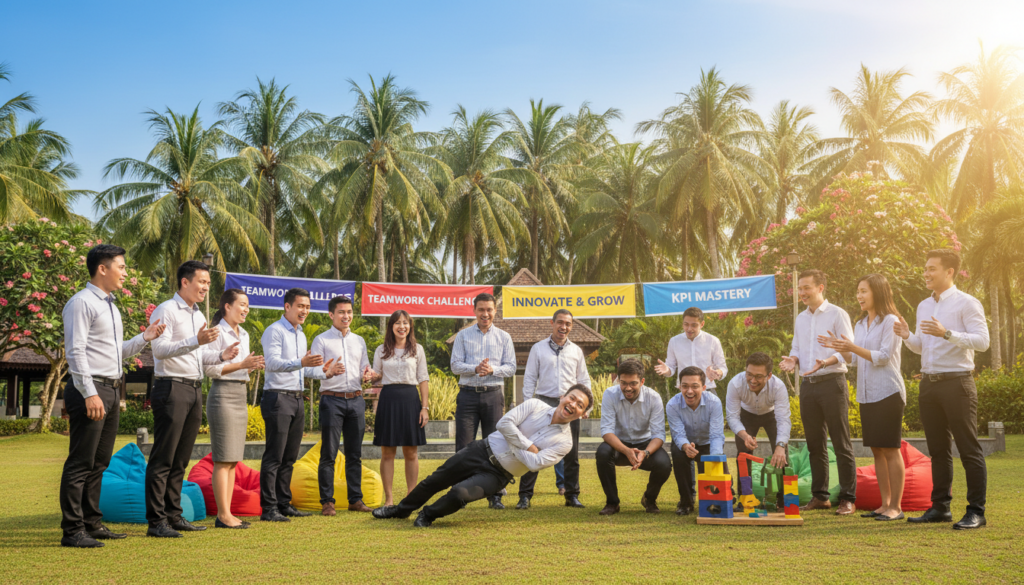
We know the groan when managers say “team building.” Many people tune out if an event feels random or only about games. We design each option to link directly to measurable outcomes: clearer roles, faster decisions, and better collaboration.
Sandmerit KPI is our recommended performance management system to track these shifts. Sandmerit KPI ties every activity to real metrics so leaders can see behavior change over weeks, not just a day of fun.
Malaysia offers quick shifts from city landmarks to beaches and rainforests, so we craft urban challenges, nature resets, water trust-builders, culture-forward sessions, and reliable indoor options. Each choice maps to specific KPIs and inclusive safety plans.
For tailored recommendations and scheduling, Whatsapp us at +6019-3156508.
Key Takeaways
- We link every activity to measurable KPIs for clear outcomes.
- Sandmerit KPI is recommended to monitor and report impact.
- Malaysia’s variety lets us match setting to goal quickly.
- Options cover urban, nature, water, culture, and indoor needs.
- Inclusive design and safety are built into every plan.
- Contact us on Whatsapp for custom KPI-driven plans.
How we choose KPI-driven team building that improves collaboration, teamwork, and communication
We pick KPI-linked experiences by starting with the business outcome that matters most this quarter. Our selection framework begins with clear objectives — speed, quality, ownership, or cross-group alignment — and then we match the right activity to that KPI.
Linking each activity to workplace KPIs and real roles
We map every exercise to practical workplace roles so leaders see who acts as facilitator, planner, communicator, risk-checker, or timekeeper under pressure. This lets managers observe real strengths and gaps in day-to-day work.
- Objective-first matching: pick an objective, pick the metric, pick the exercise.
- Role mapping: each activity shows how roles emerge and rotate.
- Visible outcomes: what to keep, stop, and start after the session.
What we measure during the session
In each session we watch problem-solving choices, trust cues, leadership rotation, conflict style, and time-to-decision. Simple tools make this measurable.
- Timed checkpoints and role-rotation rules.
- Debrief prompts and peer feedback forms.
- Short observational rubrics tied to KPIs.
Outdoor vs. indoor outcomes: when space creates better teamwork
Outdoor space often loosens hierarchy and reveals natural roles like leader, thinker, and supporter. Indoor settings boost focus and clarify processes when precision matters.
We also design sessions so learning maps back to work and can be claimable under HRDC/HRDF when delivered by certified providers. See our Sandmerit methodology for how we structure measurable outcomes and certified delivery.
“KPI-driven design turns a day of fun into weeks of measurable change.”
Planning team building in Malaysia for the months ahead: weather, safety, and the best time to go
Smart scheduling around seasonal patterns keeps experiences safe, comfortable, and outcome-focused. We use a simple calendar view to lock dates, match objectives, and set realistic backup plans.
Dry-season advantages: The February–October window offers lower rain risk and clearer conditions for outdoor activities like treks, beach challenges, and lake-based building tasks. This range reduces cancellations and helps teams focus on goals rather than weather.
What to avoid during monsoon months
Avoid water and forest formats from November to January when rivers swell, trails get slippery, and sudden storms raise safety risks. Kuala Lumpur urban races also often steer clear of heavy-rain months.
Safer alternatives and practical safety checklist
- Shift to indoor or covered park settings during monsoon months.
- Use hybrid plans with timed checkpoints and flexible routes.
- Briefing structure, clear route marking, and buddy systems for every session.
- Hydration, heat management, basic medical kit, and matched intensity to fitness levels.
“Selecting the right environment protects energy so the activity supports the objective, not works against it.”
For KL specifically, we build contingency windows and adjust transport and checkpoints when sudden rain appears. That way, weather decisions tie back to measurable outcomes and the session delivers value.
Fast-paced urban adventures in Kuala Lumpur for high-energy teams
Kuala Lumpur’s pulse suits fast, focused urban adventures that test communication, speed, and quick role shifts. We design short formats that link directly to KPIs like time-to-decision and delegation. Quick wins matter; learning must be measurable.
Kuala Lumpur Amazing Race through Central Market and Chinatown
Our Amazing Race runs through Central Market, Chinatown, and nearby landmarks. Clues vary so every activity team member contributes. The format reveals natural leadership and shows how roles rotate under pressure.
Outdoor escape game at Taman Botani
At Taman Botani we stage an escape format with clue boxes, riddle stations, and timed tasks. Scoring is clear to avoid arguments. Umbrellas and routing let us run year-round with sensible rain contingency.
Rooftop or park debates with assigned roles
Debates assign for/against, timekeeper, and fact-checker roles to build structured communication and critical thinking. This lets quieter members participate without forced improv.
Flash mob team challenge
Flash mobs boost confidence, creativity, and rapid coordination. We pick weekday mornings, set strict timeboxes, and define public boundaries so fun stays respectful.
- Planning notes: avoid heavy-rain months, prefer weekday mornings, monitor crowd and heat.
- Debrief: short reflection on roles, communication gaps, and practical steps to improve collaboration back at work.
Nature-based outdoor activities that reset culture and spark better teamwork
Nature gives a quiet stage where small, structured tasks reveal big shifts in how people cooperate. We position these sessions as a culture reset: slowing pace, lowering ego, and rebuilding trust in a calm environment that still includes measurable challenges.
FRIM forest therapy trek (≈30 minutes from the city) blends a guided jungle walk with a “silent line-up” and a cross-the-stream problem solving task. These nonverbal drills expose listening quality and planning discipline, so leaders see how roles emerge under pressure. Best planned February–October.
Rainforest puzzle trek
We rotate strengths so logic, memory, physical, and creative contributors each lead a leg. This equalizes ownership and makes progress measurable via checkpoints and quick scoring.
Night torch trek + reflection circle
After a guided torch walk we hold a short circle where people name one strength they observed in a colleague. This builds psychological safety and ties praise back to workplace behaviors.
Sunrise hike and journaling
For post-project resets (Feb–Aug) we pair a dawn walk with 10-minute journaling prompts. Teams leave with one personal goal and one shared objective for the next quarter.
- Planning tips: sturdy footwear, hydration, steady pacing, and season-aware windows.
- Debrief: translate observations into three concrete habits to test in daily work.
“A calm environment makes small changes visible — and repeatable.”
Water, sand, and adventure challenges that break hierarchy and build trust
Water and sand formats force equal footing: when balance and timing matter, job titles fade and practical collaboration rises.
Why this works: managing current, balance, and time creates shared risk. People focus on tasks and roles, not status. That makes trust form fast and visible.
Raft building on a lake for delegation, trust, and shared wins
We run a structured raft exercise with clear roles: designer, knot specialist, tester, and paddlers.
Safety first: life vests, certified instructors, and shoreline checks. We link outcomes to KPIs like delegation quality and execution discipline.
Debrief emphasizes “what failed” without blame and produces concrete next-step actions.
River tubing relay for coordination without phones
The relay forces handoffs and timing in moving water. We enforce no-phone rules and set spacing and handoff protocols.
Coaching focuses on verbal clarity, rhythm, and hand signals so coordination improves under pressure.
Mangrove kayak navigation with riddles to sharpen focus and communication
Teams navigate riddle checkpoints through narrow channels. Wrong turns are low-stakes lessons; we coach recovery and clear messaging.
This format sharpens route planning, concise instructions, and calm problem solving.
Beach sand structure build + “Shark Tank” pitch
Groups design a sand structure, then pitch it in a timed Shark Tank style. Roles—builders, planners, and speakers—appear naturally.
The pressure shows creativity and practical leadership in one short session.
Low-ropes and balance challenges on the beach
Low-impact balance lines and partner lifts suit mixed fitness levels. These high-bonding tasks reward communication and mutual support.
Seasonal note: avoid Nov–Jan for most water formats; pick Feb–Oct for best safety and consistency.
| Format | Primary KPI | Key Roles | Safety / Notes |
|---|---|---|---|
| Raft building | Delegation & trust | Designer, Knot, Tester, Paddlers | Life vests, instructors, shoreline rescue plan |
| River tubing relay | Coordination without devices | Starter, Handoff lead, Sweep | Route spacing, no-phone rule, water marshal |
| Mangrove kayak riddles | Focus & communication | Navigator, Caller, Timekeeper | Guide support, tide-aware routing |
| Sand build + pitch | Creativity under time | Planner, Builder, Presenter | Sun cover, timed judging, mixed-fitness option |
“Shared risk on water and sand makes collaboration practical and measurable.”
Culture-forward team building experiences across Malaysia that strengthen connection
We design cultural formats to create shared memories that translate into better collaboration at work. These sessions focus on meaning and identity, not just competition.
Penang heritage hunt. In Armenian Street we blend storytelling with local food tasks and creative challenges. We score collaboration—help offered, role-sharing, and problem-solving—rather than pure speed. Best run November–May for comfort and local vendors’ availability.
Kampung day. Classic games like tarik tali and coconut bowling are paired with a traditional lunch. The informal pace suits cross-generational groups and surfaces natural roles while everyone practices simple tasks together.
Indigenous-inspired rotations. Stations such as fire-making, bamboo cooking, and blowpipe target practice teach skill exchange and respectful rivalry. We brief cultural context and avoid stereotypes so learning stays authentic and safe.
- Small group sizes, paced rotations, and facilitator prompts let quieter colleagues contribute through tasks.
- Reflection ties moments to workplace habits: appreciation, patience, and clearer role handoffs.
For a curated list of outdoor options and cultural themes, see our best outdoor options.
“Cultural themes reduce the forced-corporate feel and make learning feel like discovery.”
Indoor team building activities in KL for creativity, mindfulness, and all-weather reliability
When rain, tight schedules, or venue limits threaten plans, indoor formats give reliable, focused options that map to clear learning outcomes.
Calm creativity: Batik painting at Jadi Batek (30, Jalan Inai, Imbi) offers a cultural, low-pressure way to practice focus and shared critique. Sessions blend short demos with paired work and a gentle debrief.
Mindfulness with a take-home: Terrarium making by Little Eden Succulents brings quiet collaboration and a lasting reminder of shared effort. We use this to reinforce listening and small-role handoffs.
Structured creativity and practical coordination
Good Times DIY Pottery and Art and Bonding provide step-by-step art sessions that keep scope tight and outcomes visible. We score checkpoints so everyone contributes.
Cooking and mystery-box challenges at ABC Cooking Studio teach role allocation under time pressure. We assign planner, prep lead, and quality check to prevent chaos.
- Movement and energy: Camp5, District 21, SuperPark, Game On One Utama, and Jump Street suit objectives like trust, resilience, and fast coordination.
- Fast decision drills: Laser Battle and Bomb Battle test quick choices and clear comms; we pair these with structured debriefs to keep competition healthy.
“Indoor formats let us control the setting so learning is repeatable and measurable.”
We pick the right indoor venue based on work constraints, group energy, and the specific outcomes you want to measure—mindfulness, creativity, or rapid decision-making.
Inclusive team building design: making games work for every personality and ability level
We design each session so quieter members, new hires, senior leaders, and less-mobile colleagues can contribute without being put on the spot.
Small-group formats with clear instructions and defined roles
Small groups reduce social pressure. We give simple written prompts and assign clear roles—planner, timekeeper, builder, quality checker—so everyone knows what a good contribution looks like.
Low-pressure options that don’t rely on public speaking
We avoid surprise speeches. Instead, behind-the-scenes roles keep people engaged and comfortable while the session meets objectives.
Quiet collaboration ideas
Puzzles, LEGO-style builds, and structured problem-solving tasks let teams practice coordination in a low-stress setting.
Trust and communication drills
Blindfold rope mazes (voice-guided) and no-talking challenges sharpen non-verbal cues and clear instructions.
- Scale difficulty so the same game supports onboarding and complex cross-functional teams.
- Use facilitation guardrails: turn-taking, leadership rotation, and targeted debrief prompts to draw quieter voices out.
| Format | Primary benefit | Key roles |
|---|---|---|
| Puzzle sprint | Problem focus | Planner, Solver, Verifier |
| LEGO build | Creative coordination | Designer, Builder, Quality checker |
| Blindfold maze | Trust & communication | Guide, Navigator, Safety monitor |
“When more people can join meaningfully, collaboration improves and the session delivers better ROI.”
For remote-friendly formats and options that scale, see our remote-friendly formats.
Conclusion
The right venue and format make behavior change easier to spot and keep.
Use our list as a practical guide: pick options by objectives, group energy, and the specific teamwork skills your company wants to improve.
Choose from five clear pathways — high-energy urban formats, nature resets, water and beach trust-builders, culture-forward experiences, and reliable indoor options — each designed for measurable outcomes and HRDC/HRDF-friendly delivery when certified.
Next step: pick 2–3 options, confirm dates around dry-season windows, and set 1–2 success metrics. For tailored recommendations (venue tradeoffs, group size, difficulty range), Whatsapp us at +6019-3156508.
We will tailor the plan to your work context so gains last well beyond the day.
FAQ
How do we align KPI-driven team building with workplace goals?
We start by mapping each session to specific workplace metrics such as collaboration scores, decision speed, leadership rotation, and problem-solving success. Then we choose activities—outdoor challenges, escape games, or creative workshops—that produce observable behaviors tied to those KPIs. Facilitators collect baseline and post-session measures to show impact on communication, trust, and role clarity.
How do we measure performance during a session?
We combine direct observation, timed tasks, peer ratings, and short surveys to capture problem-solving, trust, leadership rotation, and time-to-decision. For example, we time puzzle completions, record how roles shift, and use quick confidence and feedback scores to quantify improvements in teamwork and collaboration.
When should we choose outdoor versus indoor experiences?
Choose outdoor settings—parks, forests, beaches—when you want physical challenges, fresh-air energy, and large-space collaboration. Select indoor options—workshops, cooking classes, adventure parks—when reliability, creativity, or weather-proof scheduling matters. We match space to objectives, whether that’s trust-building on a low-ropes course or focused creativity in a Batik or pottery session.
What seasonal factors should we consider for planning across Malaysia?
Plan outdoor programs in the dry season to reduce cancellations and maximize safety. Be cautious during monsoon months—avoid high-water, river tubing, and exposed forest treks when heavy rain or flash floods are likely. We factor weather, travel time, and local safety advisories into every schedule.
What are safe alternatives during monsoon months?
We offer indoor creativity sessions like terrarium making, Batik painting, cooking challenges, and indoor adventure parks. These options deliver the same teamwork outcomes—communication, role practice, and problem-solving—without weather risk.
What urban adventures do we run in Kuala Lumpur?
Our KL options include an Amazing Race-style route through Central Market and Chinatown, rooftop or park debates for critical thinking, outdoor escape games at Taman Botani, and flash-mob challenges for rapid coordination. Each format emphasizes time management, creativity, and collaboration in a city setting.
How do nature-based treks improve group culture?
Forest and sunrise hikes promote psychological safety, reflection, and reset after projects. Activities like FRIM forest therapy, rainforest puzzle treks, and night torch walks use quiet reflection, rotating strengths, and shared challenges to deepen empathy, reduce hierarchy, and strengthen long-term teamwork.
Which water and beach challenges work best for trust and leadership?
Low-impact options such as raft building, mangrove kayak navigation with riddles, beach sand-structure builds with Shark Tank-style pitches, and low-ropes balance courses encourage delegation, creative problem-solving, and trust without requiring extreme fitness. We design these with safety and role distribution in mind.
How do we incorporate cultural experiences into programs?
We weave local culture into challenges—Penang heritage hunts with food tasks, kampung games like tarik tali paired with traditional meals, and indigenous-inspired skill rotations. These formats boost storytelling, empathy, and creative collaboration while showcasing local environments and cuisine.
What indoor options support mindfulness and creativity?
Batik painting, terrarium workshops, guided pottery and art sessions, cooking mystery-box challenges, and laser-tag or bomb-defusal arenas provide reliable, all-weather learning. They foster focus, calm collaboration, structured creativity, and fast decision-making in controlled settings.
How do we design inclusive experiences for diverse groups?
We create small-group formats with clear instructions, defined roles, and low-pressure options that don’t rely on public speaking. Quiet collaboration tasks—puzzles, LEGO-style builds, and structured problem-solving—sit alongside trust drills like blindfold rope mazes. Accessibility, alternative role assignments, and pacing ensure everyone can contribute.
How long should sessions run for measurable impact?
Short sessions (2–4 hours) work for focused skill practice and urban adventures. Half-day to full-day programs suit deeper culture shifts, outdoor treks, or multi-activity days. Multi-day retreats fit strategic resets, leadership rotation, and sustained behavior change. We recommend matching duration to objectives and KPI targets.
What logistics do we handle when organizing events?
We manage permits, venue bookings, safety briefings, equipment, facilitator staffing, travel timing, and contingency plans for weather. We also provide pre-session surveys, role assignments, and post-session reports tied to KPIs so organizers see clear ROI on collaboration, communication, and creativity outcomes.