
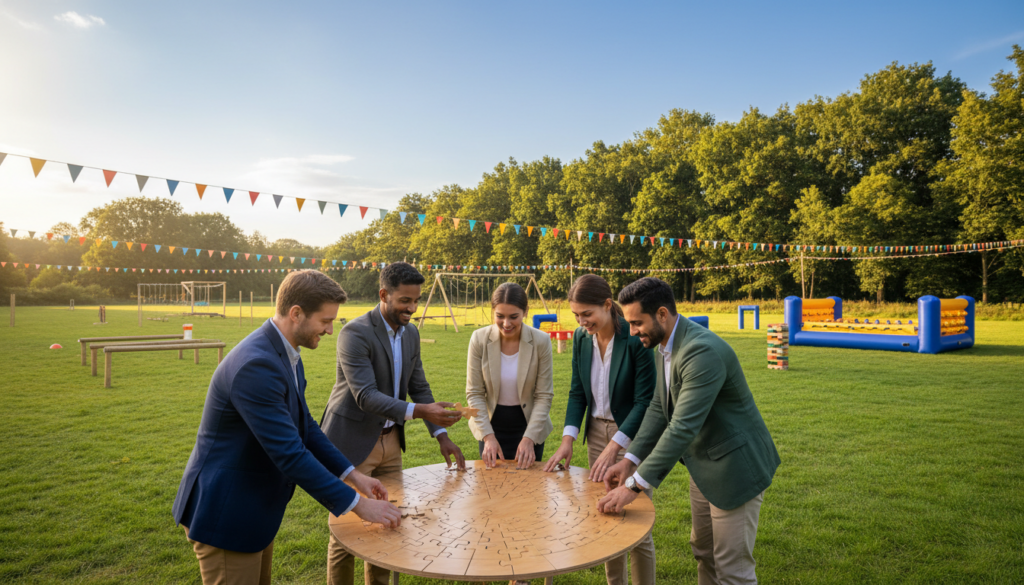
Did you know that 78% of groups report measurable boosts in trust after one focused group exercise? We curated a list of 45 practical options to help teams in Malaysia grow stronger fast.
We design each activity to sharpen communication, spark creativity, and build trust among members. Our approach fits busy workplaces and diverse participants.
Reach out via WhatsApp at +6019-3156508 to discuss tailored plans that match your goals and time limits. We guide planning, suggest the right game or challenge, and help set clear outcomes.
Key Takeaways
- We offer 45 curated options to strengthen group bonds and skills.
- Each exercise focuses on communication, trust, and creative thinking.
- Customized plans are available—WhatsApp us at +6019-3156508.
- Structured sessions deliver measurable benefits for members and employees.
- Our methods suit fast-paced Malaysian workplaces and diverse groups.
Why Company Team Building Activities Matter
Shared experiences turn routine days into moments that strengthen trust and spark fresh collaboration.
As Ashley Frabasilio, Employee Engagement Manager at Asana, highlights, shared experience helps groups build trust and encourages collaboration among colleagues.
We curated a list of 31 indoor and outdoor team building activities for 2025 to reawaken passion at work. These options give a clear way to boost productivity and team bonding in Malaysia.
Investing a small amount of time in these events improves teamwork, communication, and leadership skills that carry into daily work.
- Create a positive culture and stronger sense of camaraderie.
- Address monotony and refresh thinking with purposeful challenges.
- Choose the right activity to align with your goals and workplace needs.
| Type | Benefit | Suggested Time |
|---|---|---|
| Indoor workshop | Improves creativity and communication | 1–3 hours |
| Outdoor challenge | Builds trust and camaraderie | Half day |
| Virtual session | Maintains connection across locations | 30–60 minutes |
For practical planning and a tailored list, explore our software tools for event selection at team planning software.
Strengthening Communication Skills
Clear dialogue is the fastest way for groups to work together and reach shared goals.
Active Listening Techniques
When members listen closely, collaboration flows and misunderstandings drop. Our Active Listening exercise trains participants to paraphrase what they heard and ask open questions.
Benefits: faster problem solving, improved trust, and stronger bonds among teammates.
Conflict Resolution Strategies
We run a Conflict Responses workshop that uses the Thomas-Kilmann model. Members review past conflicts, spot patterns, and agree on practical guidelines to avoid repeats.
This structured session gives a safe way for employees to resolve misunderstandings and align on norms.
- Practice paraphrasing to confirm meaning.
- Use the Thomas-Kilmann model to map responses.
- Create clear next steps after each exercise.
| Exercise | Main Skill | Suggested Time |
|---|---|---|
| Active Listening Drill | Paraphrase & clarify | 20–30 minutes |
| Conflict Responses Workshop | Conflict styles & agreements | 60–90 minutes |
| Guided Reflection | Shared norms | 15–25 minutes |
Building Trust Within the Workplace
We strengthen trust by combining playful metaphors with structured sharing.
Our Pirate Ship game puts team members into roles like captain or deckhand to clarify strengths and limits. This simple activity helps members see how each role supports the group during pressures and challenges.
The Heard, Seen, Respected (HSR) structure asks participants to share moments when they felt valued. HSR builds empathy quickly and makes communication safer for everyone.
- Practice clear communication skills in a low-risk setting.
- Use role play to learn how teammates rely on one another.
- Run short, repeatable exercises so teams make faster decisions.
| Exercise | Purpose | Time |
|---|---|---|
| Pirate Ship | Role clarity & rapport | 20–30 min |
| Heard, Seen, Respected | Empathy & trust | 15–25 min |
| Quick Debrief | Action points to work together | 10–15 min |
Trust is the foundation of resilient teams. By practicing these short exercises, team members gain confidence in one another and improve how they work together on real projects.
Enhancing Collaboration Through Shared Experiences
Hands-on experiences let members surface strengths and test how they best complement one another.
We design short, guided sessions so team members learn fast and apply new habits the next day.
Leveraging Individual Strengths
Our Myers-Briggs Team Reflection helps members map working styles and see where skills fit. This clarity makes collaboration easier when pressure rises.
The Team Canvas Session focuses on roles and shared ways of working. It gives the group a clear framework to work together and reduce wasted time.
- Practical insight: members get immediate feedback on how they contribute.
- Shared practice: exercises encourage creative thinking in a low-pressure way.
- Reliable follow-up: brief debriefs turn experience into actionable steps.
| Workshop | Main Outcome | Suggested Time |
|---|---|---|
| Myers-Briggs Reflection | Role clarity & self-awareness | 60–90 minutes |
| Team Canvas Session | Shared purpose & working norms | 45–75 minutes |
| Mini Problem Solving Game | Practice collaboration & trust | 20–30 minutes |
Boosting Employee Morale and Engagement
Short, focused moments of recognition boost engagement and spark better collaboration.
Research shows that good teamwork links directly to higher job satisfaction and stronger morale. We use quick rituals and low-cost exercises so members can reconnect without taking too much time away from work.
One effective option is the Temperature Check. This simple activity helps leaders gauge how team members feel that day. It creates a safe way for members to share energy levels and spot issues early.
When we weave short team-building sessions into the week, we reduce burnout and add variety to routine tasks. Celebrating small wins lets teammates bond and builds a positive culture.
- Benefits: clearer communication, higher motivation, and better collaboration.
- Quick check-ins save time and reveal priorities before challenges grow.
- Regular exercises help members feel seen and valued.
| Exercise | Time | Primary Benefit |
|---|---|---|
| Temperature Check | 5–10 min | Gauge engagement |
| Micro Recognition | 5 min | Boost morale |
| Quick Debrief | 10–15 min | Improve communication |
Aligning Teams with Organizational Goals
Clear alignment of objectives helps each person connect daily tasks to broader outcomes. We focus on practical steps that let members see how their work links to company goals.
Defining Roles and Expectations
Our Alignment & Autonomy workshop, inspired by Peter Smith’s model, helps team members map responsibilities. Participants list core duties and note dependencies.
Benefits: reduced confusion, faster handoffs, and clearer communication across groups.
Strategic Goal Setting
We use the Team Canvas Session to set shared values, outcomes, and timelines. This collaborative exercise encourages members to own specific goals.
- Aligning teams with organizational goals ensures all members work toward the same outcomes with purpose.
- Strategic goal setting empowers members to take responsibility while keeping collaboration tight.
- Defining roles prevents common inefficiencies and speeds up decision making.
| Workshop | Main Outcome | Suggested Time |
|---|---|---|
| Alignment & Autonomy | Clear responsibilities | 60–90 min |
| Team Canvas Session | Shared goals & values | 45–75 min |
| Strategic Goal Setting | Owned objectives | 30–60 min |
Creative Icebreaker Games for Meetings
A two-minute icebreaker often turns a routine 8am call into a lively moment of connection.
We recommend using creative icebreaker games to start your 8am calls. These short rituals help everyone feel present before work begins.
- Penny for Your Thoughts: Pull a coin from a box and share a story from that year. It’s a simple way to learn about one another.
- Charades: A classic non-verbal game that breaks up a mentally taxing day with playful creativity.
- Swift Swap: A high-energy team bonding exercise that practices quick, time-sensitive non-verbal cues.
These building activities are brief, inclusive, and easy to run on a virtual or in-person call. We design each activity so every member of the group can join comfortably.
Remote and Virtual Team Building Ideas
We make virtual meetups practical and friendly so remote members stay connected. Short sessions reduce screen fatigue and give everyone a chance to relax and share.
Virtual Coffee Breaks
Schedule 15–20 minute coffee breaks during normal work hours so members across Malaysia and nearby time zones can join. Keep topics non-work and optional.
Why it works: casual chat boosts rapport and improves communication skills without pressure.
Online Trivia Nights
Host a short trivia game with mixed topics: local culture, pop music, and industry fun facts. Rotate hosts so different members lead each session.
The competitive, playful format improves teamwork and creative thinking, and gives teammates a shared win to celebrate.
Digital Show and Tell
Ask members to bring one item or photo they value and spend two minutes explaining why. This builds trust and personal connection fast.
It’s a low-cost exercise that helps participants learn about one another’s interests and backgrounds.
- Keep sessions under 30 minutes to respect work time.
- Schedule during overlap hours so most members can attend.
- Use simple tech: video call, chat, and a shared timer.
| Activity | Duration | Primary Benefit |
|---|---|---|
| Virtual Coffee Break | 15–20 min | Casual bonding and informal communication |
| Online Trivia Night | 30–45 min | Fun competition, creativity, teamwork |
| Digital Show and Tell | 10–20 min | Trust-building and personal connection |
Problem Solving Challenges for Teams
Problem-solving games give groups a practical way to test ideas and sharpen decision-making under pressure. We run compact exercises that help team members break down complex issues and propose workable fixes fast.
The Back of the napkin game asks team members to sketch solutions to open problems on a napkin. This low-tech activity sparks creativity and shows how simple visuals unlock new ideas.
Our Your first idea exercise prompts members to write initial thoughts and then swap notes. By sharing early drafts, participants learn to listen and explain their logic to one another.
“Short, focused challenges improve communication and help groups learn how to work together under time pressure.”
- Benefits: these challenges level up teamwork and build trust within team workflows.
- They develop communication skills by asking members to explain reasoning aloud.
- The exercises promote collaboration and faster, more creative problem solving.
- They train group resilience so members perform better when stakes are high.
- All games require little prep and fit into a short work block.
| Exercise | Time | Primary Benefit |
|---|---|---|
| Back of the napkin | 10–20 min | Creativity & rapid prototyping |
| Your first idea | 15–25 min | Idea diversity & clearer communication |
| Mini problem sprint | 25–40 min | Collaboration & decision speed |
Indoor Workshops for Creative Bonding
Art and food-based sessions create relaxed moments where participants pair creativity with practical teamwork.
Artistic and Culinary Challenges
Soy Wax Candle Making offers a calm, hands-on way for a group to work together. Each person helps measure wax, choose scents, and finish a shared set of candles.
Batik Painting invites coordination and color mixing as participants collaborate on a single piece. This exercise builds trust and strengthens creative thinking in a short time.
- Soy Wax Candle Making: relaxing, creative, good for new members to bond.
- Batik Painting: shared materials and a collective art goal improve collaboration.
- Sushi Making Challenge: a culinary game that trains quick adaptation and hands-on teamwork.
| Workshop | Main Skill | Suggested Time |
|---|---|---|
| Soy Wax Candle Making | Creativity & collaboration | 60–90 min |
| Batik Painting | Coordination & shared design | 75–90 min |
| Sushi Making Challenge | Adaptability & process skills | 45–60 min |
These indoor options are practical ways to boost team building and team bonding in a calm setting. They give participants a sense of accomplishment and a tangible result to celebrate together.
Outdoor Adventure Challenges for Camaraderie
Adventure-based exercises turn simple goals into memorable lessons about leadership and trust. Outdoor settings make it easier for groups to relax, experiment, and push comfort zones while practicing teamwork.
Laser Battle delivers a high-energy test of coordination. Players must communicate in real time, move with purpose, and adapt tactics to win. This high-stakes format sharpens teamwork and decision-making under pressure.
Archery offers an accessible, low-impact option. Participants of varied fitness levels can work together to hit targets, build trust, and boost confidence through measured practice and encouragement.
- Outdoor adventure challenges promote leadership and practical skills in a thrilling setting.
- We organise building activities that help groups develop resilience and a goal-oriented mindset outside the office.
- These team-building activities create lasting memories that strengthen camaraderie and improve performance.
Tailoring Activities to Your Company Culture
To make programs stick, we match each exercise to how members prefer to learn and work. This process helps align outcomes with real goals and everyday routines in Malaysian workplaces.
Assessing Team Dynamics
We start with a short audit of roles, communication flow, and common friction points. Interviewing several members and observing a quick session reveals where trust and collaboration need the most support.
Jombond’s experience from over 900 programs shows this upfront work prevents one-size-fits-all plans and raises the chance of lasting change.
Customizing for Diverse Groups
Next, we adapt formats for varied ages, languages, and physical needs so every participant can join fully. Customizing also means choosing exercises that build specific skills like active listening or rapid problem solving.
- Set clear goals: define desired outcomes and measures.
- Gather feedback: ask members what they value and adjust plans.
- Mix formats: combine short drills, reflective work, and playful challenges.
When tailored thoughtfully, team-building activities boost communication, teamwork, and a stronger sense of camaraderie across groups.
Strategies for Inclusive Team Participation
Simple adjustments can turn an ordinary session into a truly inclusive one.
We design sessions so every person feels safe and respected. Start by choosing options that suit varied physical needs and comfort levels.
Clear instructions help reduce anxiety. Offer step-by-step directions and show one quick demo before starting. This lets quieter members follow without pressure.
Encourage multiple ways to join. Offer speaking, writing, or paired formats so people choose what fits them. Leaders should invite input gently and rotate who shares.
- Make space for short breaks and slower pacing.
- Use simple language and repeat key points once.
- Provide optional roles so participants opt in at their comfort level.
When we focus on accessibility and respectful prompts, participation rises and connections deepen across groups in Malaysia. These practical steps turn good intentions into meaningful outcomes.
Measuring the Success of Your Events
After any event, a short guided reflection locks lessons into everyday routines.
We measure success by gathering clear feedback and translating it into practical next steps. Short, focused sessions help team members name what worked and what needs follow-up.
Post-Activity Reflection Sessions
Run a 20–30 minute debrief within 48 hours so participants remember details. Ask team members to share one insight and one action they will try at work.
- Collect quick feedback scores on satisfaction and perceived benefits from the exercise.
- Ask participants how new ideas will apply to daily tasks and if trust increased among teammates.
- Document suggested follow-up training or mini-exercises to reinforce skills over time.
By analysing these outcomes we refine future team building plans and align them with long-term company goals. Ongoing follow-up keeps teams focused, sustains camaraderie, and turns a single event into lasting change.
Contact Us to Learn More About Our Services
For practical results that boost creativity and morale, WhatsApp us at +6019-3156508.
We offer specialised team building activities in Malaysia that focus on clear outcomes. Message our planner on WhatsApp to discuss goals, timing, and participant needs.
Quick ways we help:
- If you seek the best company team building activities, WhatsApp +6019-3156508 to learn options and pricing.
- Our planner will craft a short program that boosts creativity and practical skills.
- We outline the measurable benefits and follow-up steps to keep gains lasting.
- Receive a customised proposal for your upcoming event in Malaysia via WhatsApp.
- We commit to professional, engaging solutions that support your organisation’s goals.
| Service | Primary Outcome | How to Start |
|---|---|---|
| Mini Workshops | Faster communication & clear next steps | WhatsApp +6019-3156508 |
| Creative Sessions | Boosted creativity and practical tools | WhatsApp +6019-3156508 |
| Outdoor Challenges | Stronger trust and engagement | WhatsApp +6019-3156508 |
“Message us on WhatsApp and we’ll send a tailored plan within 48 hours.”
Conclusion
Conclusion
Practical reflection and small routines amplify the value of any shared exercise.
Investing in professional sessions strengthens teams and lifts everyday work. By focusing on communication, trust, and collaboration we create an environment where members feel valued and motivated.
We reviewed options that spark creativity and support long-term goals. The real benefits show up after events, in clearer handoffs, higher morale, and steadier performance.
If you want practical next steps and a shortlist tailored to your needs, see practical ideas or message us to discuss how we can support your teams’ growth.
FAQ
What types of company team building activities do you offer?
We design a mix of in-person and virtual options that focus on communication skills, trust exercises, problem-solving challenges, creative workshops, outdoor adventures, and morale-boosting events. Each option emphasizes collaboration, creative thinking, and measurable outcomes tied to workplace goals.
How do these programs improve communication within groups?
Our sessions teach active listening techniques and conflict resolution strategies through hands-on exercises and guided reflections. Participants practice clear feedback, structured dialogue, and role-based tasks that make everyday communication more effective and efficient.
Can you explain how trust is developed during your sessions?
We use low-risk trust builders and progressive challenges that help people rely on one another. Activities include paired exercises, facilitated debriefs, and reflection prompts that create psychological safety and deepen interpersonal bonds.
How do you ensure collaboration improves after the event?
We emphasize shared experiences and leverage individual strengths during group challenges. Post-activity action plans and role alignment exercises help translate learnings into daily workflows so participants continue to collaborate more productively.
What kinds of virtual options do you run for remote participants?
Our remote offerings include virtual coffee breaks, online trivia nights, digital show-and-tell sessions, and remote problem-solving challenges. Each format is optimized for engagement, easy facilitation, and measurable participation.
Are your icebreaker games suitable for regular meetings?
Yes. We offer short, creative icebreakers that fit meeting timeframes and help reset energy, spark ideas, and improve rapport without taking away from agenda goals. These are great for hybrid and in-person formats.
How do you tailor activities to different workplace cultures?
We start by assessing team dynamics and cultural norms, then customize formats, difficulty, and inclusivity elements to match diverse groups. Adjustments include pace, competitive vs. collaborative framing, and accessibility considerations.
What measures do you use to evaluate event success?
We combine quantitative feedback surveys, participation metrics, and post-activity reflection sessions to track engagement, skill gains, and behavioral change. We also provide follow-up recommendations to reinforce outcomes.
How do you make events inclusive for all participants?
Our designs include multiple entry points for contribution, alternative tasks for accessibility needs, clear role options, and facilitation that ensures balanced participation. We plan for cultural sensitivity and psychological safety in every session.
Can activities support strategic goal setting and role clarity?
Absolutely. We facilitate exercises that define roles and expectations, align group objectives with organizational goals, and create strategic goal-setting workshops so teams leave with clear, actionable plans.
What outdoor or adventure challenges do you recommend for building camaraderie?
We offer guided hikes, low-ropes courses, scavenger hunts, and team navigation challenges that emphasize trust, shared risk, and mutual support. These are designed to foster camaraderie while remaining safe and accessible.
Do you offer creative indoor workshops like culinary or art-based events?
Yes. Our artistic and culinary challenges promote creative bonding by encouraging collaboration on hands-on projects. These sessions boost morale, spark creative thinking, and give teams a tangible takeaway.
How long should an effective session last?
Typical sessions range from 45 minutes for short icebreakers up to a full day for in-depth workshops. We recommend a mix of short, frequent touchpoints and occasional longer retreats to sustain momentum and skill transfer.
How do you handle groups with mixed experience levels?
We assess skill and comfort levels up front and design layered tasks so everyone can contribute meaningfully. Facilitators rotate roles, provide clear instructions, and offer optional challenge tiers to keep engagement high.
How can we follow up after an event to keep improvements going?
We suggest scheduled reflection sessions, accountability check-ins, micro-challenges to practice new skills, and periodic pulse surveys to measure continued progress and adjust learning plans.
How do we get started or request a custom proposal?
Contact us via WhatsApp or our inquiry form to discuss goals, participant size, budget, and preferred format. We’ll assess needs, propose a tailored program, and outline next steps for a successful rollout.