
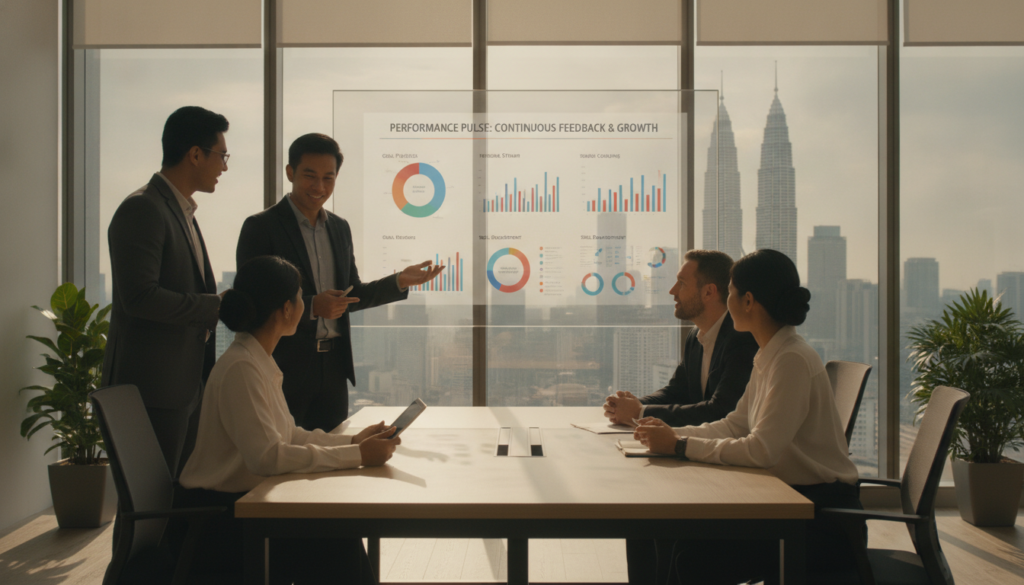
I often hear leaders express frustration because my team hates annual reviews. These outdated cycles frequently fail to capture the true value of an employee’s daily contributions. Relying on a single yearly conversation creates unnecessary stress and disconnects staff from their actual goals.
Modern organizations are shifting toward a continuous feedback PMS to bridge this gap. By moving away from static evaluations, companies can foster a culture of transparency and growth. This approach ensures that development happens in real-time rather than waiting for a calendar date.
In the local market, finding the right performance management system Malaysia is essential for retention. I recommend exploring the sandmerit KPI system to streamline these processes. By utilizing sandmerit, managers can provide actionable insights that keep employees engaged and aligned with company objectives throughout the entire year.
Key Takeaways
- Annual appraisal cycles often lead to employee disengagement and frustration.
- Continuous development models provide better alignment between staff and organizational goals.
- The sandmerit KPI system offers a modern solution for real-time performance tracking.
- Transparent communication is vital for improving retention in the Malaysian workforce.
- Shifting to ongoing evaluations creates a more supportive and productive office culture.
The Shift from Annual Appraisals to Continuous Performance Management
In my experience, the shift toward continuous performance management is the most significant change in modern HR. For too long, companies have relied on a rigid, once-a-year cycle that often feels disconnected from daily reality. This outdated approach is widely recognized as an annual performance review failure that leaves employees guessing about their true standing within the organization.
I believe that the modern workforce demands agility and frequent communication to stay aligned with company objectives. When feedback is delayed by twelve months, it loses its impact and relevance. By moving toward continuous management, leaders can ensure that guidance is timely, actionable, and focused on future growth rather than past mistakes.
“The most effective way to improve performance is to provide feedback in the moment, rather than waiting for a formal calendar event.”
Transitioning from static, bureaucratic forms to dynamic, strategic systems allows managers to foster a culture of constant improvement. This evolution helps teams pivot quickly when market conditions change, which is essential for businesses operating in competitive environments like Malaysia. Avoiding an annual performance review failure requires a commitment to ongoing dialogue that empowers every team member to succeed.
Why Traditional Annual Reviews Fail Modern Teams
When I look at modern workplace dynamics, it becomes clear that the annual performance review failure is a systemic issue. Many companies still cling to this outdated model, yet it rarely produces the growth or clarity that employees actually need to succeed.
Managers often struggle to provide honest, actionable feedback due to a fear of conflict or simply because they lack the necessary bandwidth. This hesitation turns what should be a developmental conversation into a stressful, bureaucratic exercise that benefits no one.
The Psychological Impact of Delayed Feedback
Waiting an entire year to address performance issues creates a significant psychological burden for team members. When feedback is withheld, employees often feel blindsided during their formal review sessions, which destroys morale and engagement.
The consequences of this silence are profound. Consider these common outcomes of delayed communication:
- Increased anxiety regarding job security and performance expectations.
- A sense of resentment when constructive criticism arrives too late to be useful.
- Reduced trust in leadership due to a lack of transparency.
“Feedback is the breakfast of champions, but when served only once a year, it is often cold, stale, and difficult to digest.”
The Disconnect Between Goals and Daily Execution
The annual performance review failure is further compounded by the massive gap between high-level company goals and the reality of daily tasks. When leaders rely on a single conversation to summarize twelve months of work, they inevitably miss the nuance of daily execution.
This disconnect happens because the review process is retrospective rather than forward-looking. Without consistent, purposeful communication, employees lose sight of how their daily efforts contribute to the broader organizational mission.
Trust fades when the feedback loop is broken. To bridge this gap, we must move away from the “once-a-year” mentality and embrace a culture of intentional, regular dialogue that keeps everyone aligned and motivated.
Key Features to Look for in a Continuous Feedback PMS
When I evaluate new HR technology, I look for specific features that foster transparency and ease of use for busy managers. Moving away from legacy platforms requires a continuous feedback PMS that simplifies the way we interact with our teams. These employee feedback tools are essential for any organization looking to thrive in a fast-paced environment.
Real-Time Check-ins and Pulse Surveys
The core of modern management is real-time performance tracking. Instead of waiting for a yearly meeting, managers can use check-ins to address roadblocks immediately. Pulse surveys provide a quick way to gauge team sentiment and identify potential burnout before it impacts productivity.
“The single biggest problem in communication is the illusion that it has taken place.”
Goal Alignment and OKR Tracking
I find that OKR tracking software is vital for keeping everyone focused on the most critical objectives. By linking daily tasks to high-level company goals, team members understand exactly how their work contributes to the bigger picture. This alignment ensures that effort is never wasted on low-impact activities.
Peer-to-Peer Recognition Systems
Building a collaborative culture requires more than just top-down feedback. Implementing peer-to-peer recognition allows team members to celebrate each other’s wins in real time. This practice boosts morale and strengthens professional relationships across the entire organization.
sandmerit Performance Management System: A Malaysian Perspective
When I look for a robust performance management system Malaysia teams can rely on, sandmerit stands out as a top contender. It provides a localized solution that understands the unique cultural and operational needs of businesses operating within our region. By focusing on local compliance and support, it helps organizations move away from outdated, rigid appraisal cycles.
Overview of sandmerit Capabilities
The platform offers a comprehensive suite of tools designed to streamline how companies track employee progress. sandmerit performance management is built to handle everything from goal setting to competency mapping. Its primary features include:
- Automated performance appraisal workflows.
- Customizable 360-degree feedback modules.
- Integrated talent development tracking.
How sandmerit Facilitates Ongoing Conversations
Effective management is not a once-a-year event; it is a continuous dialogue. This system excels at fostering consistent communication between managers and their direct reports. By providing a digital space for regular check-ins, it ensures that goals remain aligned with daily execution.
“Feedback is the breakfast of champions, but only when it is served fresh and consistently throughout the year.”
This approach helps remove the anxiety often associated with traditional reviews. When employees receive real-time insights, they can adjust their performance immediately rather than waiting for an annual meeting. This creates a culture of transparency and mutual growth.
WhatsApp Us to Learn More About sandmerit Performance Management System at +60193156508
Choosing the right software is a significant decision for any growing business. If you want to see how this performance management system Malaysia solution can transform your workplace, I encourage you to reach out. You can WhatsApp us to learn more about Sandmerit Performance Management System at +60193156508 for a personalized consultation.
Comparing Lattice for Growth-Oriented Organizations
I have observed that many organizations prioritize structured feedback to fuel their rapid growth. When scaling a business, finding the right tools to maintain performance standards becomes a top priority for leadership teams. While many businesses explore local options like performance management software, global platforms often enter the conversation during the selection process.
Core Features and Feedback Loops
Lattice has become a popular choice for companies that need a centralized hub for employee development. Its OKR tracking software is particularly effective for teams that require clear visibility into how daily tasks contribute to high-level company goals. By connecting individual contributions to broader objectives, the platform ensures that everyone remains focused on what matters most.
Beyond goal setting, the platform excels at fostering a culture of appreciation through its integrated peer-to-peer recognition capabilities. This feature allows team members to celebrate wins in real-time, which helps boost morale and engagement. When employees feel seen and valued by their colleagues, they are more likely to remain committed to the organization’s long-term vision.
Pros and Cons for Remote Teams
For remote-first companies, the Lattice performance review ecosystem offers a structured way to maintain connection across different time zones. The platform provides a consistent framework for managers to conduct check-ins, ensuring that distance does not lead to a lack of oversight. However, the complexity of the system can sometimes feel overwhelming for smaller teams that prefer a simpler, more lightweight approach.
While the OKR tracking software is powerful, it requires significant administrative effort to maintain effectively. Additionally, while the peer-to-peer recognition tools are excellent for building culture, they rely heavily on active participation from all staff members. I recommend that you carefully weigh these operational requirements against your team’s current capacity before committing to a long-term subscription.
Evaluating 15Five for Manager-Employee Alignment
I have found that the 15Five check-in methodology is a game-changer for teams tired of annual performance reviews. By prioritizing consistent, low-lift interactions, this platform helps leaders maintain a pulse on their team’s health without the stress of high-pressure, infrequent cycles.
The Weekly Check-in Methodology
The core of this system is simple: it takes employees about 15 minutes to write their updates and managers about 5 minutes to read them. This 15Five check-in methodology encourages staff to share their wins, challenges, and roadblocks on a recurring basis. By documenting these details weekly, you prevent the buildup of unaddressed issues that often plague traditional review processes.
This consistent flow of information ensures that managers stay aligned with their direct reports. It transforms the manager-employee relationship from a top-down audit into a collaborative partnership. When feedback is continuous, it becomes much easier to pivot goals and provide support exactly when it is needed most.
Pros and Cons of the 15Five Ecosystem
Adopting the 15Five check-in methodology offers several distinct advantages for modern businesses. The primary benefit is increased transparency, as it forces both parties to reflect on their progress regularly. It also helps in identifying burnout early, allowing managers to intervene before productivity drops significantly.
- Pros: Promotes a culture of accountability, improves manager-employee relationships, and provides actionable data for growth.
- Cons: Requires high discipline to maintain consistency, and some employees may experience survey fatigue if the questions become repetitive.
While the platform is powerful, it is not a magic fix for poor communication. You must ensure that managers are trained to respond to these check-ins with constructive dialogue rather than just acknowledging them. When used correctly, this ecosystem creates a sustainable framework for long-term alignment and professional development.
Assessing Culture Amp for Data-Driven Feedback
I often find that large enterprises struggle to bridge the gap between raw data and meaningful employee growth. As organizations expand, relying on gut feeling is no longer sufficient to maintain a high-performing workforce. This is where specialized employee engagement software becomes a vital asset for leadership teams.
Employee Engagement and Performance Analytics
The platform excels by integrating survey data with performance metrics to provide a holistic view of the organization. By utilizing Culture Amp analytics, managers can pinpoint exactly where sentiment dips or where productivity bottlenecks occur. These insights allow for proactive interventions rather than reactive fixes.
“Data is the bridge between human potential and organizational success; without it, we are simply guessing at what our people need to thrive.”
The system excels at visualizing complex trends across different departments. It helps leaders understand the nuanced relationship between engagement scores and actual output. This clarity is essential for any business aiming to maintain a competitive edge in the Malaysian market.
Pros and Cons for Large Enterprises
While the depth of information is impressive, it is important to weigh the benefits against the operational requirements. Large enterprises often find the platform indispensable, yet smaller teams might feel overwhelmed by the sheer volume of data generated.
| Feature | Benefit | Consideration |
|---|---|---|
| Advanced Analytics | Deep trend identification | Requires data literacy |
| Scalability | Handles thousands of users | Higher cost structure |
| Integration | Connects with HRIS | Complex initial setup |
Ultimately, Culture Amp analytics provides the precision that large-scale operations demand. However, if your team is still in a rapid growth phase, you must ensure your HR department has the capacity to act on these insights. Choosing the right employee engagement software is not just about the features, but about your team’s readiness to embrace a data-first culture.
Reviewing Workday Peakon Employee Voice
In my experience, the ability to listen to your employees at scale is what separates thriving companies from those that stagnate. For multinational corporations, Workday Peakon employee voice offers a sophisticated way to capture feedback across diverse regions and time zones. By leveraging this employee engagement software, leaders can transform raw data into meaningful cultural shifts.
Real-Time Sentiment Analysis
The core strength of this platform lies in its ability to provide real-time sentiment analysis. Instead of waiting for annual reports, managers receive immediate updates on how their teams feel about leadership, workload, and company direction. This continuous feedback loop ensures that HR departments can address issues before they escalate into turnover.
By integrating this tool, organizations move beyond static metrics. It allows for real-time performance tracking that aligns individual sentiment with broader business objectives. This visibility is essential for maintaining high morale in a fast-paced, global environment.
Pros and Cons for Global Scalability
When considering this solution for a large enterprise, it is important to weigh the benefits against the logistical requirements. The platform is built for global scalability, allowing HR teams to compare engagement scores across different countries and departments with ease. This data-driven approach is a significant advantage for companies with thousands of employees spread across the globe.
- Pros: Excellent visualization of global trends and high-level data security.
- Cons: The cost can be prohibitive for smaller firms, and the implementation process requires significant internal buy-in.
Ultimately, while the investment is substantial, the depth of insight provided by this employee engagement software is hard to match. If your organization is ready to prioritize a culture of listening, it serves as a powerful engine for long-term growth and stability.
How to Choose the Right PMS for Your Malaysian Business
Finding a reliable tool for your organization involves balancing technical features with local operational requirements. I have found that the most successful transitions occur when leaders prioritize platforms that understand the unique landscape of the local market. A performance management system Malaysia businesses trust must offer more than just basic features; it must provide a seamless experience for your specific workforce.
Assessing Local Support and Compliance
When evaluating a continuous feedback PMS, you must prioritize vendors that offer dedicated support within your time zone. Quick resolution of technical issues is vital to maintaining momentum during your transition. If a provider cannot offer responsive assistance during local business hours, your team may face unnecessary downtime.
Furthermore, ensure the software adheres to Malaysian labor regulations and data privacy standards. Compliance is not just a legal requirement; it is a critical component of building trust with your employees. Always verify that the vendor understands the nuances of local employment contracts and reporting needs.
“The quality of your tools determines the quality of your culture; choose systems that empower your people rather than just tracking them.”
Budgeting for Continuous Feedback Tools
Investing in a new platform requires a clear view of your expected return on investment. You should look beyond the initial subscription cost to identify potential hidden expenses, such as implementation fees or training modules. A well-structured budget accounts for the long-term value of improved employee retention and productivity.
Consider these factors when finalizing your financial plan:
- Scalability: Does the pricing model grow with your headcount?
- Integration: Can the tool connect with your existing payroll or HR software?
- Training: Are there additional costs for onboarding your management team?
By carefully selecting a continuous feedback PMS that fits your financial goals, you ensure that your investment remains sustainable. A high-quality performance management system Malaysia teams use should ultimately pay for itself through increased engagement and reduced administrative burden.
Implementing a Continuous Feedback Culture Without Friction
Transitioning to a modern performance model requires more than just installing new software. I have found that the real challenge lies in changing how people interact daily. To build a continuous feedback culture, you must prioritize human behavior over technical features.
Successful adoption depends on how well you prepare your leadership team. When managers feel supported, they are more likely to embrace these employee feedback tools with confidence. This approach minimizes resistance and helps your team see the value in frequent, open communication.
Training Managers for Constructive Dialogue
Many managers struggle because they lack the specific skills needed for ongoing conversations. I recommend moving away from vague, annual critiques toward actionable, specific coaching. You should provide training that focuses on active listening and empathy.
It is vital to teach leaders how to avoid “wishy-washy” communication that leaves employees confused. Instead, encourage them to use a structured framework for every check-in. This ensures that feedback remains objective and goal-oriented rather than personal.
Setting Expectations for Team Members
Transparency is the foundation of any successful transition. You must clearly explain to your staff why the company is moving toward a continuous feedback culture. When employees understand that these employee feedback tools are designed for their growth, they become active participants.
I suggest holding a kickoff session to outline the new rhythm of check-ins. Make sure everyone knows that feedback is a two-way street. By setting these expectations early, you reduce the friction that often accompanies organizational change.
| Strategy Component | Manager Focus | Employee Role |
|---|---|---|
| Communication | Provide specific, timely input | Request feedback on projects |
| Goal Alignment | Clarify quarterly objectives | Update progress in the system |
| Skill Development | Identify growth opportunities | Own personal development plans |
| System Usage | Review pulse survey data | Participate in peer recognition |
By following these steps, you create a sustainable environment where performance is managed naturally. Consistency is the key to ensuring that your new processes become a permanent part of your company’s daily workflow.
My team hates annual reviews — what PMS supports continuous feedback instead?
When my team hates annual reviews, it is a clear signal that the current appraisal process is no longer serving your organizational goals. Relying on a single yearly conversation often leads to disengagement and missed opportunities for growth. Transitioning to a continuous feedback culture allows you to replace anxiety with clarity and consistent development.
Synthesizing the Best Options for Your Needs
Choosing the right platform depends on your specific business size and your team’s unique communication style. Some tools excel at data-driven analytics, while others prioritize simple, frequent check-ins that keep employees feeling heard. I have summarized the core strengths of the leading platforms to help you make an informed decision for your Malaysian business.
| Platform | Primary Focus | Best For |
|---|---|---|
| Sandmerit | Local Compliance | Malaysian SMEs |
| Lattice | Growth & Goals | Scaling Startups |
| 15Five | Manager Alignment | Remote Teams |
| Culture Amp | Engagement Data | Large Enterprises |
Final Verdict on Transitioning Your Workflow
Ultimately, the software you choose is only as effective as the culture you foster within your office. A tool can facilitate conversations, but it cannot replace the human element of mentorship and active listening. You must ensure that your managers are trained to use these systems to provide constructive, actionable guidance rather than just checking boxes.
I recommend starting with a pilot program to test how your team responds to more frequent check-ins. By prioritizing transparency and regular dialogue, you will move past the frustration of outdated cycles. Embracing a modern approach will empower your employees and lead to higher retention rates across your organization.
Conclusion
Moving away from annual reviews represents a strategic necessity for companies that want to thrive in a competitive, modern market. You possess the power to transform your workplace by prioritizing consistent communication and utilizing the right technology.
I encourage you to take the first step by evaluating your current feedback processes today. Selecting a tool that aligns with your team’s unique goals will foster a culture of growth and transparency. Whether you choose sandmerit, Lattice, 15Five, Culture Amp, or Workday Peakon, the right platform serves as the foundation for your success.
The ultimate impact of your performance management strategy depends on the daily commitment of your leaders to support their people. Your investment in these systems creates a lasting legacy of engagement and high performance. Start your transition now to ensure your organization remains agile and ready for the challenges ahead.
FAQ
Why do my employees feel blindsided during traditional annual reviews?
In my experience, this happens because delayed feedback creates a significant psychological burden. When I analyze the disconnect between high-level goals and daily execution, it often stems from a lack of consistent communication. Relying on a single conversation to summarize twelve months of mixed signals causes trust to fade, which is why I advocate for replacing silence with intentional, regular dialogue.
Is the sandmerit Performance Management System suitable for the Malaysian market?
Yes, sandmerit offers a localized solution specifically tailored to the unique needs of the Malaysian corporate landscape. I have reviewed how this platform facilitates ongoing conversations to ensure goal alignment while adhering to local compliance and support requirements. For a deeper dive into how it can transform your workflow, you can WhatsApp the team at +60193156508.
How does 15Five improve the relationship between managers and their direct reports?
I’ve found that the 15Five weekly check-in methodology is vital for leaders who want to move away from high-pressure, infrequent review cycles. By utilizing low-lift interactions, this ecosystem encourages employees to share wins and challenges regularly. This prevents the buildup of unaddressed issues and supports long-term alignment through a consistent feedback loop.
Can Workday Peakon Employee Voice handle the needs of a multinational corporation?
Absolutely. I discuss Workday Peakon as a premier tool for global scalability. It excels at capturing the pulse of a global workforce through advanced real-time sentiment analysis. This allows HR leaders to track engagement metrics and performance indicators across multiple regions simultaneously, supporting data-driven decision-making at scale.
What are the must-have features in a modern Performance Management System (PMS)?
When I evaluate continuous feedback tools, I look for OKR tracking, real-time pulse surveys, and peer-to-peer recognition systems. These features ensure that daily execution stays connected to the company’s broader mission. Tools like Lattice and Culture Amp are excellent examples of platforms that integrate performance analytics to help growth-oriented organizations maintain focus.
How can I implement a continuous feedback culture without causing friction?
My approach involves training managers for constructive dialogue and setting clear expectations for all team members. By choosing a user-friendly PMS like 15Five or Sandmerit, you can transition away from the “hated” annual review and create a culture where real-time feedback becomes a natural part of the workday, rather than a source of stress.
How do I choose between Lattice and Culture Amp for data-driven feedback?
I recommend Lattice for organizations that prioritize tight feedback loops and growth-oriented coaching. On the other hand, Culture Amp is often a stronger contender for large enterprises that require deep employee engagement insights and sophisticated performance analytics to manage complex workforce dynamics.