
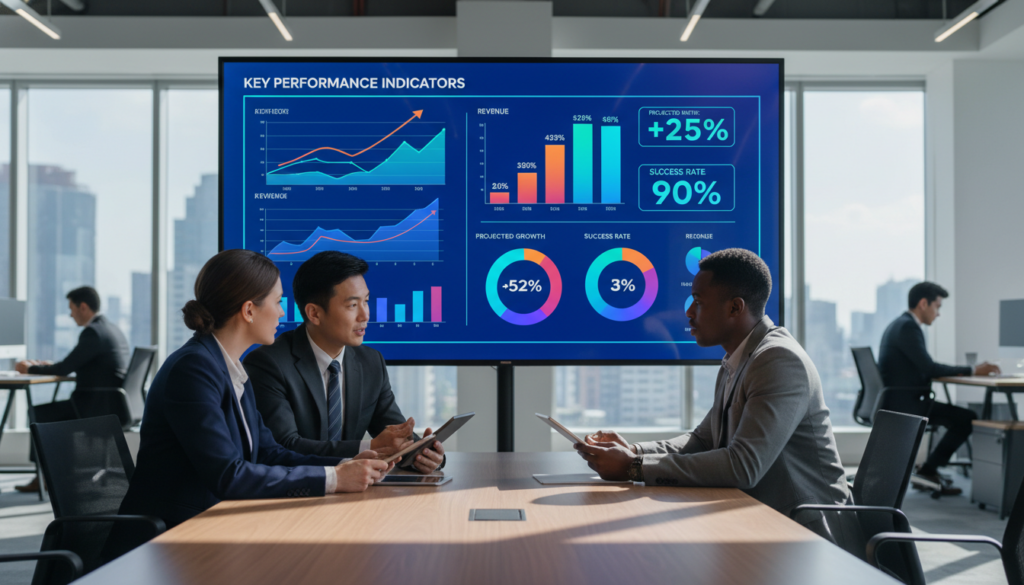
Did you know companies with a clear set of performance metrics are 67% more likely to hit their strategic targets? In today’s competitive landscape, simply having goals isn’t enough. You need a precise way to measure your progress toward them.
That precise tool is a Key Performance Indicator, or KPI. These are not just numbers on a dashboard. They are the vital signs of your organization’s health. We define them as quantifiable measures that track how effectively you are achieving key business objectives.
Mastering these indicators transforms how you operate. It shifts your team from working on assumptions to making decisions powered by real data. This data-driven approach directly impacts your bottom line and fuels sustainable growth.
Understanding and implementing the right metrics can seem complex. If you need expert insights to tailor this framework for your team, please WhatsApp us at +6910-3156508. We are here to provide clarity and guidance.
Key Takeaways
- KPIs are quantifiable measures that track progress toward critical strategic goals.
- Selecting the right metrics is essential for an accurate evaluation of organizational performance.
- Effective tracking enables leaders to make informed, data-driven decisions.
- Regular reviews ensure these indicators stay aligned with evolving business objectives.
- Mastery of this framework is a cornerstone of long-term, sustainable success.
- Expert guidance can streamline implementation and maximize the impact of your performance strategy.
Understanding Key Performance Indicators
Imagine steering a ship without a compass; that’s what running a business without clear performance indicators feels like. These quantifiable signals are your navigational tools. They evaluate the success of any organization, project, or process in reaching its defined goals.
Defining KPIs and Their Importance
Key performance indicators serve as vital health checks for your entire operation. They provide a realistic look at financial stability and potential risk factors. This clarity is essential for ensuring every team member moves in the same strategic direction.
By utilizing these tools, managers gain a clear view of successes and failures. This allows leaders to confidently do more of what works. The focus shifts from measuring mere activity to tracking the most critical drivers of real results.
History and Evolution of Performance Metrics
The journey of tracking performance is fascinating. It began with simple manual logs and spreadsheets. Today, sophisticated digital dashboards are used by modern global organizations.
These evolved kpis offer real-time insights that were once impossible. This evolution empowers faster, more informed decision-making at every level. The core mission remains: to focus effort on what truly matters for growth.
| Aspect | Traditional Method | Modern System |
|---|---|---|
| Data Collection | Manual logs & spreadsheets | Automated digital integration |
| Analysis Speed | Slow, periodic reviews | Real-time dashboard updates |
| Accessibility | Limited to few managers | Organization-wide visibility |
| Strategic Focus | Historical reporting | Predictive and actionable insights |
The Difference Between KPIs and Metrics
In the world of business measurement, not all numbers carry equal weight or strategic importance. It is vital to distinguish between general metrics and true key performance indicators. This clarity prevents data overload and focuses effort.
How KPIs Support Strategic Goals
Key performance indicators are the vital few metrics directly tied to your core strategic objectives. They are the targets that make the most impact on business outcomes. Everyday metrics measure activity, but these indicators measure progress toward your most important goals.
Everyday Metrics vs. Key Performance Indicators
All kpis use business metrics, but not all metrics qualify. For example, monthly website visits are a useful metric. However, the rate of targeted new customer acquisitions is a true KPI. It directly supports long-term growth goals.
Metrics provide the raw data points. Key performance indicators provide the essential context for driving meaningful change. We help you focus energy on the measures that truly move the needle for your organization.
kpi full form Explained
Behind the three letters of KPI lies a powerful concept that transforms how organizations measure success. This acronym stands for key performance indicator. It represents a specific, quantifiable measure used to track progress toward a critical business objective over a set period.
What Does KPI Stand For?
We define a key performance indicator as a vital tool for goal-setting and milestone monitoring. It moves beyond simple data collection to highlight areas needing improvement. This clarity turns abstract goals into tangible targets.
Understanding what a KPI is allows leaders to align daily team activities with the company’s broader vision. Each employee can see how their individual contribution drives collective success. This alignment is fundamental for building a cohesive and motivated workforce.
This foundational knowledge is the first step in creating a robust performance management system. It provides the framework needed to evaluate progress accurately. With this system, your organization can make informed decisions that propel sustainable growth.
Types of Key Performance Indicators in Business
Business success hinges on tracking the right signals, which fall into three primary categories: strategic, operational, and functional. Each category serves a distinct purpose and scope within your organization. We help you understand these different types to build a complete measurement framework.
Strategic, Operational, and Functional KPIs
Strategic indicators are monitored at the executive level. They measure the overall health and long-term direction of your entire company. Common examples include total company revenue, market share, and return on investment.
Operational KPIs focus on shorter timeframes and specific processes. They track the efficiency and performance of daily or monthly activities. This helps managers optimize workflows and resource allocation across different locations.
Functional types are department-specific. They track progress in areas like finance, sales, marketing, or human resources. These ensure each team’s efforts directly support the broader organizational goals.
Understanding these different types allows you to create a balanced system. It covers all aspects of your performance, from high-level vision to daily execution.
How KPIs Drive Business Success
The true power of performance measurement lies not in the data itself, but in its ability to synchronize an entire organization. These indicators create a shared definition of progress that promotes decisive action and builds accountability across all levels.
Aligning Team Objectives with KPIs
Without clear objectives and KPIs, a company cannot confidently gauge if it is moving toward its desired future. It operates on guesswork rather than evidence. We see this alignment as the cornerstone of sustained business growth.
By making goals visible and actionable, KPIs ensure every team member moves in the same strategic direction. This focus prevents energy from being wasted on unrelated or conflicting metrics. The entire workforce pulls together toward a common finish line.
Tracking progress through these indicators allows managers to pinpoint areas of strength and weakness. This insight is crucial for optimizing overall team performance and resource allocation. It turns management from a reactive task into a proactive strategy.
Ultimately, aligning team objectives with these metrics ensures everyone understands the organization’s definition of success. It transforms abstract company goals into personal, daily targets for every employee. This is how KPIs fundamentally drive business success.
Developing Effective KPIs for Your Organization
A strategic goal without a measurable indicator is merely a wish. Turning aspirations into achievements requires SMART design. Developing effective metrics is a deliberate process that aligns your entire team.
Writing SMART, Actionable KPIs
We teach you to craft KPIs that are Specific, Measurable, Attainable, Realistic, and Time-Bound. This framework ensures every target is clear and trackable from the start.
An actionable indicator moves beyond vague desires. It provides a concrete path for your team to follow and measure progress against.
Tying KPIs to Strategic Business Goals
Every effective KPI must connect directly to your core strategic goals. This direct link prevents wasted effort on irrelevant data and keeps focus sharp.
We provide a step-by-step process for your organization. It involves defining desired outcomes, identifying measurement units, and assigning clear ownership.
This approach builds a culture where performance is measured accurately. It guides future strategic decisions with confidence and clarity.
Best Practices for Implementing KPI Systems
Implementing a robust measurement framework requires more than just selecting numbers. It demands a strategy to prevent overwhelm and ensure your system drives real value.
A successful launch hinges on avoiding common traps that can derail your efforts. We focus on establishing clarity and sustainable habits from the start.
Avoiding KPI Overload and Data Pitfalls
The biggest risk is measuring too much. This overload scatters focus and buries critical signals in noise. We advise selecting only the most impactful indicators that directly reflect strategic priorities.
Building data literacy across your team is equally vital. Everyone must understand how to interpret and act on the information. This turns raw numbers into improved performance.
Your chosen kpis should evolve as your business and market change. Plan to review and iterate them regularly. This keeps your measurement system agile and relevant.
会选择 indicators that are resistant to manipulation. Good metrics encourage the right behaviors, not shortcut gaming. This integrity is foundational for trust in your data.
Regular system reviews ensure your kpis continue to drive the correct organizational actions. This ongoing refinement is key to long-term performance health.
| Common Pitfall | Best Practice | Impact |
|---|---|---|
| Measuring Everything | Focus on 5-7 critical kpis | Sharpens strategic focus and reduces noise |
| Static Metrics | Schedule quarterly reviews | Ensures indicators stay aligned with goals |
| Complex, Inaccessible Data | Promote organization-wide data literacy | Empowers informed decisions at all levels |
Measuring Customer Satisfaction and Employee Engagement
An organization’s vitality is often reflected not just in its balance sheets, but in the satisfaction of its customers and the engagement of its team. These qualitative aspects are powerful predictors of loyalty, innovation, and sustainable growth.
KPIs and Their Role in Customer Experience
We measure 客户满意度 directly through surveys like Net Promoter Score (NPS) and Customer Satisfaction (CSAT) scores. This feedback gauges sentiment about your product and reveals what draws buyers to your brand.
Tracking this satisfaction provides actionable insights. It helps you improve the overall customer experience and service delivery. These human-centric metrics complete your view of organizational health.
Using Employee Metrics to Enhance Performance
Employee engagement is equally critical. Regular surveys and turnover rates show if staff are motivated to stay and contribute. These metrics are essential for HR teams to foster a positive workplace culture.
Monitoring these indicators helps enhance team performance and retention. A motivated workforce directly boosts productivity and innovation. Integrating this data with financial metrics via a robust performance management software creates a balanced, accurate picture of your company’s true standing.
Tools and Techniques for Tracking KPIs
The bridge between raw data and decisive action is built with the right visualization and reporting tools. These systems transform complex numbers into clear, actionable insights for your team.
Dashboard Visualizations and Reporting Tools
We highlight the importance of using centralized dashboards. They visualize, review, and analyze all your key metrics in one place. This single source of truth is crucial for effective performance management.
Modern reporting tools provide faster data availability. This speed is a competitive necessity, especially in fast-moving sectors. Automated entry and approval functions in software also eliminate manual inefficiencies. They maintain strict consistency across all your reports.
| Feature | Traditional Reporting | Modern Dashboard Tools |
|---|---|---|
| Data Speed | Delayed, batch updates | Real-time streaming |
| Access & Visibility | Limited, static reports | Organization-wide, interactive views |
| Process Consistency | Manual, prone to error | Automated, standardized workflows |
Utilizing the right tools ensures your indicators are tracked accurately. Stakeholders gain real-time access to critical information, enabling proactive management. For a deeper dive into effective KPI tracking, explore dedicated resources.
We provide guidance on selecting the best business intelligence platforms. The right choice keeps your team making decisions that move your business forward effectively.
Critical Insights from Real-World KPI Examples
Real-world case studies offer invaluable lessons on how to translate theoretical performance frameworks into tangible business results. We analyze applications across sectors to show what works.
Finance, Sales, and Marketing Case Studies
Different departments rely on distinct indicators. Finance teams prioritize revenue and profit margin to gauge health.
销售 organizations focus on customer acquisition cost and pipeline value. Marketing teams measure campaign success through conversion rate and return on investment.
In manufacturing, a key example is Overall Equipment Effectiveness (OEE). It is calculated as availability x performance x quality. This metric directly tracks production progress.
We provide over 170 kpi examples and templates to help you track progress across all business functions.
Lessons Learned from KPI-Driven Organizations
Public sector organizations also use these tools effectively. Ontario, Canada, uses performance indicators for higher education.
They report on graduate satisfaction and employment rate. A study of Texas school districts used employee turnover as a performance indicator.
It revealed impacts on educational results. A crucial lesson is understanding indicator types.
Leading indicators predict future outcomes, while lagging indicators report on past achievements.
This distinction helps organizations choose the right metrics to drive their goals forward.
| Indicator Type | Primary Function | Common Example |
|---|---|---|
| Leading KPI | Predicts future performance and results | Sales pipeline value |
| Lagging KPI | Confirms past performance and outcomes | Quarterly profit margin |
| Operational KPI | Measures the efficiency of a process | Manufacturing OEE score |
By studying these examples, you can avoid common pitfalls. You can implement a system that truly aligns your team and drives your project and business forward.
结论
Organizational growth demands more than intuition—it requires a systematic approach to tracking what matters most. We have explored how mastering key performance indicators drives long-term business success across industries.
Setting clear goals and monitoring the right metrics keeps your company healthy and competitive. This framework turns abstract vision into measurable progress everyone can understand.
We encourage you to implement these strategies. Align your team’s daily efforts with broader strategic objectives. This creates powerful momentum toward your targets.
Remember, the most effective systems evolve. Regularly review and adapt your kpis to meet changing needs and new data insights.
Begin your journey toward better performance management today. Select the most impactful kpis that will help your business not just survive, but truly thrive.
FAQ
What does KPI stand for, and why is it so important?
KPI stands for Key Performance Indicator. These are the critical, quantifiable metrics an organization uses to gauge its progress toward its most vital strategic goals. They are important because they transform abstract ambitions into concrete data, allowing leaders to make informed decisions, align teams, and drive meaningful business success.
How is a KPI different from a regular business metric?
All KPIs are metrics, but not all metrics are KPIs. We see a regular metric as a simple data point, like daily website visits. A true KPI is directly tied to a core strategic objective, such as increasing qualified customer acquisition by 20%. It’s the difference between measuring activity and measuring progress toward a goal that impacts the organization’s health.
What are some common types of performance indicators used by companies?
Organizations typically use several categories. Strategic indicators track high-level goals like market share. Operational ones monitor internal efficiency, such as project completion time. Leading indicators predict future outcomes (e.g., sales pipeline value), while lagging indicators confirm past results, like quarterly revenue. Common examples across departments include customer satisfaction scores, profit margin, and employee engagement rates.
What is the biggest mistake to avoid when setting these indicators?
The most common pitfall is creating too many. This leads to KPI overload, where teams lose focus on what truly matters. We recommend starting with a handful of indicators that are directly linked to your strategic objectives. Each one should be SMART—Specific, Measurable, Achievable, Relevant, and Time-bound—to ensure it drives actionable insights and not just data collection.
Can you give a real-world example of a KPI driving success?
Absolutely. Consider a company like Amazon. A core indicator for their fulfillment centers is “order defect rate.” By relentlessly tracking and optimizing this single metric, they directly enhance customer satisfaction, reduce costs, and protect their brand reputation. This focus on a key performance indicator aligns thousands of employees toward a common goal of operational excellence.
How do we effectively track and report on our KPIs?
We advocate using dedicated dashboard and reporting tools, such as Google Data Studio, Tableau, or Microsoft Power BI. These platforms pull data from various sources to create visual, real-time dashboards. This makes complex data easily understandable at a glance, enabling faster decision-making and keeping everyone aligned on progress.