
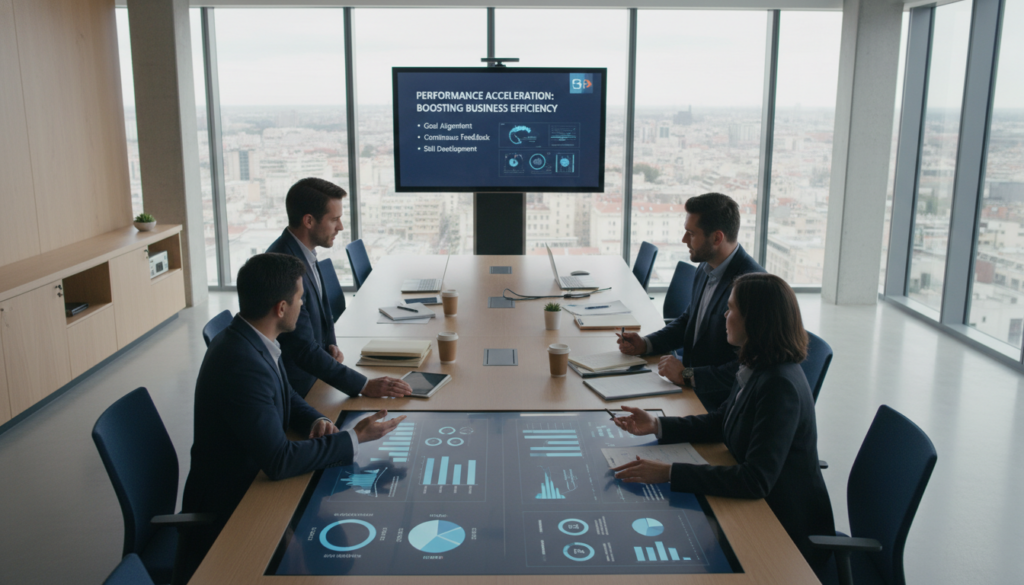
Could a single shift in how we set goals and give feedback change our whole culture? That question guides our work as we help Malaysian businesses adapt today.
We know the workplace has changed. A Deloitte study shows 70% of companies are rethinking their approach to performance management to meet modern employee expectations.
Our guide shows how a modern management system moves teams away from yearly review cycles toward ongoing, data-driven processes. By using tailored performance management software like sandmerit KPI system, managers can deliver timely feedback and clear goal setting.
This approach reduces admin work, boosts engagement, and supports career development. We will walk you through choosing systems that fit your objectives and training needs, so every employee understands their role and can grow.
Key Takeaways
- 70% of firms are rethinking performance management to match modern work.
- Clear goals and regular feedback improve engagement and outcomes.
- Real-time tracking with the right software reduces admin and aids growth.
- We recommend systems that support training, skills, and career paths.
- Adopting continuous processes builds a high-performance culture.
Understanding the Role of HR System Performance Management
A modern framework keeps goals visible and feedback active all year long.
We define the performance management process as an ongoing dialogue between managers and employees. This approach links daily tasks to organizational goals and strategic objectives. A Betterworks study found 21% of employees say their goals are set once a year and never reviewed. That highlights the need for change.
By establishing a digital framework, we enable consistent communication throughout year. Managers can give timely feedback and track development with clarity. Employees see how their goals map to the company’s mission, which boosts ownership and results.
How the frameworks compare
| Traditional Annual Reviews | Digital Continuous Framework | Business Outcomes |
|---|---|---|
| Goals set yearly; rarely updated | Goals visible; updated regularly | Higher engagement and clarity |
| Feedback is episodic | Feedback is timely and ongoing | Faster development and retention |
| Limited data for decisions | Real-time tracking and reports | Clearer links to organizational goals |
- We ensure managers and employees keep a steady dialogue.
- Effective systems give structure to progress tracking and feedback.
- Aligning individual goals with objectives drives team results.
Why Modern Organizations Prioritize Performance Tracking
Top organisations now use regular tracking to link employee actions with business results.
Research backs the shift. A Willis Tower Watson study found firms with a structured performance management system are 1.5x more likely to outperform competitors financially. The same study shows these firms are 1.25x more likely to boost employee productivity.
We believe those numbers matter for Malaysian businesses. Tracking helps managers and employees spot gaps early. It also makes feedback timely and useful.
Our approach focuses on clear goals, routine check-ins, and data that leaders trust. That creates higher engagement and better alignment to company objectives.
- Improved clarity for every employee about their role.
- Tools that let managers and teams have meaningful conversations.
- Consistent process to find and close skill gaps.
| Metric | Measured Benefit | Business Impact |
|---|---|---|
| Financial Outperformance | 1.5x likelihood | Stronger market position |
| Employee Productivity | 1.25x increase | Higher output per team |
| Engagement & Alignment | Clear goals and feedback | Better retention and growth |
Traditional Reviews Versus Contemporary Digital Solutions
Annual reviews often feel like a snapshot taken months after the story unfolded.
We contrast old-style performance reviews that hinge on one meeting with modern digital platforms that enable continual dialogue. Traditional performance appraisals suffer from recency bias and heavy paperwork. That leaves managers and employees scrambling to remember achievements and development needs.
The shift toward continuous feedback fixes that. Ongoing feedback ensures guidance is timely and aligned to changing goals. Our performance management software automates reminders, stores evidence of work, and makes check-ins fast and useful.
The Shift Toward Continuous Feedback
Frequent check-ins let managers correct course quickly. Employees get clearer direction and can track progress in real time. This reduces administrative load and makes reviews fairer.
| Traditional Reviews | Digital Solutions | Business Outcome |
|---|---|---|
| Once-a-year meeting | Frequent check-ins and notes | Better alignment to goals |
| Recency bias affects ratings | Real-time tracking of achievements | Fairer, evidence-based appraisals |
| Heavy admin for managers | Automated workflows and reminders | Time saved for coaching |
| Static goals | Dynamic goals and milestones | Faster employee development |
- We replace annual burden with an automated process that supports managers and employees.
- Our systems promote collaboration on goals and document results for objective reviews.
- Continuous feedback becomes a strategic advantage for agile Malaysian teams.
Core Features to Look for in Performance Management Software
Choosing the right tools determines whether goals become action or just good intentions.
Goal setting and alignment matter most. Look for software that maps individual goals to business objectives. This ensures every employee sees how their work contributes to team and company outcomes. Systems that support clear goal setting raise engagement and help managers track progress.
Real-time feedback mechanisms help teams course-correct fast. Tools with quick check-ins, comments, and peer recognition keep employees motivated. These features also reduce the burden of annual performance reviews and support continuous employee development.
Analytics and reporting give leaders actionable insight. Advanced dashboards reveal trends in productivity, skills gaps, and training needs. We note that organizations focused on people’s growth see roughly 30% higher revenue growth, making analytics a strategic asset.
- User-friendly management software increases adoption among managers and employees.
- Recognition and engagement features build a positive culture.
- Customizable review templates let teams adapt the process to their needs.
“Data-driven insights and easy feedback loops turn reviews into real development.”
Strategic Benefits for Your Workforce and Business
When teams know what matters most, their daily choices drive the company forward.
We deliver clear alignment between individual goals and broader objectives. This clarity helps managers and employees focus on work that moves the business. Regular feedback and short check-ins reduce ambiguity and boost engagement.
Consistent coaching speeds skill development. Employees grow where it counts, increasing productivity and lowering turnover. We help identify high-potential staff and prepare them for leadership roles.
Our tools let leaders track data in real time. That allows faster coaching, better resource allocation across teams, and more agile responses to market change.
“Transparent goals and timely feedback turn everyday tasks into lasting value.”
Key outcomes we see:
- Higher engagement and clearer career paths for employees.
- Faster skill development and improved productivity.
- Data-driven identification of future leaders.
| Benefit | What It Enables | Business Impact |
|---|---|---|
| Goal alignment | Daily work mapped to objectives | Stronger strategic focus across teams |
| Regular feedback | Timely coaching and course correction | Higher retention and faster development |
| Real-time data | Actionable insights for managers | Better resource allocation and agility |
For a deeper look at how these advantages translate into outcomes, see our review of the advantages of performance management.
Identifying the Right Tools for Your Team
Choosing the right tools starts with mapping how your teams actually work today.
We guide you through a practical audit of workflows, tech, and user needs. That helps us shortlist platforms that match daily routines and growth plans.
Assessing Scalability and Integration Needs
We check whether a candidate platform can scale as your headcount and goals grow. We also test how well it connects to payroll, rostering, and learning tools.
- Evaluate vendor support and training to speed adoption.
- Confirm APIs and single sign-on so your teams keep using familiar tools.
- Prioritise features employees need to track goals and receive timely feedback.
- Estimate total cost of ownership to ensure long-term value for the business.
Our aim is to select a performance management system that empowers managers and employees, reduces admin, and supports development across teams.
Stages of an Effective Performance Management Cycle
A repeatable cycle gives managers and employees a predictable path from goal setting to rewards.
Plan: We begin with collaborative goal setting. Managers and employees agree clear expectations and link each goal to organizational objectives.
Monitor: Regular check-ins keep work aligned throughout year. Ongoing feedback and open communication help teams spot issues quickly and adjust effort.
Develop: We use the data collected to identify skills gaps and training needs. Targeted coaching and short learning sprints support employee development and career growth.
Rate & Reward: Objective data from the cycle informs fair reviews, promotions, and bonuses. Integrating performance appraisals into the process makes decisions transparent and defensible.
“A clear cycle turns feedback into real development and aligns daily work with long-term goals.”
- Each stage supports continuous improvement and better communication.
- Our approach ensures managers and employees stay focused on outcomes.
- Use tools like performance management cycle guides and performance management software to automate evidence and reports.
Best Practices for Successful Implementation
Successful rollout begins with clear expectations and practical coaching for all leaders.
Training Managers for Success
We train managers to give constructive feedback and lead focused review conversations. Short workshops teach coaching skills, goal setting, and how to use performance management software.
We also run role-play sessions so managers practice real scenarios. This builds confidence and improves communication with employees.
Personalizing Employee Development
We personalise development by mapping career paths and setting SMART goals. Each employee gets a clear plan, with milestones they can track throughout year.
Personal plans increase engagement and make skill development measurable.
- Communicate the process to all teams and leaders.
- Use software to store goals, feedback, and evidence.
- Review progress quarterly and adjust training.
“Only 16% of employers adapted their management process for remote and hybrid work.” — Willis Tower Watson
| Best Practice | Action | Expected Benefit |
|---|---|---|
| Manager training | Workshops, role-play, coaching guides | Better feedback and clearer expectations |
| Personal learning plans | SMART goals, milestones, mentoring | Higher engagement and career growth |
| Clear communication | Launch briefs, FAQ, regular updates | Smoother adoption across teams |
| Regular evaluation | Quarterly reviews and metrics | Process improvements aligned to business objectives |
Overcoming Common Adoption Challenges
Change succeeds when we design a staged plan that balances speed with clarity.
We tackle low engagement by choosing user-friendly performance management systems that both managers and employees want to use. Intuitive interfaces cut the learning curve and help teams adopt the new process quickly.
Privacy worries can slow adoption. We build trust by being transparent about how data is collected and used. Clear rules and easy-to-find policies reassure staff and protect morale.
Phased rollouts avoid overload. Small pilots let us refine training and fix issues before wider launch. This staged approach keeps employees informed and reduces resistance.
Scalability matters. Our management software grows with your business, supporting small teams and large enterprises alike. Ongoing support and timely troubleshooting keep the solution effective over time.
“Successful adoption is a journey—we help build a culture where tracking goals and giving feedback become part of daily work.”
- Proactive communication keeps engagement high.
- Targeted training builds skills and confidence.
- Regular feedback loops ensure the process delivers measurable business value.
WhatsApp Us to Learn More About sandmerit Performance Management System
Ready to see how sandmerit can simplify goal tracking and boost team outcomes?
Contact us on WhatsApp at +60193156508 for a fast, friendly conversation about how our tools fit Malaysian workplaces.
We invite you to WhatsApp us at +60193156508 to learn more about how the sandmerit performance management system can transform your organisation’s day-to-day work.
- Get a personalised demo that shows how the system maps goals to outcomes.
- Receive immediate answers about our performance management software and key features.
- Discuss integration with your existing software and ensure smooth adoption.
- We help choose the right management software to drive engagement and measurable results.
Reach out today and our experts will guide you through next steps and timelines. We believe sandmerit is the practical solution Malaysia teams need to move toward a more data-driven, coaching-led approach.
“Reach out to us at +60193156508 to start your journey toward clearer goals and faster development.”
结论
A clear, ongoing review culture turns goals into measurable results for every team.
We have shown how a modern performance management approach drives business growth and continuous employee development.
By choosing the right sandmerit software, we empower employees to reach career goals through clear goal setting and regular feedback.
Consistent feedback and simple goal processes build lasting engagement. Prioritising training and ongoing support ensures these efforts deliver measurable results.
Start small, train well, and scale thoughtfully. Focus on tools and coaching that match your needs and you will build an agile, resilient organisation that thrives in Malaysia’s competitive market.
FAQ
What is the purpose of a digital framework for tracking employee outcomes?
We use a digital framework to align individual goals with organizational objectives, streamline ongoing feedback, and centralize reviews and development plans. This helps teams stay focused on measurable outcomes, improves communication between managers and employees, and supports data-driven decisions through reporting and analytics.
How do we align individual goals with our company strategy?
We translate company objectives into clear, measurable goals for teams and employees. We recommend cascading goals from leadership to teams, using goal-setting tools that allow progress tracking and visibility. Regular check-ins ensure goals remain relevant and tied to business priorities.
Why are organizations moving from annual appraisals to continuous feedback?
Continuous feedback keeps expectations current, boosts engagement, and accelerates skill development. It reduces surprises at review time and lets managers correct course quickly. This approach increases productivity and helps retain talent through timely recognition and coaching.
What core features should we prioritize in performance management software?
We prioritize goal-setting and alignment, real-time feedback channels, and robust analytics and reporting. Integration with existing tools, user-friendly interfaces, and development planning are also critical to adoption and long-term value.
How does real-time feedback improve employee engagement?
Real-time feedback creates a culture of recognition and continuous learning. Employees receive timely guidance that improves daily performance, while managers can identify development needs early. This transparency increases motivation and clarifies expectations.
What analytics should we look for to measure workforce outcomes?
We recommend tracking goal completion rates, skill development progress, engagement indicators, and performance trends over time. Dashboards that segment data by team, role, and objectives make it easier to spot gaps and guide training investments.
How do we assess scalability and integration needs when choosing tools?
We evaluate current headcount, growth projections, existing HR and collaboration platforms, and data security requirements. Scalable solutions should integrate via APIs with payroll, learning, and communication tools to avoid duplicative work and support seamless workflows.
What are the stages of an effective performance cycle?
We follow a cycle of goal setting, ongoing check-ins, mid-cycle calibration, development activities, and formal reviews. Each stage includes clear expectations, documented feedback, and action plans to support continuous improvement.
How do we train managers to use new review processes effectively?
We provide role-based training focused on coaching skills, giving constructive feedback, and using analytics to guide conversations. Short workshops, job aids, and ongoing support help managers adopt new tools and lead meaningful development discussions.
How can we personalize development for individual employees?
We tailor development plans based on skills gaps, career goals, and performance data. Offering modular learning paths, mentorship, and stretch assignments helps employees grow in ways that align with both personal aspirations and business needs.
What common adoption challenges should we prepare for?
We plan for resistance to change, lack of manager buy-in, and data quality issues. Clear communication, pilot programs, executive sponsorship, and measuring early wins help overcome these obstacles and build momentum.
How does digitizing reviews impact productivity?
Digitizing reduces administrative burden, shortens feedback cycles, and provides visibility into priorities. This lets teams spend more time on strategic work and development, improving overall productivity and goal attainment.
Can performance tools support career progression?
Yes. We map competencies and achievements to career paths, track development milestones, and surface internal opportunities. This transparency helps employees see clear steps for advancement and supports retention strategies.
How do we ensure data privacy and compliance with these tools?
We choose vendors that follow industry-standard security protocols, provide role-based access, and offer clear data governance. Regular audits, consent-based data use, and compliance with applicable laws protect employee information.
What outcomes should we expect after implementing a modern solution?
We expect improved goal alignment, faster development cycles, higher engagement scores, and better retention. Over time, the organization gains clearer insights into workforce capabilities and can allocate training and resources more effectively.