
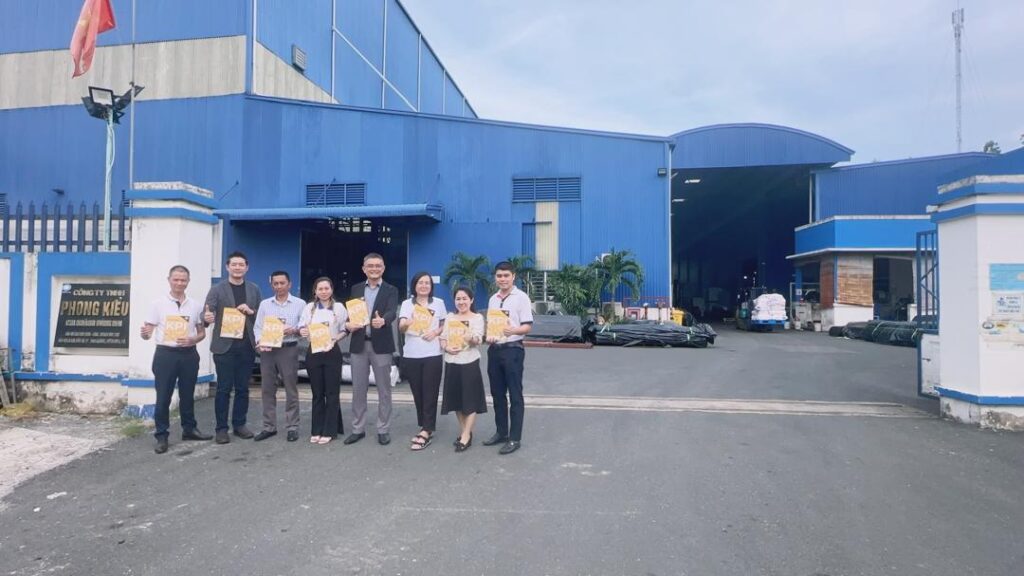
For Công Ty TNHH Phong Kiều, a manufacturing company in Vietnam, the KPI system became something far more important — a way to turn strategy into daily execution on the factory floor.
Phong Kiều has more than 15 years of experience in industrial packaging and woven products, serving both local and international clients. While the company had strong technical capabilities, rapid growth exposed a familiar challenge faced by many manufacturers: execution was no longer keeping pace with ambition.
As order volume increased, management struggled with limited real-time visibility into production performance. Strategic goals were clearly defined at the leadership level, but they did not consistently translate into actionable priorities for supervisors and frontline teams. At the same time, operational costs rose and output fluctuated, making performance management increasingly complex.
The leadership team recognised that the problem was not manpower or effort — it was structure. Decisions were being made based on experience and assumptions rather than data. Without a unified KPI system, departments were working hard but not always in the same direction.
In 2024, Công Ty TNHH Phong Kiều partnered with sandmerit to implement a company-wide KPI system designed to align production performance with business strategy.
The engagement began by clarifying strategic priorities at the executive level. Instead of tracking too many indicators, the KPI system focused on what truly mattered to growth: production output, on-time delivery, quality consistency, manpower efficiency, and overtime impact. These priorities were then translated into departmental KPIs across Production, Planning, Quality Control, and Maintenance.
Supervisors received KPI coaching to help them understand not only what to track, but how to manage using KPI data. This was a critical shift. KPIs were no longer just numbers reported upward — they became tools for daily decision-making on the shop floor.
The sandmerit KPI software system was implemented to support this discipline. Live dashboards connected output, rejection rates, delivery timeliness, and overtime costs into a single performance view. Managers could see issues as they happened, rather than weeks later through reports.
Regular KPI review sessions ensured that data led to action. Variances were discussed, root causes identified, and corrective actions agreed upon. Over time, this built a culture where performance conversations became objective, structured, and solution-focused.
Within 12 months, the impact of the KPI system was clear.
Production output increased by 50%, driven by better manpower planning and faster response to bottlenecks. Supervisors no longer relied on intuition alone — they managed using facts.
Sales grew by 20% as improved output stability and on-time delivery allowed the company to scale volume and win additional export orders. Operational confidence translated directly into commercial growth.
Accountability improved at every level. Team leaders clearly understood their KPIs, daily targets, and performance gaps. Bonus tracking became transparent and data-driven, reducing uncertainty and strengthening trust between management and employees.
According to the company’s leadership, the KPI system changed how decisions were made. Instead of guessing, the team measured performance weekly and adjusted quickly. Visibility improved, ownership increased, and execution became more consistent.
A video testimonial from the Phong Kiều team further demonstrates how the KPI system transformed their operations, leadership visibility, and performance culture. Management shares how KPI clarity empowered supervisors and replaced assumptions with data-driven actions.
Watch the full video testimonial here:
https://youtu.be/PLaWuDmGzkk
The success of this transformation highlights an important lesson for manufacturers. KPI systems do not need to be complex to be effective. When KPIs are strategically aligned, clearly understood, and consistently reviewed, they become a powerful management framework rather than an administrative burden.
The Phong Kiều case shows that even traditional manufacturing companies can achieve rapid performance improvement when strategy, people, and execution are aligned through the right KPI system.
#KPISystem #KPI #PerformanceManagement #KPIimplementation #ManufacturingKPI #VietnamManufacturing #ProductionEfficiency #OperationalExcellence #BusinessStrategy #FactoryManagement #DataDrivenManagement #EmployeeAccountability #FairRewardSystem #sandmerit #wilsonten