
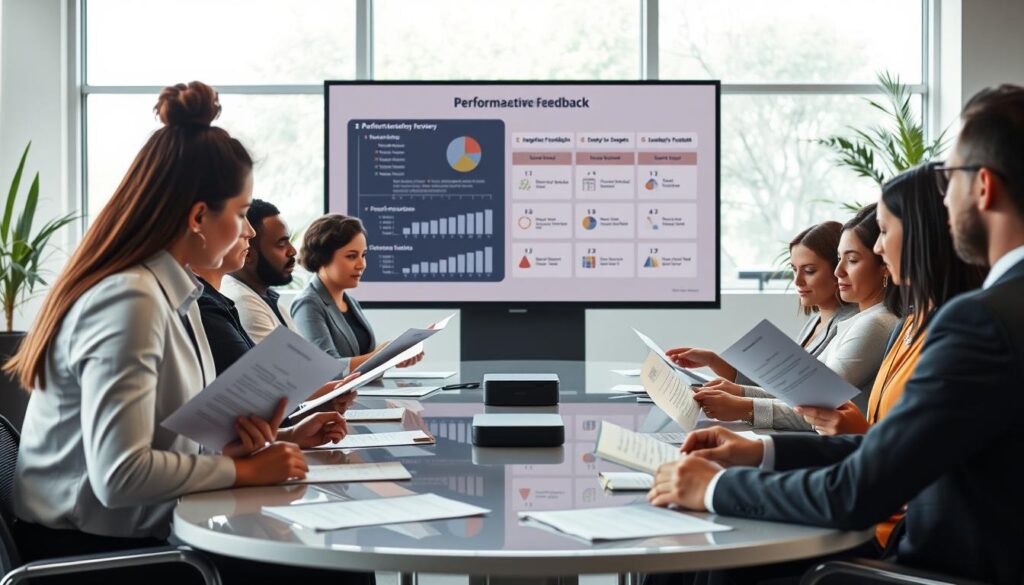
Can the words we choose in a review change a person’s career path?
We introduce what modern performance reviews mean for Malaysian teams and why clear feedback matters now. Reviews that balance candor with encouragement help staff feel valued and stay engaged.
Our list compiles practical phrases and short examples managers can adapt to roles, KPIs, and culture. We focus on specific, goal-aligned feedback that turns observations into development and measurable improvement.
We preview categories like communication, teamwork, results, innovation, and coachability to guide skills-based conversations. We also stress documenting real examples linked to goals so progress is easier to track.
For tailored help building a review library or frameworks that fit Malaysian norms, WhatsApp us at +6019-3156508.
Key Takeaways
- Use clear, job-relevant phrases tied to goals.
- Balance honest feedback with encouragement.
- Document examples to track development over time.
- Adapt wording to team culture in Malaysia.
- Make reviews part of ongoing coaching, not one-off events.
- Contact us via WhatsApp for tailored guidance.
Why Performance Reviews Matter Today in Malaysia
Reviews are more than ratings; they align daily work with strategic goals.
When managers give timely, specific feedback, staff see how their work shapes bigger goals. This clarity boosts employee engagement and encourages steady professional growth across roles in Malaysia.
We link feedback to team objectives so members understand how projects affect company results. HR and leaders then use documented outcomes for evidence-based talent decisions such as promotions and targeted development.
How reviews drive engagement and growth
Timely, actionable feedback clarifies expectations and fuels skills development. Regular check-ins outside annual cycles keep momentum and trust, reducing drift between priorities and daily tasks.
Connecting feedback to team and organisational goals
We recommend a simple template that captures achievements, blockers, and ideas for the next cycle. Link development goals to stretch assignments, cross-functional work, or learning pathways to turn feedback into real opportunities.
- Improve alignment: feedback shows how tasks map to business goals.
- Support decisions: reviews provide HR with talent signals for promotions and opportunities.
- Sustain progress: frequent check-ins maintain focus and build capability.
| Focus | What it achieves | Action |
|---|---|---|
| Timely feedback | Higher engagement | Monthly one-on-ones |
| Goal linkage | Clear contribution | Map projects to KPIs |
| Structured templates | Consistent development | Prepare achievements and blockers |
For help mapping feedback to strategic goals and building an engagement-focused review process, WhatsApp us at +6019-3156508 or explore our tools at performance management software.
Best Practices for Writing Performance Review Comments
Clear, actionable feedback turns routine appraisals into growth conversations that matter for teams in Malaysia.
We focus on specific behaviour, balance, and clear next steps so the review becomes a development tool rather than a checklist.
Be specific, balanced, and aligned to goals and values
Point to concrete examples and link them to team goals. Say what happened, the outcome, and why it mattered.
Balance praise with areas for improvement so motivation stays high while standards remain clear.
Turn constructive feedback into clear next steps
Use a simple formula: observation, impact, and agreed actions with timelines. This makes development measurable.
Keep reviews two-way with active listening
Summarize what we heard, invite questions, and confirm understanding. Regular check-ins build trust and reduce recency bias.
- Write review phrases that cite behaviour linked to goals so the employee knows what to continue or change.
- Set measurable goals, note needed coaching or resources, and schedule follow-ups to track improvement.
- Avoid vague praise or personality judgments; focus on outcomes and skills that lead to growth opportunities.
Need templates or coaching? WhatsApp us to learn more at +6019-3156508.
Pitfalls to Avoid in Performance Reviews
Avoiding common appraisal traps keeps development momentum and trust intact within teams.
Vagueness leaves people unsure what to change. Anchor each review with a specific example of behaviour, the outcome, and the linked goals. This clarity helps staff focus improvements quickly.
Negative bias skews perception and kills motivation. We balance corrective feedback with recognition of what went well. That keeps conversations constructive and fair.
Unclear expectations cause repeated mistakes. Set measurable targets early and confirm shared understanding of timelines and success metrics.
The follow-up fumble: turning insights into action
Without follow-up, good feedback fades. We recommend a simple plan:
- Schedule short check-ins at agreed intervals.
- Document actions, owners, and deadlines.
- Track progress against goals and adjust support.
Also, avoid comparing one employee to another. Use consistent review phrases tailored to role and responsibilities, align feedback to company values and key metrics, and keep notes over time to reduce recency bias. This turns insight into real, measurable improvement.
How to Use Our sample employee comments on performance review examples
Clear, contextual feedback helps teams link daily tasks to measurable goals and career progress.
Tailor phrases to roles, KPIs, and company culture
We treat the provided review phrases as inspiration, not scripts. Personalize wording to the role, local norms, and the KPIs that matter in Malaysia.
Map each phrase to evidence. Use client scores, delivery dates, or quality metrics so feedback stays objective and actionable.
Mix positive reinforcement with targeted improvement
Balance praise with a clear next step. Frame each comment with: behaviour, impact on work or team, and agreed action tied to goals.
Keep a running log of recent examples so comments reflect current contribution and support ongoing development.
| Focus area | KPI to cite | Sample action |
|---|---|---|
| Client handling | CSAT score | Assign training and shadowing |
| Project delivery | On-time % | Adjust planning and checkpoints |
| Quality | Defect rate | Pair reviews and coaching |
- Involve employees in setting goals so they own the improvement plan.
- Choose phrases that match ability and growth stage, not one-size-fits-all wording.
- Link feedback to development paths, training, or stretch assignments to accelerate progress.
Communication Skills: Review Phrases and Self-Comments
Good communication turns complex plans into practical next steps for project teams.
Positive review phrases recognise clear presentations, concise reports, and timely updates that keep the team aligned.
Use praise such as: “Explains complex ideas simply,” “Keeps stakeholders updated,” and “Negotiates effectively with clients.” Cite a meeting, report, or client presentation to ground each phrase.
Constructive feedback addresses behaviours we can change. Suggest pausing for questions, tailoring messages to the audience, proofreading for clarity, and summarizing key points to confirm understanding.
Self-review examples help employees reflect and set goals. Useful lines include: “I will encourage interactive discussion in meetings,” “I aim to be briefer in written updates,” and “I will practice active listening and paraphrase to confirm understanding.”
- Reinforce listening skills by asking clarifying questions.
- Align communication goals to role and project complexity.
- Follow up in 4–6 weeks to track improvement and next steps.
For more phrasing ideas, see our curated performance review phrases to adapt for Malaysian teams.
Teamwork and Collaboration: Comments for Team Members
Strong collaboration makes complex projects run smoother across departments.
We praise team behaviours that unite colleagues, credit others, and share knowledge across functions. Note specific moments where a team member stepped in, coordinated handoffs, or kept stakeholders informed. These examples link daily work to better outcomes and higher overall performance.
Positive phrases that highlight collaboration
- “Unifying presence in meetings; helps others stay focused.”
- “Willingness to help across departments improved delivery times.”
- “Acknowledges contributions and credits colleagues publicly.”
Constructive phrases to improve cooperation
- “Seek input from quieter members and rotate facilitation to engage others.”
- “Find compromises when priorities conflict and balance workload fairly.”
- “Incorporate feedback from peers to speed handoffs and reduce bottlenecks.”
We recommend citing joint projects where coordination sped delivery, documenting knowledge sharing, and using retrospectives to surface improvements. These steps create clearer roles, fairer task distribution, and stronger morale—key signals that a team is improving its performance and creating growth opportunities.
Results Orientation and High-Quality Work
We focus on results that keep projects on schedule while protecting quality.
Positive phrases should recognise consistent delivery against deadlines and the ability to break complex goals into clear tasks. Praise persistence that solved blockers and kept projects moving. Cite a project, the outcome, and the measurable impact.
Positive review phrases highlighting timely, high-quality work
- “Consistently met deadlines while maintaining strong quality standards; reduced rework by tracking milestones.”
- “Translates complex goals into clear tasks and keeps progress visible to stakeholders.”
- “Shows persistence in resolving blockers to protect high-quality work during peak periods.”
Constructive comments that balance speed and thoroughness
Coach on prioritising by impact and sequencing tasks to protect quality under pressure. Recommend regular progress checks to keep momentum and spot defects early. Use measurable targets such as on-time delivery rates and defect counts to guide improvement.
| Focus | Metric | Action |
|---|---|---|
| On-time delivery | On-time % | Set milestone dates and weekly checkpoints |
| Quality control | Defect rate | Introduce pair reviews and acceptance tests |
| Prioritisation | Impact score | Rank tasks by stakeholder value |
We recommend follow-up checkpoints to confirm that process changes sustain both speed and quality. Recognise problem-solving that kept high-quality work intact and set clear, measurable goals for continued improvement.
Innovation and New Ideas: Encouraging Innovative Solutions
We encourage teams to treat curiosity as a measurable habit that fuels useful new ideas.
We praise creativity that proposes new processes, experiments with innovative solutions, and draws on industry trends to keep work relevant. Positive phrases should call out cross-functional collaboration, quick prototypes, and curiosity that leads to practical gains.
Positive phrases that celebrate creativity and industry trends
- “Suggests new processes that reduced handoffs and improved cycle time.”
- “Experiments with innovative solutions and shares learnings across the team.”
- “Stays current with industry trends and applies insights to our work.”
Constructive comments to balance novelty with feasibility
Encourage calculated experiments and early feasibility checks. Coach on researching options before seeking buy-in and on reducing fear of failure by running small pilots.
- Dedicate time for ideation and lightweight prototypes to test ideas quickly.
- Acknowledge micro-innovations that streamline tasks, not just big breakthroughs.
- Document hypotheses, results, and next steps to build a repeatable practice.
We recommend aligning solutions with strategic goals and engaging stakeholders early to boost adoption. Track indicators like idea submissions and shorter pilot cycles to measure improvement and development opportunities.
Leadership and Influence for Managers and Aspiring Leaders
Effective leaders blend vision with practical steps that help teams deliver.
We highlight behaviours that empower others, influence stakeholders with data, and create clear paths for growth. Praise the ability to set a high-level direction while delegating work and celebrating team wins.
Positive notes to include
- “Provides a clear vision and empowers team members to lead initiatives aligned to goals.”
- “Builds stakeholder support using data and user impact to speed decisions.”
- “Mentors peers with structured coaching that creates tangible development opportunities.”
Constructive phrases to guide growth
- “Increase feedback cadence with brief, regular check-ins to boost ownership.”
- “Recognize team efforts publicly and delegate measurable responsibilities more often.”
- “Balance assertiveness with empathy to strengthen trust and engagement.”
Self-review prompts for aspiring leaders
We suggest noting plans to create leadership opportunities for others, improve constructive feedback delivery, and set mentoring goals with checkpoints.
“Use 360-degree feedback to uncover blind spots and align leadership development with succession planning.”
For more phrasing ideas, see our guide to leadership performance review phrases.
Customer Focus: Review Phrases that Elevate Satisfaction
Prioritising customer needs turns routine service into repeat business and stronger trust.
We highlight phrases that recognise deep customer understanding, timely follow-through, and trust-building. Praise examples include acknowledging compliments, upselling via needs analysis, and proposing ideas that raised satisfaction scores. These notes make clear what to continue and why it mattered to the team.
Constructive feedback targets responsiveness, expectation-setting, and proactive updates during issues. Suggest reducing response time, prompting quick acknowledgments, and asking for direct customer feedback after key interactions. Role-playing difficult conversations helps build consistent skills across the team.
Positive comments that show follow-through and trust
- Understands customer needs: actively probes and tailors solutions that led to repeat orders.
- Reliable follow-through: closes the loop with customers and documents outcomes in case notes.
- Builds trust: receives direct compliments and converts insight into new opportunities.
Constructive feedback on responsiveness and expectation-setting
- Shorten initial reply time and acknowledge receipt within agreed timeframes.
- Set clear timelines and update customers proactively when issues arise.
- Capture customer feedback and align goals with CSAT or retention metrics for measurable improvement.
| Focus | Metric | Suggested action |
|---|---|---|
| Follow-through | CSAT | Document case notes and confirm resolution with customer |
| Response time | First response time (hrs) | Set SLA targets and track weekly |
| Solution quality | Retention rate | Expand product knowledge and share best practices |
We recommend coordinating with internal teams to resolve issues faster and outlining follow-up plans with ownership and timelines. This keeps service consistent, reduces repeat problems, and creates clear development opportunities for the team.
Adaptability and Flexibility Under Changing Priorities
Change is constant; how a team adapts decides whether projects stay on course.
We praise calm responses, rapid learning, and steady support that stabilise the group during shifts.
Positive notes highlight quick uptake of new tools, effective re-planning, and a constructive attitude that keeps work moving. These phrases recognise resilience and the ability to prioritise under pressure.
Constructive phrases for shifting priorities
- Encourage experimentation with timeboxing and visual boards to clarify tasks and trade-offs.
- Ask for flexibility in schedules during peaks and better communication of trade-offs to stakeholders.
- Recommend cross-training and contingency plans to boost team resilience and capacity.
Self-reflection prompts
We suggest noting stress-management steps, rapid skill gains, and when to delegate to protect focus.
“After each change, run a short retro to capture lessons and speed future improvement.”
Time Management, Planning, and Meeting Deadlines
Consistent estimation and smart sequencing make complex projects manageable.
We praise accurate planning that keeps tasks on track and teams aligned with goals. Good time estimates, proactive buffers, and respect for others’ schedules raise overall work quality. This helps teams meet deadlines reliably and reduces last‑minute pressure.
Positive phrases for prioritization and strategic planning
Use clear phrases that note accurate estimating, strong planning, and deadline adherence.
- “Consistently estimates time well and meets agreed deadlines.”
- “Prioritises tasks by impact and reduces risk to projects.”
- “Creates simple processes that save others’ time and speed delivery.”
Constructive feedback on estimation and task breakdown
When estimates miss reality, focus on skills that improve future forecasts.
- “Break tasks into smaller steps and add buffer for unknowns.”
- “Align effort estimates with complexity and use past data to adjust plans.”
- “Protect focus time, reduce context switching, and give concise status updates to respect others’ time.”
| Area | Metric | Recommended action |
|---|---|---|
| On‑time delivery | On‑time rate (%) | Weekly checkpoints and milestone dates |
| Estimate accuracy | Schedule variance | Use historical data and post‑mortems |
| Task flow | Cycle time | Visualise dependencies and limit work in progress |
We also recommend daily and weekly planning routines, building contingency for high‑risk work, and periodic workload reviews to keep commitments realistic. These small steps improve skills, boost output, and help teams meet deadlines with less stress.
Coachability, Professional Growth, and Competency Development
A growth mindset shows in small habits: asking for input, trying new methods, and tracking outcomes.
We value openness to coaching and visible skill gains. When team members apply guidance, work improves and processes become smoother. Documenting changes since the last cycle makes progress clear and fair.
Positive phrases that recognise progress
- “Demonstrates clear improvement after coaching by applying new techniques to daily work.”
- “Seeks diverse feedback and shows measurable skill growth across projects.”
- “Volunteers for cross‑functional tasks to build ability and broaden development opportunities.”
Constructive phrases to encourage continuous improvement
- “Act on feedback within agreed timeframes and document results to show tangible improvement.”
- “Pair learning goals with on‑the‑job practice and short courses to cement new skills.”
- “Engage a mentor or buddy and use periodic assessments to track progress toward goals.”
We recommend a simple follow‑up cadence: set goals, add learning resources, check progress monthly, and celebrate milestones to keep momentum.
“Frame feedback as opportunity; small experiments and tracked outcomes reduce defensiveness and speed growth.”
Integrity, Accountability, and Ethical Decision-Making
Trust is built through honest actions, timely follow-through, and owning outcomes.
Trust grows when people own outcomes and admit mistakes quickly so teams can learn and move forward.
Positive comments that reinforce trust and ownership
- “Consistently acts with integrity, honours commitments, and credits others for success.”
- “Demonstrates transparency in decisions and communicates impacts to the team clearly.”
- “Takes ownership of results and uses setbacks as learning opportunities for improvement.”
Constructive phrases for strengthening accountability
- “Clarify deadlines and owners to reduce ambiguity and ensure follow-through.”
- “Avoid deflecting blame; propose corrective steps and update stakeholders proactively.”
- “Use simple checklists and post-mortems to prevent repeat issues and raise quality.”
We recommend documenting agreements with owners and dates so accountability is visible. For how we build structured feedback and practical templates, see 策略方法.
“Model ethical decisions, acknowledge mistakes, and focus on solutions to strengthen team trust.”
Making Reviews Actionable: Goals, Follow-Through, and Performance Management
Turning review insights into clear, time-bound goals makes feedback useful beyond the meeting.
We set clear goals that link day-to-day work to team and company outcomes. Each goal carries success criteria, a timeline, and the support needed to succeed. This approach helps managers turn a single conversation into ongoing improvement.
Setting measurable goals aligned to team and company objectives
We translate feedback into measurable goals with defined criteria. Aligning individual goals to team and company objectives ensures efforts compound into visible results.
Ongoing check-ins to sustain momentum post-review
Regular check-ins—monthly or quarterly—keep work on track and surface blockers early. Use simple dashboards to track actions, outcomes, and learning over time.
- Define resources, training, or coaching needed to remove obstacles.
- Tie goals to development and career paths so wins build long‑term progress.
- Celebrate small improvements to sustain motivation and find new opportunities.
“Consistent follow-up turns feedback into action and makes performance management meaningful.”
We keep the conversation two-way, adjust targets when needed, and connect goals to projects and stakeholder expectations. This makes reviews a tool for measurable improvement and real growth.
Need Help Crafting Effective Performance Reviews? WhatsApp us to learn more at +6019-3156508
Many Malaysian teams tell us they lack clear, usable templates that make feedback fast and fair.
We help organisations build role-specific phrases and templates that save time and raise clarity. Regular, constructive communication makes teams welcome input and turn feedback into measurable development.
Only a small share of HR leaders say their systems work well. Simple, structured examples help new and seasoned managers give balanced notes and set clear goals.
Contact us on WhatsApp at +6019-3156508 for tailored guidance. We offer pilot programs, phrase libraries, and manager training that improve consistency and reduce bias.
- Design role-aligned templates and phrases tied to clear goals.
- Train managers in active listening, concise feedback, and time-efficient prep.
- Set a lightweight rhythm: scheduled check-ins and simple progress tracking.
- Enable HR with tools to standardise frameworks and measure improvement.
“Quick, consistent wins build trust and make the next review cycle easier.”
结论
Conversations that tie actions to outcomes build trust and speed growth.
We recap that clear, balanced language and measurable goals turn feedback into development and real improvement. Use adapted phrases that match role, culture, and team goals so guidance is practical and fair.
Focus discussions on communication, collaboration, results and quality, innovation, leadership, customer focus, adaptability, time management, coachability, and integrity. Avoid vague phrases, bias, and missed follow-up by setting timelines and checking progress.
Document examples across the year to reduce recency bias and keep reviews two‑way. Prioritise clarity, respect, and consistency to make every conversation count in Malaysian teams and beyond.
FAQ
What is the purpose of Sample Employee Comments on Performance Reviews?
We provide practical phrasing and guidance to help managers and staff deliver clear, balanced feedback that supports professional growth, aligns with goals, and improves team performance.
Why do performance reviews matter today in Malaysia?
We see reviews as a tool to boost engagement, reinforce organizational values, and drive measurable development. Thoughtful feedback links individual work to team and company objectives and supports retention.
How do reviews drive employee engagement and professional growth?
We use reviews to recognize achievements, identify skill gaps, and set actionable development plans. Regular feedback encourages learning, increases motivation, and helps employees map career paths.
How can feedback be connected to team and organizational goals?
We recommend tying comments to specific KPIs, project outcomes, and company priorities. This clarifies expectations and shows how individual contributions move the organization forward.
What are best practices for writing performance review comments?
We suggest being specific, balanced, and aligned to goals. Use clear examples, highlight impact, and offer next steps that are measurable and time-bound.
How do we turn constructive feedback into clear next steps?
We convert concerns into concrete actions: define the desired behavior, set milestones, assign resources or training, and schedule follow-up check-ins to measure progress.
How can reviews be kept two-way with active listening?
We promote open dialogue: ask for the individual’s perspective, explore root causes, and mutually agree on development plans. This builds trust and ownership of outcomes.
What common pitfalls should we avoid in performance reviews?
We avoid vague language, negative bias, and unclear expectations. Reviews must be evidence-based, timely, and focused on future improvement rather than only past mistakes.
How do we prevent the follow-up fumble and turn insights into action?
We schedule measurable goals, assign accountability, and use regular check-ins. Documenting actions and progress ensures feedback leads to real change.
How should we tailor phrases to different roles and company culture?
We adapt language to job level, function, and cultural norms. Align phrases to specific KPIs, competencies, and the tone your organization uses for recognition and development.
How do we mix positive reinforcement with targeted improvement?
We balance praise for strengths with one or two focused development areas. Offer practical resources and set clear expectations to support improvement without undermining morale.
What are effective review phrases for communication skills?
We recommend highlighting clarity, conciseness, and active listening. Note examples where communication saved time or prevented errors, and suggest specific steps to improve presentation or written updates.
How should we give constructive feedback to improve clarity and listening?
We provide actionable tips: request summaries in meetings, use structured updates, and practice reflective listening. Offer coaching or communication workshops when needed.
How can self-review examples encourage reflection?
We craft prompts that ask employees to detail accomplishments, lessons learned, and areas for growth. Self-assessment fosters ownership and prepares meaningful development conversations.
How do we praise collaborative behaviors within the team?
We call out specific instances of cross-functional support, knowledge sharing, and conflict resolution. Tie the praise to project outcomes to show the value of teamwork.
What constructive phrases help resolve conflicts and share workload?
We suggest focusing on behaviors: encourage clear role agreements, proactive communication, and structured handoffs. Recommend mediation or workload redistribution when patterns persist.
What positive phrases highlight quality work and meeting deadlines?
We emphasize attention to detail, consistency, and timely delivery. Cite projects where high-quality output improved client satisfaction or reduced rework.
How do we balance speed and thoroughness in constructive comments?
We advise recommending prioritization techniques, checklists, and peer reviews to maintain quality while improving turnaround times.
How should we celebrate creativity and new ideas?
We acknowledge initiative, experimentation, and alignment with industry trends. Recognize practical innovations that deliver measurable benefits or test promising hypotheses.
How do we temper novelty with feasibility in feedback?
We encourage evaluating risks, setting clear success criteria, and running small pilots. Provide guardrails to balance experimentation with operational stability.
What positive comments work for leaders and aspiring managers?
We highlight vision, mentoring, delegation, and a proactive approach to people development. Note examples of coaching that improved team performance or morale.
How do we give constructive phrases about feedback cadence and empowerment?
We recommend scheduling regular one-on-ones, delegating decision authority, and creating development plans. Suggest leadership coaching to strengthen these habits.
What self-review prompts help build future leaders?
We ask leaders to reflect on delegation, conflict resolution, and team outcomes. Encourage setting stretch goals tied to mentoring and cross-team influence.
How should we phrase feedback that elevates customer satisfaction?
We praise follow-through, empathy, and trust-building actions that reduced churn or improved NPS. Link behaviors to specific customer outcomes.
How do we give constructive feedback on responsiveness and expectation-setting?
We suggest creating SLAs for responses, clearer handoffs, and proactive updates. Recommend role-play or communication templates to standardize customer interactions.
What positive comments reflect adaptability under change?
We commend resilience, quick learning, and a solutions mindset. Cite situations where the person pivoted effectively and minimized disruption.
How do we provide constructive phrases for managing shifting priorities?
We urge prioritization frameworks, clearer escalation paths, and frequent status updates. Offer training in agile methods when relevant.
What phrases support better time management and planning?
We highlight strong prioritization, realistic planning, and strategic task breakdown. Mention tools or methods that improved delivery reliability.
How do we address issues with estimation and task breakdown?
We recommend coaching on work decomposition, time-boxing, and historical tracking to refine estimates. Suggest peer review of plans before execution.
How do we encourage coachability and competency development?
We praise openness to feedback, eagerness to learn, and adoption of best practices. Support growth with clear learning paths and mentoring.
What constructive phrases foster continuous improvement?
We recommend specific learning goals, stretch assignments, and measurable milestones. Frame feedback as development rather than criticism.
How do we reinforce integrity and accountability in reviews?
We call out trustworthy decisions, ownership of outcomes, and ethical comportment. Link recognition to instances that protected reputation or reduced risk.
How do we address gaps in accountability constructively?
We propose clarifying responsibilities, documenting commitments, and setting consequence-aware follow-ups. Offer coaching to build ownership habits.
How do we make reviews actionable with goals and follow-through?
We set SMART goals aligned to team objectives, assign owners, and establish timelines. Use regular checkpoints to keep momentum and adjust as needed.
What is the role of ongoing check-ins after the review?
We use check-ins to track progress, remove blockers, and recalibrate objectives. Frequent touchpoints prevent plans from stalling and reinforce accountability.
How can we get help crafting effective performance reviews?
We offer tailored guidance and templates. WhatsApp us at +6019-3156508 to learn more and arrange support for your review cycle.