
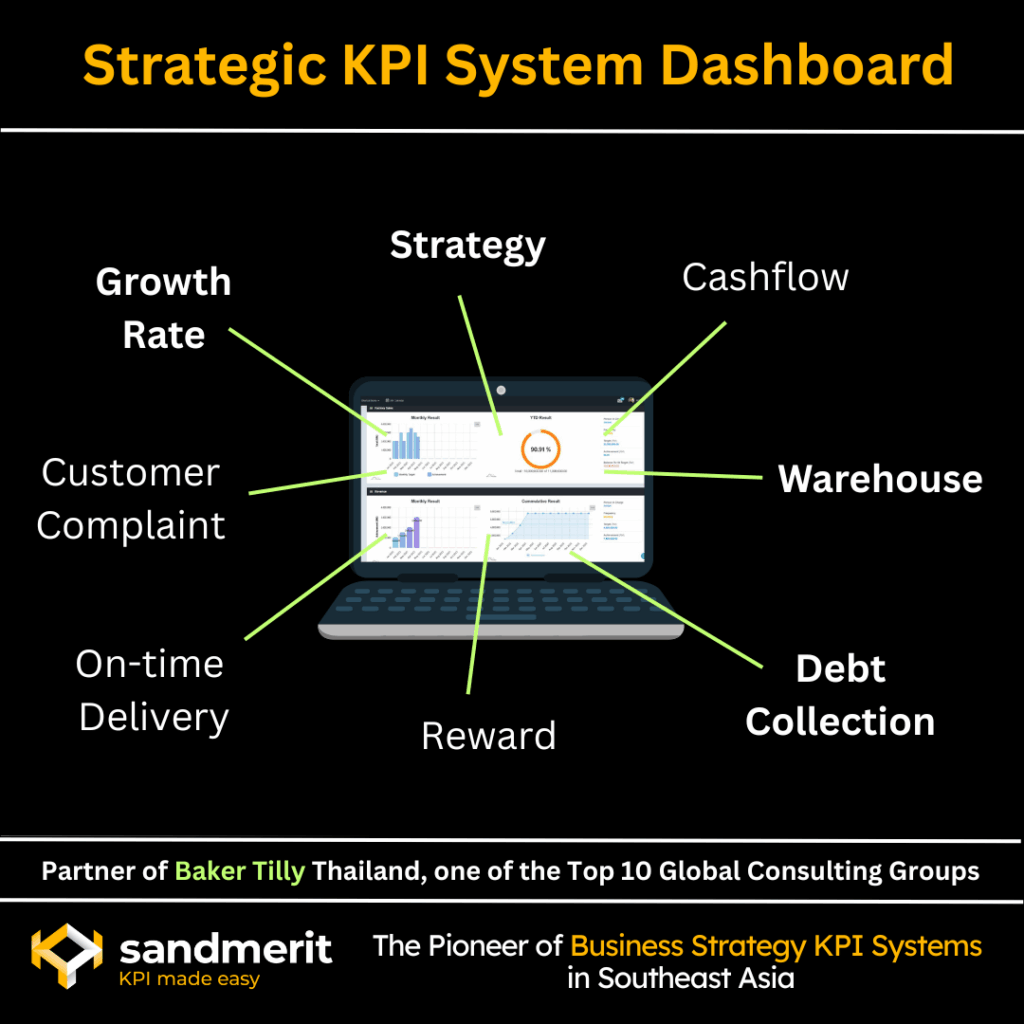
How the Right KPI Management Tool Becomes a Growth Engine, Not a Control System
In today’s competitive business environment, many organizations are actively searching for a reliable kpi management tool. As companies scale, spreadsheets break down, manual appraisals create conflict, and leaders struggle to manage performance fairly across teams. A kpi management tool appears to be the logical answer—offering structure, data, and transparency.
Yet the reality is uncomfortable.
Many companies invest in a kpi management tool and still experience low engagement, poor execution, and inconsistent results. The system is there, but performance does not change.
The reason is simple: a kpi management tool is only powerful when it is built on the right philosophy, methodology, and leadership alignment. This is where sandmerit KPI 123 stands apart from other solution providers in the market.
Why Businesses Are Searching for a KPI Management Tool
The demand for a kpi management tool is driven by real and growing challenges:
- Leaders want objective and fair evaluations
- Employees want clarity, transparency, and trust
- Managers want consistency across departments
- Organizations want higher productivity without increasing costs
A kpi management tool promises to standardize performance tracking and remove subjectivity. However, tools alone cannot solve deeper issues such as unclear strategy, misaligned incentives, or lack of ownership.
That is why many KPI initiatives fail—not because of technology, but because of how KPI is designed and implemented.
The Most Common KPI Management Tool Mistake
The biggest mistake companies make is assuming that the tool itself is the solution.
They implement a kpi management tool before answering fundamental questions:
- What truly defines success for our business?
- Which outcomes matter most right now?
- What behaviors do we want to encourage?
- How should performance be rewarded fairly?
Without clear answers, KPIs become arbitrary numbers. Employees comply, but they do not commit. Managers track data, but they do not lead performance.
In this situation, the kpi management tool becomes a reporting system instead of a performance system.
What a KPI Management Tool Should Actually Achieve
A truly effective kpi management tool must support three critical outcomes:
- Strategic Alignment
KPIs must reflect business direction, not administrative convenience. - Behavioral Change
KPIs must guide daily priorities and decision-making. - Fair and Transparent Rewards
Performance results must be clearly linked to recognition and incentives.
If a kpi management tool does not support all three, it will never deliver sustainable impact.
sandmerit KPI 123: Methodology Before Technology
sandmerit approaches KPI differently. It is not positioned as a software vendor, but as a Business Strategy KPI Solutions provider. The kpi management tool is designed to support a proven framework known as sandmerit KPI 123.
Stage 1: CEO Vision and Strategic Clarity
Before any KPI is entered into the system, sandmerit works closely with the CEO and top management to clarify:
- Business vision and long-term direction
- Strategic priorities and growth drivers
- Key success factors
- Reward and performance philosophy
This ensures that KPIs are created to drive strategy, not just measure activity.
Stage 2: Organization-Wide KPI Alignment
Instead of designing KPIs in isolation, sandmerit facilitates structured alignment workshops involving management and employees. KPIs are cascaded from company objectives to department goals and individual responsibilities.
This process builds ownership and trust. Employees understand not only what they are measured on, but why it matters.
Stage 3: KPI Management Tool Automation
Only after strategy and alignment are clear does the sandmerit kpi management tool come into play. At this stage, the tool becomes powerful because it automates what has already been agreed and understood.
The system provides:
- Transparent KPI tracking
- Consistent and objective scoring
- Real-time visibility for managers and employees
- Structured reward calculation
This sequence is the key difference between sandmerit and most other solution providers.
Why sandmerit’s KPI Management Tool Is Widely Accepted
One of the strongest indicators of success is adoption. sandmerit has received over 600 testimonial videos from CEOs, managers, and employees across different industries.
This level of acceptance is rare in performance management initiatives.
Employees accept sandmerit’s kpi management tool because:
- KPI rules are clear and objective
- Performance data is transparent
- Expectations are realistic and achievable
- Rewards are directly linked to results
Instead of creating fear, the tool creates clarity. Instead of resistance, it encourages improvement.
Productivity Comes from Focus, Not Pressure
Many leaders believe that a kpi management tool improves productivity by increasing control. In reality, productivity improves when people are focused on the right outcomes.
sandmerit emphasizes:
- Fewer but more meaningful KPIs
- Clear ownership for each KPI
- Visibility without micromanagement
When employees know what truly matters, productivity increases naturally. Time is spent on high-impact work rather than busy tasks that do not move the business forward.
The Missing Element in Most KPI Management Tools: Rewards
Many KPI systems stop at measurement. They calculate scores but fail to answer the most important question for employees:
“What does this mean for me?”
The sandmerit kpi management tool integrates KPI performance directly with structured reward mechanisms. Employees can clearly see:
- How their scores are calculated
- How performance affects bonuses or incentives
- How company success is shared
This transparency builds trust and reinforces long-term engagement.
Wilson: The Experience Behind the System
The strength of sandmerit lies not only in its kpi management tool, but in the experience behind it.
Wilson, the founder of sandmerit, has more than 23 years of hands-on experience focused exclusively on KPI and performance management. Widely recognized as Malaysia’s KPI King, Wilson has worked with SMEs, multinational corporations, and public-listed companies across multiple industries.
His career has been dedicated to fixing failed KPI implementations and helping leaders understand one core truth:
KPI fails not because employees resist it, but because systems are poorly designed.
This philosophy is deeply embedded in sandmerit KPI 123.
A KPI Management Tool That Works Across Industries and Cultures
sandmerit’s kpi management tool has been implemented successfully across manufacturing, logistics, education, professional services, and more. It has also been applied across different countries and cultural environments.
This proves that when KPI is built on clarity, fairness, and alignment, it works universally.
The Future of KPI Management Tools
The future of performance management will not belong to feature-heavy kpi management tools that only track numbers. It will belong to solutions that integrate:
- Business strategy
- Leadership alignment
- Employee engagement
- Technology automation
sandmerit KPI 123 represents this future. The kpi management tool is not the starting point—it is the execution layer of a complete performance management system.
Conclusion: Choose a KPI Management Tool with the Right Foundation
A kpi management tool can help you calculate faster and report better. But only the right approach can help you manage people effectively and grow sustainably.
sandmerit KPI 123 combines strategy, people, and technology into one integrated solution. It helps leaders gain peace of mind, employees gain clarity and fairness, and organizations achieve consistent productivity growth.
That is why sandmerit is not just another kpi management tool provider. It is a long-term partner for companies that want results, trust, and alignment.
#kpimanagementtool #KPI #sandmerit #KPIKing #wilsonten #performanceManagement #Productivity #businessStrategy #HRTech