
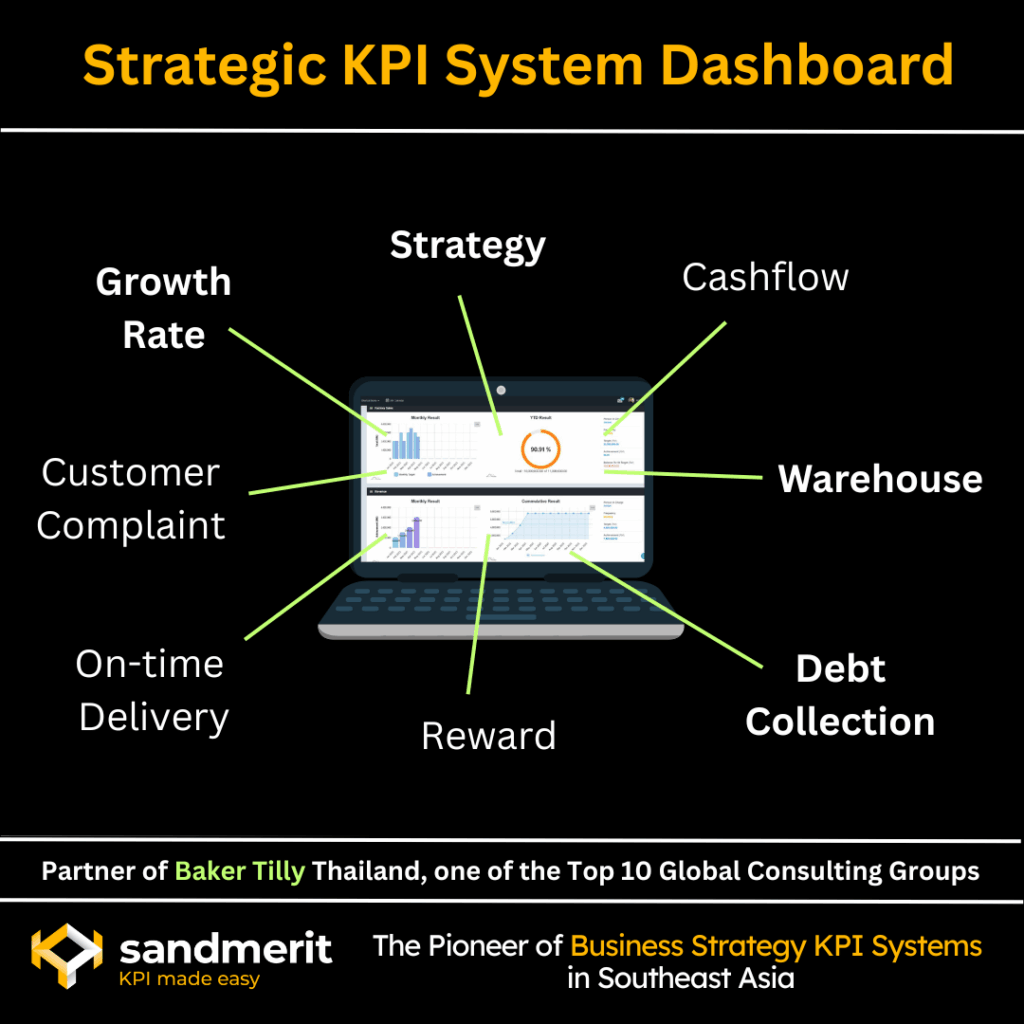
The business environment has changed dramatically in the last 10 years.
Competition is stronger, customers expect more, and operational mistakes cost more than ever before.
In this new reality, companies that grow sustainably have one thing in common:
They use a strong Performance Management System (PMS) to manage people, measure results, and improve performance continuously.
A PMS is no longer a tool only for large corporations.
Today, SMEs, family businesses, manufacturers, logistics companies, service companies, and even startups rely on PMS to stay competitive.
This article explains the core advantages of a performance management system and why companies that ignore PMS fall behind.
1. A PMS Eliminates Guesswork and Brings Clarity
One of the biggest internal problems companies face is unclear expectations.
Employees often do not know:
- what their targets are
- how they are measured
- which tasks are priorities
- how their performance affects salary or bonus
A performance management system removes confusion by defining:
- KPIs
- weightages
- measurement rules
- scoring formula
- achievement levels
When clarity increases, performance naturally rises.
2. It Drives Strategic Alignment Across the Entire Company
Strategy is useless unless employees can execute it.
Without a PMS, strategies stay in PowerPoint slides.
With a PMS, strategies turn into measurable KPIs.
The system ensures:
- Company goals → Department KPIs
- Department KPIs → Employee KPIs
- Employee KPIs → Daily actions
This alignment is one of the most powerful advantages of performance management systems, especially for fast-growing companies.
3. It Encourages Continuous Communication and Improvement
The old way of doing performance reviews once a year is no longer effective.
A PMS enables:
- monthly reviews
- performance conversations
- coaching sessions
- constructive feedback
- alignment discussions
This strengthens teamwork and builds a culture of continuous improvement — something every modern business needs.
4. PMS Improves Accountability and Reduces Internal Conflict
Without a system, employees rely on:
- opinions
- personal judgment
- emotions
- politics
- “I think, I feel, I believe”
This leads to disputes and frustration.
A PMS introduces objective measurement:
- clear scoring
- data-driven evaluation
- transparent reports
- consistent rules
Accountability becomes fair, logical, and emotionally neutral.
5. PMS Helps Managers Identify Problems Early
Managers often discover performance issues too late — when customers complain, deadlines are missed, or financial results decline.
A PMS provides early warning signals:
- performance decline
- repeated mistakes
- low achievement
- slow output
- quality drop
- poor attendance
- weak initiative
Early detection makes it easier to fix issues before they become expensive.
6. It Enhances Employee Motivation and Engagement
One of the greatest advantages of a performance management system is that it increases motivation.
Employees become more engaged when:
- they understand their goals
- they can track their progress
- they see recognition for good work
- rewards are fair and transparent
Motivated employees = strong performance.
7. PMS Makes Reward Systems Fair and Transparent
Many companies suffer from:
- inconsistent bonus decisions
- favoritism
- employees who feel unappreciated
- unclear reward methods
A PMS solves this by creating:
- clear scoring
- predictable bonus calculation
- fair distribution based on performance
- transparent evaluation rules
This improves morale and reduces employee turnover.
8. PMS Strengthens Leadership Decision-Making
Leaders must make decisions quickly and confidently.
A PMS provides:
- real-time KPI dashboards
- accurate performance reports
- department comparisons
- progress tracking
- data-based insights
Leaders with strong data build stronger companies.
9. It Enables Better Talent Development
A good PMS helps companies:
- identify future leaders
- design training programs
- evaluate capability gaps
- promote the right people
- support employee growth
Strong performance management = strong talent pipeline.
10. PMS Improves Productivity and Operational Efficiency
With clear goals, tracking, and accountability, teams perform faster and with fewer errors.
PMS contributes to:
- faster delivery
- better quality
- reduced wastage
- smoother operations
- better customer satisfaction
- fewer delays
The result is a more productive and profitable company.
11. A PMS Helps Companies Scale Faster
Growing companies often face chaos:
- overlapping responsibilities
- unclear accountability
- inconsistent performance
- lack of data
- difficulty managing more employees
A PMS creates structure and stability, making scaling much easier.
This is one of the major advantages of performance management systems for SMEs planning expansion.
12. PMS Supports a High-Performance Culture
A strong performance culture is not created through motivation talks or posters.
It is created through systems.
A PMS cultivates:
- responsibility
- discipline
- clarity
- fairness
- teamwork
- transparency
- recognition
- continuous improvement
Companies with strong culture outperform those without.
Conclusion: The Advantages of a Performance Management System Are Transformational
A PMS is not just software — it is the foundation of long-term business success.
Companies that adopt it become faster, smarter, stronger, and more competitive.
And in Malaysia, the gold standard for PMS is sandmerit, backed by:
- 23 years of KPI experience from Wilson Ten (KPI King)
- International KPI Standards
- Proven methodology
- 600+ video testimonials
- Trusted by SMEs, MNCs, and public listed companies
- Strong presence across Southeast Asia
If your company wants to succeed in the next 5–10 years, a modern PMS is no longer optional — it is necessary.
#️⃣ Hashtags
#PerformanceManagementSystem
#AdvantagesOfPerformanceManagementSystem
#BestPerformanceManagementSystem
#PerformanceManagementSystemMalaysia
#KPISystem
#KPIManagement
#PerformanceImprovement
#WilsonTen
#sandmerit
#KPIKing
#KPISoftware