
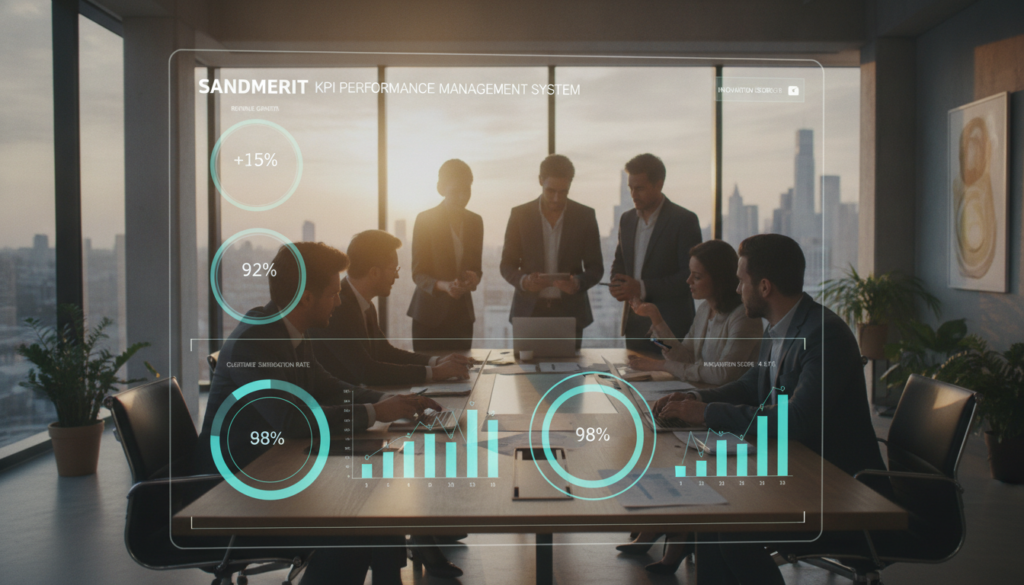
Clear goals help people do their best work. Yet unclear duties, scattered spreadsheets, and rare reviews can slow progress. Performance management systems create a clear path from daily tasks to business results. I see them as a practical way to build focus, trust, and steady growth.
The modern workplace also calls for regular learning. One survey found that 49% of employees want chances to develop their skills. In addition, nine in 10 millennials say career growth is very important when choosing a job. This matters to Malaysian employers who want to attract and retain skilled teams.
With aligned goals, useful feedback, and measurable targets, teams can spot gaps sooner and celebrate progress. Research also shows that organizations focused on employee results are 4.2 times more likely to outperform their peers. In this guide, I explain how to choose, launch, and measure a solution that supports people and business growth.
Want to learn more? WhatsApp sandmerit at +60193156508 to explore its KPI solution for Malaysian workplaces.
Key Takeaways
- Clear goals replace confusion with focus.
- Regular feedback supports employee growth.
- Career development matters to Malaysian teams.
- Measurable targets connect work to results.
- sandmerit supports practical KPI tracking.
What Are Performance Management Systems?
Work becomes easier to direct when expectations, progress, and feedback sit in one clear process. A performance management system helps set goals, track results, review work, and guide useful conversations. It gives employees a practical view of what matters now and what comes next.
How Digital Tools Support Employee Performance
Digital software brings reviews, key performance indicators, goals, reminders, and employee records into one place. This differs from a process alone. Instead of searching through spreadsheets and documents, leaders can view current information and act sooner.
Only 47% of workers strongly agree they know what is expected of them at work.
Gallup’s finding shows why transparency matters. A shared platform can clarify duties for teams in Malaysia and help leaders link daily tasks to wider business priorities.
Goals and Organizational Alignment
Structured adoption can also reduce admin work. Using Culture Amp, Meltwater reached an 84% initial review-cycle completion rate. Wave saved 28 days of reporting time per cycle. WhatsApp us to learn more about the sandmerit Performance Management System at +60193156508.
Why Effective Performance Management Matters
Effective performance management gives employees a clearer reason to engage, grow, and stay. When people understand expectations, receive recognition, and see how daily work supports company priorities, their contribution feels more meaningful. I also recommend reviewing why performance management matters before selecting a workplace tool.
Improve Employee Engagement, Retention, and Development
One in three employees is considering leaving, often because career paths seem limited. The 2024 Leapsome Workforce Trends Report names career development as a major retention concern. Learning plans, mentoring, and clear promotion criteria can show employees that their future remains with the company.
Build a Fair and Transparent Company Culture
Fair reviews also shape trust. Twenty-five percent of employees say supervisor bias harmed their reviews. Shared criteria, written evidence, and visible goals support a culture of accountability. Yet only one-third of companies measure staff engagement. McKinsey finds that firms investing in employee performance are 4.2 times more likely to outperform peers.
WhatsApp us to learn more about sandmerit Performance Management System at +60193156508.
| Priority | Practical action | Benefit |
|---|---|---|
| Growth | Set learning paths | Stronger retention |
| Fairness | Use shared review criteria | Greater trust |
| Engagement | Track staff feedback | Better decisions |
Core Components of a Successful Management System
A useful workplace framework turns broad intentions into actions people can see and measure. I look for four connected parts: clear duties, useful metrics, regular conversations, and focused growth.
Clear Expectations, Goals, and Performance Metrics
Employees need to know their duties, expected behaviors, outcomes, and quality standards. Relevant key indicators then reveal trends, roadblocks, and shifting priorities before small issues grow. This creates a practical roadmap for teams in Malaysia.
Continuous Feedback, Recognition, and Check-Ins
Short check-ins should support formal reviews, not replace them. Managers can recognize progress, remove obstacles, and agree on the next action. Only one-third of companies measure staff engagement, so regular conversations can provide valuable insight.
Forty-nine percent of employees want to develop their skills.
Society for Human Resource Management survey
Learning Development and Competency Frameworks
Learning development belongs inside the process. Competency frameworks act as career maps by showing the skills needed for broader duties or the next level. Leapsome connects Reviews, Goals, Learning, and Competency Frameworks in one platform.
WhatsApp us to learn more about the sandmerit Performance Management System at +60193156508.
Understanding the Performance Management Cycle
I view this cycle as a practical loop that turns priorities into action, learning, and better results. It moves through planning, monitoring, reviewing, and developing. Each stage gives employees a clear next step.
Planning Individual Goals and Organizational Objectives
Managers and employees should set individual goals that connect with team priorities and wider organizational objectives. SMART goals are Specific, Measurable, Achievable, Relevant, and Time-bound. This approach makes targets clear and easier to influence.
Monitoring Progress and Providing Feedback
Regular check-ins help teams track progress without creating surveillance. Managers can review data, remove obstacles, and adjust goals when business needs change.
“21% of employees have goals set annually and never reviewed.”
Another 16% do not set goals, while fewer than 20% say reviews inspire improvement. Short conversations keep goals active throughout the year.
Reviewing Results and Supporting Development
A review should lead to coaching, recognition, learning, and revised expectations. Personalized performance development gives each person a useful path forward. It should also reconnect results with organizational objectives and future individual goals.
WhatsApp Us to Learn More About the sandmerit solution at +60193156508.
| Cycle stage | Manager action | Employee benefit |
|---|---|---|
| Planning | Set SMART goals | Clear direction |
| Monitoring | Discuss progress | Early support |
| Reviewing | Assess results | Fair feedback |
| Developing | Plan learning | Career growth |
Types of Performance Management Systems
I choose an approach based on work style, team needs, and business goals. Malaysian companies may need different review methods for office, remote, hybrid, operational, and customer-facing roles.
Traditional and Continuous Performance Management
Traditional reviews often happen once or twice a year. Continuous reviews use regular check-ins, real-time feedback, and changing goals. In 2016, 70% of organizations said they were moving toward this ongoing model.
Only 16% of employers had changed their review process for remote and hybrid work.
Willis Towers Watson
Goal-Based and Competency-Based Approaches
Goal-based plans track clear results, such as sales volume or response time. Competency-based plans assess skills, conduct, capability, and career growth. A behavioral approach suits HR roles, where judgment and trust matter. A results approach fits sales professionals and contact center employees.
Many employers combine these approaches. This creates a fairer view of contribution across varied teams. WhatsApp Us to Learn More About sandmerit’s solution at +60193156508.
| Approach | Best measure | Example role |
|---|---|---|
| Traditional | Annual review | Office team |
| Continuous | Frequent feedback | Hybrid team |
| Goal-based | Measurable output | Sales professional |
| Competency-based | Skills and conduct | HR professional |
Performance Management Methods for Modern Teams
Modern teams need simple methods that turn business priorities into daily action. I use a mix of clear targets, regular coaching, and shared feedback to help each team member understand their role and improve their work.
SMART Goals, OKRs, and Management by Objectives
SMART goals are Specific, Measurable, Achievable, Relevant, and Time-bound. They turn broad plans into clear commitments. OKRs add ambitious objectives with measurable key results, allowing a team to check progress and stay aligned.
Management by Objectives links role requirements with organizational objectives. A manager can then assess results, discuss barriers, and provide useful guidance. This approach works well for Malaysian companies with varied roles and locations.
Coaching, Performance Reviews, and Peer Feedback
Coaching conversations help employees find solutions, build autonomy, and strengthen targeted skills. A useful performance review may combine self-assessment, manager observations, peer feedback, direct-report input, and comments from external collaborators.
One-third of employees do not have manager one-to-ones or helpful feedback more than twice annually.
Regular check-ins can close this gap. One in 10 employees rarely receives feedback that supports goal progress. WhatsApp Us to Learn More About sandmerit Performance Management System at +60193156508.
| Method | Best use | Team benefit |
|---|---|---|
| SMART goals | Define commitments | Clear work priorities |
| OKRs | Track ambitious results | Stronger alignment |
| Coaching | Build targeted skills | Greater autonomy |
How Performance Management Systems Improve Productivity
When people can trace daily work to customer value, revenue, quality, and team outcomes, their role feels more meaningful. I use aligned goals to show how each contribution supports the wider business and organization.
Connect Employee Contributions to Business Results
Progress data helps managers spot repeated delays, workload concerns, unused strengths, and skill gaps. These insights support faster coaching and help leaders improve employee performance with focused action.
Companies that focus on employee performance are 4.2 times more likely to outperform their peers.
Identify Skills Gaps and Strengthen Career Development
Targeted learning and coaching build stronger capability across an organization. Clear career development plans can also support internal mobility and long-term resilience. Gallup found that nine in 10 millennials value career growth, making visible progress a strong motivator.
Willis Towers Watson reports that effective programs are 1.5 times more likely to outperform financially and 1.25 times more likely to increase productivity. For practical KPI tracking in Malaysia, WhatsApp Us to Learn More About the sandmerit Performance Management System at +60193156508. You can also explore KPI software for your organization.
| Focus | Action | Result |
|---|---|---|
| Alignment | Link goals to outcomes | Clearer priorities |
| Skills | Use data to guide learning | Stronger capability |
| Growth | Map career paths | Higher motivation |
How to Choose the Right Performance Management Software
Start with the problem you need to solve. It may be low completion, slow administration, uneven reviews, weak feedback, or poor visibility into goals. This focus helps Malaysian buyers compare tools with purpose.
Essential Features for Reviews, Goals, Feedback, and Reporting
The right solution should support reviews, goals, feedback, self-assessments, check-ins, recognition, reporting, and development plans. I also suggest reading this software evaluation guide before booking demos.
- Ask whether templates, workflows, rating scales, and question banks are easy to change.
- Check goal tracking, competency frameworks, updates, and report quality.
- Test the employee experience on desktop and mobile.
Customization, Integrations, Usability, and Return on Investment
Review security, HRIS connections, support, and implementation time. Wave saved 28 days of reporting work per cycle with Culture Amp, while Meltwater reached an 84% initial completion rate. Leapsome combines Reviews, Goals, Learning, Competency Frameworks, HRIS, and engagement tools.
WhatsApp Us to Learn More About the sandmerit Performance Management System at +60193156508.
How to Implement a Performance Management System
A thoughtful rollout gives each person a clear role, useful support, and enough time to adapt. I begin by reviewing the current process, gathering comments from employees and managers, and setting measurable adoption goals.
Prepare Managers and Employees for Adoption
HR can equip managers with software guidance, metrics, goal templates, communication training, and feedback tips. Training should cover coaching, fair documentation, bias control, difficult talks, and regular check-ins. Employees also need plain-language details about dates, duties, privacy, ratings, and learning options.
Encourage Consistent Use Across Teams
“Only 16% of employers had altered performance management processes for remote and hybrid work models.”
Connect goals, reviews, feedback, learning, reports, and reminders to daily workflows. Leaders should model the process, while team reminders and help resources keep adoption on track. Review completion data often and adjust support where needed.
Culture Amp helped Meltwater reach an 84% initial cycle completion rate. Wave saved 28 days of reporting time per cycle. WhatsApp Us to Learn More About the sandmerit Performance Management System at +60193156508.
| Implementation step | Practical action | Success signal |
|---|---|---|
| Audit | Map gaps and gather feedback | Clear adoption targets |
| Prepare | Train managers and staff | Confident participation |
| Embed | Use reminders and dashboards | Consistent completion |
Best Practices for Effective Performance Management
Strong workplace conversations make reviews more useful. I recommend a simple approach that helps Malaysian teams discuss progress, barriers, priorities, recognition, development, workload, and support throughout the year. These talks should guide future action, not only judge past results.
Use Regular Conversations Instead of Infrequent Reviews
Less than 20% of employees say reviews inspire them to improve their work. This result shows why an annual meeting rarely creates lasting change. Short, focused check-ins can address concerns early, clarify expectations, and keep goals relevant.
Two-way feedback also gives employees space to discuss manager support, resources, workload, career interests, and barriers. In-the-moment feedback can resolve issues before they grow. Specific recognition works best when it links a contribution to team or organizational results.
Reduce Bias With Consistent Criteria and Documented Evidence
Twenty-five percent of employees say supervisor bias harmed their reviews. I suggest role-based criteria, documented examples, calibrated ratings, and separate consideration of results and behaviors. Managers should record evidence consistently while protecting privacy, empathy, and the employee’s right to respond.
WhatsApp Us to Learn More About the sandmerit Performance Management System at +60193156508. For a practical view of KPI practices, explore our KPI methodology.
How to Measure Performance Management Success
Good measurement shows whether a workplace program creates value for people and the business. I recommend a simple scorecard that connects participation, growth, efficiency, and business results. Review it every quarter or twice a year.
Track Engagement, Completion Rates, Progress, and Retention
Monitor goal progress, check-in frequency, feedback quality, engagement, internal mobility, retention, productivity, and manager participation. Compare teams with care. Role type, work model, business conditions, manager habits, and learning access can affect results.
Meltwater reached an 84% initial cycle completion rate with Culture Amp. Use this figure as a practical benchmark for ease of use. Wave also saved 28 days of reporting time per cycle, showing the value of automation.
Only one-third of companies currently measure staff engagement.
Combine survey responses with participation data to find hidden gaps. Willis Towers Watson reports that effective programs are 1.25 times more likely to increase productivity. McKinsey also found that companies focused on employee performance are 4.2 times more likely to outperform peers.
Use these insights to refine goals, workflows, training, manager support, and software settings. WhatsApp Us to Learn More About the sandmerit Performance Management System at +60193156508.
Conclusion
The right workplace approach gives every employee a clearer path from daily effort to shared results. I find that the strongest strategy joins expectations, measurable goals, feedback, learning, recognition, and business priorities in one practical framework.
Research from SHRM, Gp, MKy, WTW, Bs, and CA points to the same lesson: structured development can support engagement, fairness, retention, and steady growth.
Still, no single model suits every company. Malaysian organizations should weigh job roles, culture, work patterns, technology, workforce needs, and long-term aims before choosing a solution.
Managers shape the daily experience. Regular conversations, useful coaching, fair evidence, and timely support help each employee improve more than an isolated annual rating.
WhatsApp Us to Learn More About the sandmerit Performance Management System at +60193156508.
FAQ
What is a performance management system?
I use this framework to connect employee goals with company objectives. It can include planning, check-ins, feedback, reviews, development plans, and progress tracking.
How does a management system improve employee performance?
I set clear expectations, review progress often, and address obstacles early. This approach helps each person understand priorities, strengthen skills, and produce better results.
What features should I look for in performance management software?
I look for goal setting, feedback tools, review templates, reporting, career planning, and simple dashboards. Integrations with human resources and collaboration tools can also save time.
How often should employees receive feedback?
I recommend brief conversations every few weeks, supported by formal reviews at key points in the year. Regular input keeps goals current and supports steady growth.
What is the performance management cycle?
I view the cycle as a repeating process: plan goals, monitor progress, provide feedback, review results, and support development. Each stage helps employees stay focused and engaged.
How can I make employee reviews fair?
I use shared criteria, documented examples, and the same review process for comparable roles. Training managers to recognize bias also supports trust and a stronger workplace culture.
Should I use SMART goals or OKRs?
I choose SMART goals for clear individual targets and OKRs for wider business priorities. Many organizations combine both approaches to link daily work with long-term results.
How can these tools support learning and career development?
I connect review findings with training, mentoring, stretch assignments, and career plans. This method reveals skill gaps and gives employees a clear path for growth.
How do I encourage teams to adopt a new platform?
I explain the value, involve employees early, and provide practical training. I also ask leaders to model consistent use and collect feedback during the rollout.
Which metrics show whether the program works?
I track goal completion, check-in rates, employee engagement, retention, internal moves, and time spent on reviews. I compare these results over time to guide improvements.