
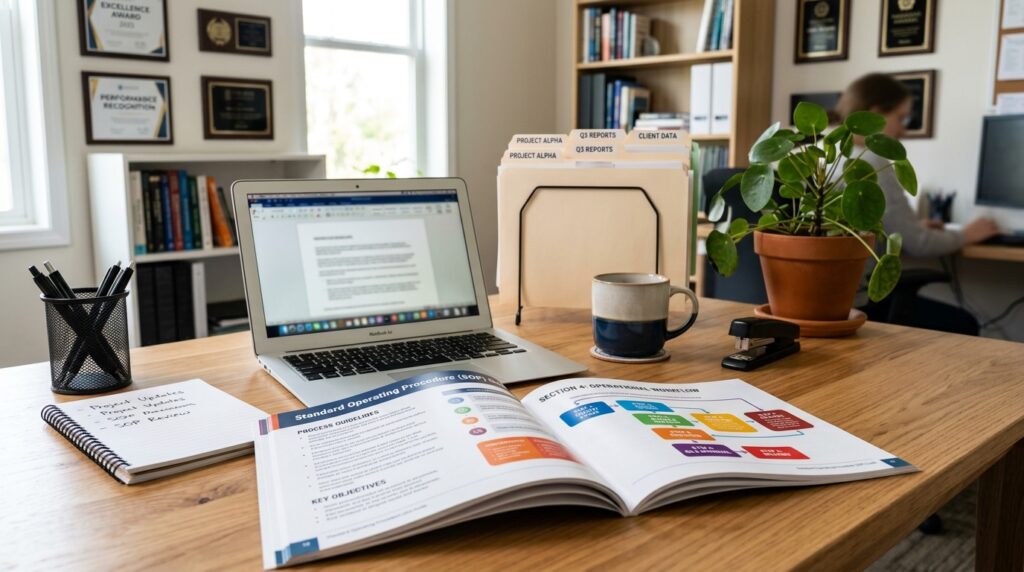
A clear standard operating procedure helps employees complete routine work with greater care and consistency. In this guide, I explain how to choose a task, gather accurate information, select a useful format, and write steps people can follow. The goal is simple: make daily work easier to learn, repeat, and improve.
A September 4, 2025 article shares ten tips for building effective workplace instructions. I use that guidance to shape a practical process for customer-facing work, quality checks, and other business needs. You’ll learn how to identify the right audience, test a draft, and keep each document current as procedures change.
Good instructions support employees and help an organization deliver reliable service. They also give each employee a clear reference for a task, reducing confusion when work gets busy. Small improvements can make a real difference.
For more information about the sandmerit KPI Performance Management System, WhatsApp us at +60193156508.
Key Takeaways
- Choose a clear purpose and audience.
- Collect accurate details before writing.
- Use direct steps for each task.
- Test instructions in real work settings.
- Review and update the guide as needs change.
What Is a Standard Operating Procedure and Why Does It Matter?
I use the term SOP for a written guide that explains how to complete a task in clear steps. It sets out the method, rules, and checks that help people do the work as expected. A strong procedure gives employees a shared reference instead of leaving key details to memory.
How Procedures Support Consistency, Quality, and Efficiency
Documented methods help a company deliver reliable results. For example, a restaurant can guide its chefs through the same recipe each time. That consistency can protect product quality and support customer satisfaction. In food production, procedures also help teams follow relevant standards and compliance rules, including FDA requirements in the United States and applicable Malaysian regulations.
How Written Guides Help Train New Employees and Reduce Errors
Clear instructions give new employees a practical training resource. They can learn the expected process, check each step, and ask focused questions. Maintenance guides can also help manufacturers spot machine issues early and reduce unplanned downtime. Well-managed operating procedures support safer work, better service, and greater efficiency.
| Workplace example | How the guide helps | Expected benefit |
|---|---|---|
| Restaurant kitchen | Sets out recipe steps | Consistent dishes and customer satisfaction |
| Food production | Explains required checks | Stronger compliance with relevant rules |
| Machine maintenance | Lists inspection tasks | Fewer breakdowns and less downtime |
Choose the Process and Audience for Your SOP
Before writing, decide which work needs guidance and who will use it. A focused standard operating procedure helps people follow the right steps and reach a clear outcome. Consider both the employee who performs the task and the customer who receives the service.
Identify the Task, Purpose, and Intended Outcome
State the task, its purpose, and what success looks like. For a customer service workflow, the goal might be to resolve an inquiry with accurate information and a helpful response. This example keeps the process focused and shows employees how to complete the task.
Involve Employees and Other Relevant Stakeholders
Ask employees who do the work to review the steps. Their firsthand knowledge can reveal gaps before a procedure becomes part of training. Also consider managers and other stakeholders who rely on the result.
SOP Group reports more than 8,000 employees, from estate workers to professionals. Incorporated in 1968 through a joint venture involving the Sarawak State Government and the Commonwealth Development Corporation, the company also identifies Miri and Lambir Palm Oil Mill in its updates. This range shows why an organization should match instructions to each audience’s experience.
| Audience | Question to ask | Planning focus |
|---|---|---|
| Employee doing the task | What steps need guidance? | Familiarity and training |
| Customer receiving service | What outcome matters? | Clear, reliable service |
| Manager or stakeholder | What result must be checked? | Quality and accountability |
Gather Information and Define the Procedure’s Scope
I begin by learning how the work happens in practice. Direct observation helps me capture real actions, common delays, and useful checks before I draft instructions.
Document How the Work Is Currently Performed
Watch employees complete the task and record each step. Gather related forms, equipment details, safety rules, and quality checks. This information helps turn existing processes into a useful document, rather than relying on assumptions.
Next, define where and when the procedure applies, who must follow it, and its purpose. For example, SOP-IT-001 covers the IT Department’s Cybersecurity and Network Teams and applies to all company network users. Its revision date, December 27, 2023, also shows why version details matter. I use a scope guide to help set these boundaries.
List roles clearly. The Chief Information Security Officer (CISO), Cybersecurity Team, Network Team, and IT Support Staff each contribute information or carry out specific actions. Clear ownership supports compliance and efficiency.
| Planning detail | What to record | Why it matters |
|---|---|---|
| Scope and version | Covered teams, users, and revision date | Shows where the procedure applies |
| Roles | CISO, Cybersecurity Team, Network Team, and IT Support Staff | Clarifies ownership |
| Resources and checks | Forms, equipment, safety rules, and quality points | Supports reliable work |
Select an SOP Format and Build a Clear Document
I match the layout to the work, so employees can find each action without delay. The right format makes instructions easier to use and supports steady service across a Malaysian business.
Choose a Layout That Fits the Work
Four common formats suit different tasks:
- Checklist: tracks recurring duties, such as daily room cleaning or guest checkout.
- Step-by-step list: guides a task in a fixed sequence.
- Hierarchical list: groups complex procedures into steps and substeps.
- Flowchart: maps choices, such as different customer service responses.
A housekeeping checklist can help staff confirm each room is ready. The best format keeps routine work easy to scan.
Include Roles, Checks, and Useful Resources
A standard operating procedure document can include a title, code, revision date, purpose, scope, responsibilities, quality measures, references, appendices, distribution list, and approval signatures. These details support management, compliance, and consistency.
For an expense-report example, employees use a template, upload receipt images, enter dates, reasons, and amounts, then submit the report to accounting. This makes ownership and resources clear at each step.
Write Clear Instructions for Every Step
After choosing a format, I turn each task into a sequence anyone can follow. A standard operating procedure works best when it states what to do in the order the work happens. I keep each step short and use active voice.
Use Logical Sequences and Direct, Action-Oriented Language
I start each instruction with a clear command verb. For example: “Clean the machine after every use.” This wording tells readers exactly what action to take. It also helps new employees who may not know the process yet.
For an expense report, I arrange the actions in the order employees perform them:
- Add each expense to the company template.
- Upload an image of each receipt.
- Enter the date, reason, and amount.
- Submit the completed report to accounting.
Specific instructions reduce guesswork and help prevent skipped actions. They also support consistent quality when teams handle routine tasks. I can use business performance software to organize related resources and support efficient work.
Review and Test the SOP for Accuracy and Compliance
Testing the draft before approval helps me catch gaps while changes are still easy to make. I check both the written steps and the results they must support.
Ask Experienced Employees to Check the Process
I ask employees who perform the task to follow the procedure from start to finish. They can spot missing actions, wrong details, or steps that appear in the wrong order. I record their feedback, correct errors, and retest the revised document before the company relies on it.
“A test is only useful when it reveals what the written steps miss.”
Run a Trial with Someone New to the Task
Next, I ask an employee unfamiliar with the work to use the instructions. Their questions can expose unclear wording and hidden assumptions. This trial shows whether a new team member can complete the task without extra guidance.
For cybersecurity, each update should pass a security effectiveness test before full use. A network vulnerability scan after implementation adds a measurable check for safety and compliance. These checks help protect service quality and customer information.
| Review stage | Who checks it | What to confirm |
|---|---|---|
| Process review | Experienced employees | Accurate, complete steps |
| Usability trial | New employee | Clear instructions and sequence |
| Security check | Cybersecurity team | Effectiveness test and vulnerability scan |
Train Employees and Make the SOP Easy to Access
A written guide works best when people know how to use it during real work. I introduce each standard operating procedure through a short demonstration, then let employees practice the steps with support from a manager or experienced colleague.
Show Employees Where to Find Guidance
During induction, I use process instructions as training resources for new employees. I explain where to find each document, how to follow its steps, and whom to ask when information is unclear. This approach helps a new employee build confidence before handling a task alone.
Digital access also matters. I recommend making current instructions available on mobile devices, so employees can check them while working. Beekeeper is now part of LumApps, which offers one example of a digital platform for sharing workplace information.
SOP Group reports more than 8,000 employees across roles, from estate workers to professionals. That scale shows why an organization needs a simple way to reach every team. Accessible guidance can support compliance, customer service, and consistency across the business.
For information about the sandmerit Performance Management System, WhatsApp us at +60193156508.
Monitor Results and Keep the Procedure Up to Date
A standard operating procedure needs regular oversight to stay useful as work changes. I track how employees use it and whether they reach the intended result. Measures should fit the task, such as fewer missed maintenance checks, shorter service delays, or fewer customer complaints.
Use Feedback to Improve Consistency and Customer Satisfaction
I ask employees and customers for feedback. Their comments can reveal unclear wording, missing actions, or gaps in service. I also compare results over time to see if the process supports quality and customer satisfaction.
- Check whether employees follow the steps.
- Track results that match the procedure’s purpose.
- Use feedback to improve the next revision.
Review Changes to Workflows, Standards, and Requirements
I review each procedure when workflows, equipment, or rules change. For example, current machine-maintenance instructions can help manufacturers avoid unplanned downtime. Food manufacturers should also reflect applicable FDA requirements in their instructions.
For Malaysian businesses, regular reviews help keep service reliable as operations evolve. I document the review date and update the version so teams can find current information. These procedure review practices help management maintain consistency, compliance, and efficiency.
Conclusion
Strong workplace guidance starts with a shared picture of success. I build an SOP by defining its audience and desired outcome, gathering reliable details, choosing a suitable format, and writing clear steps. Each procedure should help employees work with confidence and protect quality. Well-designed standard operating procedures give a business a steady method for reliable customer service.
Before teams rely on operating procedures, I test them with experienced staff and someone new to the task. Their feedback can reveal errors or unclear directions. Training, easy access to current files, employee input, and regular reviews keep SOPs useful as work changes.
To learn more about the sandmerit Performance Management System, WhatsApp us at +60193156508.
FAQ
What should I include in a standard operating procedure?
I include the task’s purpose, who is responsible, required resources, and clear steps. I also add quality checks and links to useful information so employees can complete the work correctly.
How do I choose the right format?
I match the format to the task. A checklist works well for routine work, while a flowchart can help employees follow a process with several decision points.
Who should review the procedure before I share it?
I ask experienced employees and relevant managers to check each step. Their feedback can reveal errors, unclear instructions, or gaps in compliance before the document reaches the full team.
How can I tell if the instructions are clear?
I ask someone new to the task to follow the steps without extra help. If they get stuck or miss a quality check, I revise the instructions and test them again.
How do I train employees to use an SOP?
I explain the procedure’s purpose, show employees where to find it, and walk through the task with them. I also give them time to practice and ask questions.
When should I update the procedure?
I review it when a workflow, product, standard, or requirement changes. I also use employee feedback and customer service results to spot problems and improve consistency.