
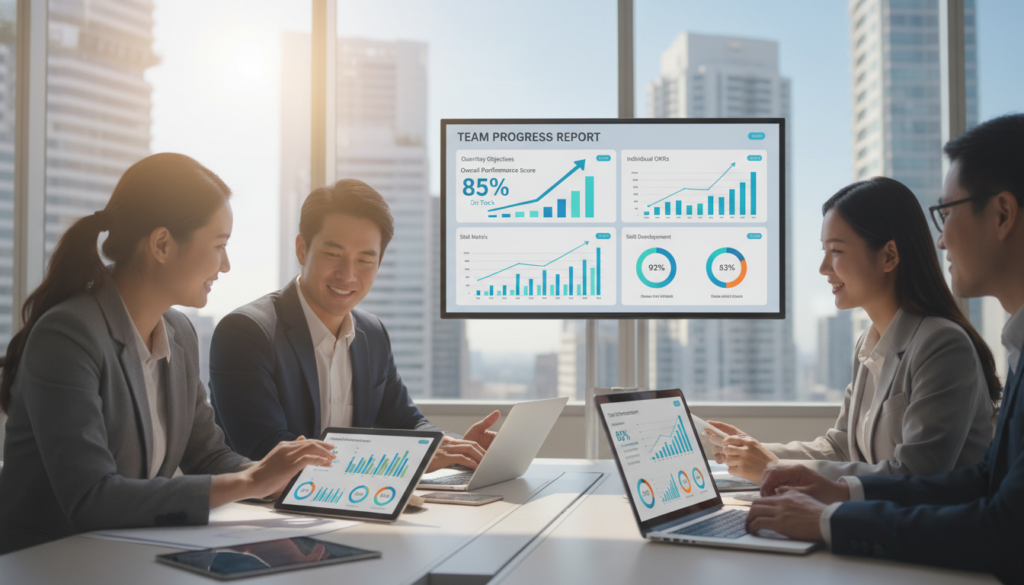
Can clear goals and timely feedback really change how we work day to day?
We believe they can. By aligning job objectives with company aims, we make work more meaningful for everyone. Clear expectations and ongoing feedback help staff see progress and grow.
Research shows organisations that focus on employee performance are 4.2 times more likely to outperform peers and often enjoy about 30% higher revenue growth. We use a mix of goal setting, regular reviews, and targeted training to build motivation and engagement.
To support this approach, we adopt modern tools like the sandmerit KPI system that ties individual objectives to wider company results. This keeps reviews continuous rather than annual, and makes improvement part of daily work.
Key Takeaways
- Clear goals link individual work to business success.
- Regular feedback motivates and guides development.
- Continuous reviews beat once-a-year appraisals.
- Training and recognition raise engagement and retention.
- Tools that track progress make outcomes visible and fair.
Understanding the Employee Performance Management System
Structured approaches let organisations translate strategy into day-to-day work. We define a performance management system as a framework that tracks objectives, progress, and skill development.
These frameworks fall into two groups. At the organisational level we use balanced scorecards, OKRs and strategic dashboards. At the individual level we apply 360-degree feedback, continuous check-ins, and focused reviews.
When applied well, this approach creates open dialogue between managers and staff. Regular feedback and clear goals build accountability, motivation, and a culture of steady improvement.
- Track progress: make outcomes visible and measurable.
- Reward & develop: identify top talent and target training.
- Real-time reviews: move beyond annual appraisals to continuous growth.
We rely on tools and simple planning to align every job with company aims. This helps us boost engagement, recognise effort, and support long-term success across Malaysian organisations.
Why Modern Organizations Prioritize Performance Management
Data shows that aligning daily tasks with broad company aims drives measurable revenue gains.
We prioritise effective performance management because clear links between job objectives and business goals deliver results. Organisations that focus on this approach are 4.2 times more likely to beat peers and often see about 30% higher revenue growth.
As the workforce becomes more agile and remote, we must adapt. Continuous feedback and collaborative goal setting replace annual reviews. This keeps employees engaged and helps managers support development in real time.
The Link to Revenue Growth
Aligning individual goals with organisational goals turns daily work into measurable impact. We use tools and software to track objectives and progress. This clarity boosts motivation and rewards effort, which in turn raises business outcomes.
Adapting to a Changing Workforce
Remote and hybrid models need flexible planning and regular reviews. We focus on continuous feedback, targeted training, and recognition to maintain engagement. That culture of transparency helps staff feel supported and drives long-term improvement.
“Focusing on structured measurement and timely feedback makes improvements visible and sustainable.”
- Data-driven: link goals to revenue and growth.
- Continuous: shift from annual reviews to regular check-ins.
- Supportive: use tools to coach, not just judge.
| Focus Area | Benefit | Typical Tools |
|---|---|---|
| Goal alignment | Clear priorities, higher revenue | OKRs, KPI dashboards |
| Continuous feedback | Faster development, better engagement | Check-ins, feedback apps |
| Training & recognition | Skill growth and retention | Learning platforms, reward systems |
Core Elements of an Effective Performance Management System
At the heart of strong workplace practices are clear aims, regular coaching, and ongoing learning.
Clear goal setting gives staff a direct line between daily job tasks and wider company objectives. We use measurable objectives and simple planning to keep focus.
Continuous feedback and coaching create faster improvement. Gallup research shows regular coaching can make employees about 3.6 times more motivated to excel.
- Ongoing training and inclusive development for all staff.
- Recognition and rewards to boost retention and morale.
- Data-driven tools to track progress and spot training needs.
| Element | Benefit | Typical tools |
|---|---|---|
| Goals & objectives | Clear priorities, aligned work | OKRs, KPI dashboards |
| Feedback & coaching | Faster skill growth | Check-ins, feedback apps |
| Training & recognition | Higher retention, motivation | Learning platforms, reward tools |
“A people-first approach turns evaluation into a path for growth.”
Strategic Goal Setting and Alignment
When we set goals with intent, teams gain clarity and the whole organisation moves faster.
Defining SMART objectives gives each task meaning and a clear deadline.
Defining SMART Objectives
Specific: We write clear objectives so every employee knows what success looks like.
Measurable: Each goal has metrics so we can track progress weekly or monthly.
Achievable & Relevant: Objectives match job scope and broader company aims, which strengthens motivation and engagement.
Time-bound: Deadlines help teams prioritise work and focus development efforts.
- We co-create goals with managers and employees to boost ownership.
- We use specialised software to document objectives and log progress.
- Regular checks let us adjust planning before small issues become large ones.
| Step | Purpose | Typical tools |
|---|---|---|
| Set SMART goals | Clear aims and measurable targets | OKRs, KPI dashboards |
| Review cadence | Track progress and give timely feedback | Weekly check-ins, review apps |
| Align to company | Ensure effort links to business priorities | Strategic plans, goal-mapping tools |
The Role of Continuous Feedback in Professional Growth
Small, frequent conversations drive steady growth more than annual reviews.
Continuous feedback helps people spot strengths and fix weaknesses in real time. We make it part of daily work so goals stay clear and progress is measurable.
Gallup finds that employees are 3.6 times more motivated to do outstanding work when managers give daily feedback rather than waiting for yearly reviews.
Our approach uses short check-ins and quick surveys on internal intranets. These tools let staff share anonymous thoughts and let managers act fast.
We train managers to give constructive, timely advice that focuses on development and skills, not just ratings. This raises engagement and helps people grow their job abilities.
“Daily guidance turns learning into a continuous process and celebrates wins as they happen.”
- Regular check-ins keep objectives aligned with company goals.
- Anonymous feedback fosters trust and open dialogue.
- Timely coaching improves progress and motivation.
Implementing a Performance Management System Successfully
A careful rollout turns a good idea into lasting change across an organization.
Planning must pair with clear communication. We map timelines, train managers, and involve staff early. This avoids confusion and builds trust.
Planning the Rollout
We stage launches in phases and pilot with one team first. Pilots spot issues fast and let us refine training and software before wider use.
Securing Executive Buy-in
We show how the performance management system links to business goals and long-term growth. Leaders back the project when metrics and ROI are clear.
Establishing Clear Expectations
Only 47% of people say they know what is expected at work. We tackle this by co-creating objectives and publishing simple guides.
What we train managers to do:
- Set realistic goals and give timely feedback.
- Use integrated software to track progress and reviews.
- Recognize progress and tie rewards to outcomes.
| Phase | Focus | Outcome |
|---|---|---|
| Pilot | Training & feedback loops | Refined process, higher buy-in |
| Scale | Company-wide rollout | Consistent expectations, tracked progress |
| Embed | Rewards & development | Stronger culture and engagement |
Best Practices for Manager and Employee Training
Practical workshops and on-demand courses make skill building part of daily work.
We prioritise comprehensive training. Forbes found companies with formal programs earn 218% more income per employee. That makes clear why we invest in learning across the company.
Our sessions teach managers how to set realistic goals, give constructive feedback, and run fair reviews. We also coach staff to set personal objectives and act on feedback.
- Regular short workshops for managers and teams.
- On-demand courses and microlearning for busy schedules.
- Mentorship and coaching to support long-term development.
| Focus | Method | Outcome |
|---|---|---|
| Goal setting | Workshops, templates | Clear objectives and planning |
| Feedback skills | Role-play, e-learning | Fair reviews and better coaching |
| Continuous growth | Mentors, on-demand modules | Higher engagement and rewards |
“Training that ties skills to daily goals builds a stronger, more consistent culture.”
By running regular training and using supportive tools and software, we embed a repeatable process across teams. This keeps our performance management efforts consistent and helps the company meet its business goals in Malaysia.
Leveraging Technology for Real-Time Performance Tracking
Real-time tools let teams see progress as it happens and act on it fast.
Utilizing AI-Powered Intranets
We use AI-driven intranets to capture ongoing feedback, goal progress, and peer reviews in one place. Platforms such as Simpplr add automated workflows and social feeds so recognition is instant.
Instant recognition keeps engagement high and helps managers remind teams to celebrate wins without leaving a single application.
- Consolidated analytics flag trends early so we can plan training and development.
- Automated reminders and social recognition reduce bias in reviews.
- Integrated tools make communication and rewards seamless across the company.
“AI-powered intranets make goal tracking part of daily work and help teams improve in real time.”
| Capability | Benefit | Example |
|---|---|---|
| Automated workflows | Faster follow-up and fewer missed tasks | Simpplr reminders |
| Integrated social feeds | Instant peer recognition and morale boost | Real-time shout-outs |
| Consolidated analytics | Early issue detection and tailored development | Dashboards and reports |
To learn how digital tracking fits modern practice, read our piece on digital performance tracking.
Enhancing Employee Engagement Through Recognition
Simple acts of appreciation can transform team morale and retention. Select Software Reviews found that 66% of employees would quit if they did not feel appreciated. That makes recognition central to engagement and to keeping talent in Malaysia.
We build recognition into our daily routines. Our platform supports instant shout-outs, badges, and public appreciation so every contribution is seen.
Peer-to-peer praise strengthens relationships across teams. We celebrate wins in meetings and highlight success in company newsletters. This keeps motivation high during long or tough projects.
- Immediate rewards: badges and shout-outs for fast wins.
- Peer recognition: cross-department praise to boost culture.
- Celebration rituals: meetings and newsletters to reinforce value.
“Recognition of effort, not just outcomes, keeps teams resilient and focused.”
| Recognition Type | How It Works | Business Benefit |
|---|---|---|
| Instant shout-outs | Quick messages and badges on dashboards | Boosts daily engagement and morale |
| Peer-to-peer awards | Nomination and small rewards from colleagues | Strengthens team bonds and retention |
| Team celebrations | Meeting highlights and newsletter features | Reinforces company values and visible wins |
Our approach makes it easy for managers and peers to give feedback and rewards. We use thoughtful planning and lightweight software tools so recognition becomes a natural part of work.
We commit to a culture where every employee feels seen, valued, and motivated to contribute to our shared success.
Addressing Underperformance with Empathy and Structure
When someone struggles to meet goals, a kind and methodical approach helps them improve. We treat underperformance as a chance for growth rather than blame.
Using Performance Improvement Plans
Performance Improvement Plans (PIPs) are formal documents that set clear areas for improvement, timelines, and available resources. We design PIPs to be constructive, with measurable goals and a realistic timetable.
Each PIP states expected milestones and links to training or coaching. This ensures the person has tools and support to meet the job requirements.
Monitoring Progress and Support
We monitor progress through regular check-ins and timely feedback. Short, frequent conversations let us adjust goals and offer extra coaching when needed.
We also keep detailed records of actions taken, support offered, and outcomes. This approach ensures transparency, fairness, and legal compliance across the management system.
“Early, structured support helps staff overcome challenges and reach their potential.”
- Growth-focused: PIPs aim to develop skills, not punish.
- Practical help: training, coaching, and software tools back each plan.
- Clear tracking: regular reviews and records keep the process fair.
Overcoming Common Challenges in Performance Management
Common obstacles — from doubt about change to uneven scoring — can stall even the best performance management efforts.
We tackle resistance by communicating the purpose and benefits clearly to every employee. Transparent goals and open channels for feedback reduce fear and build trust.
To fix inconsistent application, we standardize criteria and run regular calibration meetings so reviews remain fair across teams. We also audit the process often to catch gaps early.
- Train managers: practical sessions on objective setting and unbiased reviews.
- Involve employees: co-design goals to gain buy-in and reduce scepticism.
- Audit & adapt: regular checks keep the management system credible and current.
“Clear rules, steady training, and frequent audits make change stick.”
By combining transparent communication, consistent criteria, and ongoing training, we build an effective performance management approach that fits Malaysian workplaces and supports long-term development.
The Impact of Performance Appraisals on Productivity
Appraisals shape daily focus and can unlock measurable gains in output.
Organizations with high employee engagement report 18% more productivity and 23% greater profitability. That data shows the link between clear review routines and business results.
Moving beyond annual reviews means we give timely feedback and coaching throughout the year. Short, regular check-ins keep goals visible and reduce surprises at review time.
Moving Beyond Annual Reviews
Our management system captures ongoing feedback, progress on goals, and peer reviews in one place. This gives a fuller view of each person’s contributions and growth.
We use data from the performance management system to spot skills gaps. Then we tailor training and development so learning is relevant and timely.
“A well-structured appraisal process motivates staff and drives a high-performance culture.”
- Continuous reviews deliver faster course corrections.
- Consolidated data helps managers plan targeted training.
- Transparent feedback reduces misunderstandings and boosts engagement.
Our commitment: embed an effective performance management process that lifts productivity and helps us meet market goals in Malaysia.
Fostering a Culture of Transparency and Communication
Openness and honest dialogue turn daily work into shared purpose across every team.
We make expectations clear by publishing metrics and simple goals. This reduces confusion and shows how each role links to company aims.
We use multiple channels — regular team meetings, brief updates, and digital notices — so everyone stays informed about progress and changes.
Our approach encourages ongoing feedback and safe conversation. People can raise ideas, ask for support, and suggest improvements without fear.
- Clear metrics: shared targets and easy-to-read reports.
- Open channels: meetings, newsletters, and quick check-ins.
- Supportive culture: candid feedback and constructive coaching.
“Authentic communication builds trust, sparks innovation, and keeps everyone moving forward together.”
By promoting transparency we boost employee engagement and help teams act with confidence. Quick responses to issues and shared celebrations keep morale high across Malaysia.
Integrating Development Plans for Long-Term Success
Linking career growth to business aims ensures learning stays relevant and measurable.
We integrate individual development plans into our performance management approach so each person has clear steps, resources, and timelines. These plans map skills to current roles and to future opportunities.
Targeted training and structured coaching help people close skill gaps quickly. Regular feedback is built into each plan so progress is visible and timely.
We align personal goals with our organizational goals. This link keeps learning practical and ensures investment supports long-term competitiveness in Malaysia and beyond.
“Clear development paths turn ambition into measurable growth.”
| Plan Element | What It Shows | Typical Outcome |
|---|---|---|
| Steps & timelines | Concrete actions and dates | Faster skill gains and clarity |
| Resources & training | Courses, mentors, on-the-job tasks | Better readiness for higher roles |
| Progress tracking | Regular check-ins and feedback | Higher retention and effective performance |
We encourage peer pairing for knowledge sharing and tracking progress in a single system. This approach helps retain top talent and builds a culture of continuous development.
WhatsApp Us to Learn More About sandmerit Performance Management System
Message us on WhatsApp to see a live demo of sandmerit’s tools and how they help teams succeed.
If you are interested in optimising your organisation’s performance, please WhatsApp us at +60193156508. We will respond quickly and arrange a demo tailored to your needs.
What we offer:
- Live demo showing how sandmerit improves goal tracking and results.
- Practical advice on aligning individual tasks with company aims.
- Personalised recommendations to boost engagement and productivity.
Our team is ready to guide you through features, answer questions, and outline rollout steps that fit Malaysian workplaces.
| Contact | Service | Benefit |
|---|---|---|
| WhatsApp: +60193156508 | Live demo & consultation | Clear roadmap to improve performance |
| Follow-up | Custom recommendations | Higher team engagement |
| Support | Implementation guidance | Sustainable business results |
“Reach out and let us show how sandmerit can align daily work with bigger goals.”
Conclusion
In conclusion, small daily changes produce lasting gains across the whole organisation.
effective performance management ties clear goals, frequent feedback, and targeted training to measurable results. We use recognition and modern tools to keep progress visible and fair.
When someone needs support, we apply empathy and a structured plan. Short check-ins, coaching and tailored development help each person grow and stay aligned with business goals.
Keep testing and refining your approach. By staying practical and data-informed, we can build a high-performing culture that fits Malaysia’s evolving workplace needs.
FAQ
What benefits do we see when implementing a performance management solution?
We gain clearer goal alignment, improved staff engagement, and faster progress tracking. That leads to higher productivity, better role clarity, and more timely coaching. We also see stronger links between daily work and organizational targets, which boosts motivation and retention.
How does a modern performance platform help align objectives with company goals?
We map individual goals to strategic priorities using measurable targets and regular check-ins. This creates transparency across teams, ensures contributions support business outcomes, and simplifies reporting for leadership.
What are the core elements we should include in our performance framework?
We include goal setting, continuous feedback, competency assessments, development plans, and recognition. Each element supports career growth, accountability, and measurable improvement.
How do we write effective SMART objectives for staff?
We make goals Specific, Measurable, Achievable, Relevant, and Time-bound. We clarify expected outcomes, set quantifiable metrics, ensure realism, tie goals to strategy, and set clear deadlines.
Why is ongoing feedback more effective than annual reviews?
We provide timely course corrections and reinforce good behaviors when feedback is continuous. Frequent conversations reduce surprises at review time and increase skill development and engagement.
What steps should we follow when rolling out a new performance solution?
We start with needs assessment, define success metrics, pilot with a few teams, train managers and staff, gather feedback, and iterate before full deployment.
How do we secure executive buy-in for a new platform?
We present a clear ROI case, show pilot results, highlight how it supports strategic priorities, and outline governance and risk mitigation. Executives respond to evidence of improved outcomes and efficiency.
What training best practices help managers and staff adopt the process?
We use role-based training, short refresher sessions, real-world scenarios, and ongoing coaching. We also provide quick reference guides and accessible support channels.
How can technology enable real-time tracking and insights?
We deploy tools that capture goals, feedback, and performance data continuously. Dashboards and analytics reveal trends, support timely interventions, and reduce administrative work.
Can AI tools improve internal knowledge sharing and performance?
We leverage AI-powered intranets to surface relevant content, suggest learning resources, and personalize coaching prompts. This speeds up skill development and supports informed decision-making.
How do we effectively recognize contributions to boost engagement?
We combine frequent, specific recognition with meaningful rewards tied to values and outcomes. Public praise, spot bonuses, and career development opportunities increase motivation and loyalty.
What approach do we take when addressing underperformance?
We start with empathetic conversations to identify root causes, set clear expectations, and co-create a development plan. We provide resources, regular check-ins, and defined timelines for improvement.
How do performance improvement plans (PIPs) work in practice?
We define measurable targets, required actions, support resources, and review dates. PIPs are framed as development tools with documented progress checkpoints and transparent outcomes.
What common challenges hinder successful adoption, and how do we overcome them?
We face unclear goals, lack of manager capability, and low trust. We overcome these with clear communication, manager coaching, streamlined tools, and consistent leadership support.
How do we move beyond traditional annual appraisals?
We adopt continuous reviews, frequent check-ins, and real-time metrics. This shift emphasizes development and operational agility instead of a once-a-year summary.
How does transparency in conversations affect workplace culture?
We build trust and reduce ambiguity by sharing expectations and feedback openly. Transparency encourages accountability, cross-team collaboration, and faster problem solving.
How do development plans contribute to long-term organizational success?
We align individual growth with strategic needs, close skill gaps, and prepare future leaders. Ongoing learning supports innovation and long-term retention.
How can we contact sandmerit to learn more about their performance offering?
We can message sandmerit on WhatsApp for demos, pricing details, and implementation guidance. They provide tailored consultations to match our organizational needs.