
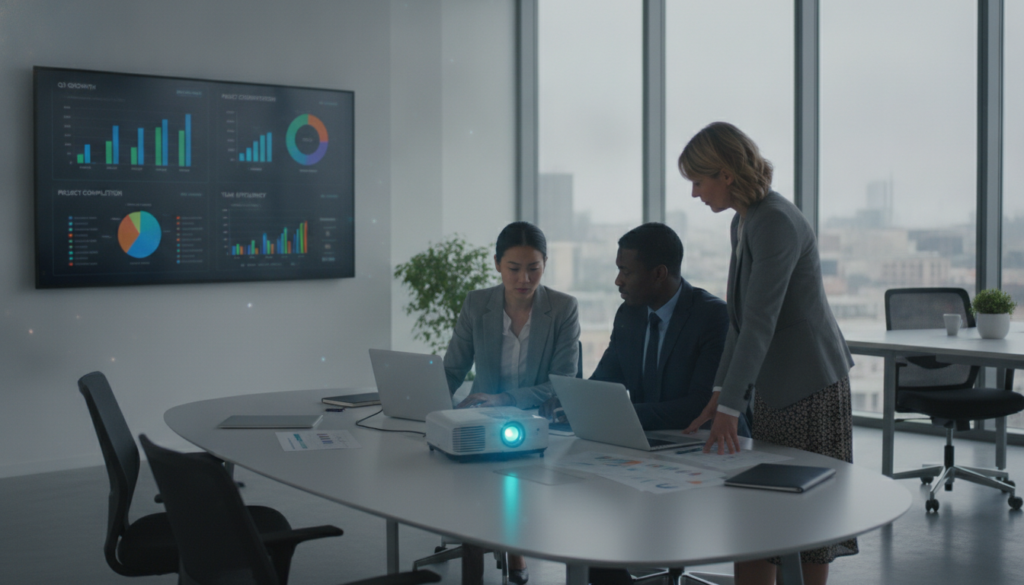
Can a single change to how we set goals and give feedback truly lift morale and growth across our company? This question guides our approach as we rethink reviews and routines for Malaysian teams.
We know that building an effective framework boosts employee performance and business outcomes. Research shows many organisations see roughly 30% higher revenue growth after shifting from annual checks to continuous review and coaching.
In this guide, we walk through each essential step. From assessing current needs to training managers and employees, our steps aim to align personal goals with company objectives.
We also highlight how tools such as the sandmerit KPI system can streamline processes while keeping people at the centre.
Our goal is simple: create a fair, transparent way that promotes development, clear expectations, and regular feedback so teams can thrive in today’s work environment.
Key Takeaways
- Move from annual reviews to continuous discussions.
- Align individual goals with company objectives for growth.
- Train managers and employees for consistent feedback.
- Use focused tools to simplify tracking and evaluation.
- Create an open culture that supports development and engagement.
Understanding the Role of Performance Management
When we shift to ongoing feedback, teams gain direction and momentum. Traditional annual reviews still dominate: 71% of companies rely on them, and managers spend about 210 hours per year on those reviews.
Defining the Modern Framework
We view the modern framework as regular check-ins, clear goals, and timely feedback. This moves the focus from one-off ratings to steady development.
Benefits of Strategic Alignment
Strategic alignment helps each employee see how their work links to company objectives. When managers give weekly feedback, teams report far better guidance and engagement.
| Area | Old Approach | Modern Approach |
|---|---|---|
| Timing | Annual reviews | Continuous discussions |
| Manager Effort | ~210 hours/year | Regular short check-ins |
| Outcome | Snapshot view | Ongoing development |
To support this shift, we recommend tools that centralize goals and feedback. Explore sandmerit KPI software for a streamlined approach: sandmerit KPI software.
Key Steps for Designing a Performance Management System
We start by mapping current gaps, then set measurable goals with input from every team. This gives HR and leaders a clear plan and helps employees see how their work links to company objectives.
Next, we recommend a short audit of the existing process to spot blockers. Involving staff in workshops builds buy-in and improves engagement. Clear metrics and regular check-ins help managers give timely feedback and support development.
We apply consistent standards so every team member is assessed fairly. Where possible, we use modern performance management software to automate routine tasks. This frees managers to coach, not just record scores.
- Assess gaps with HR and teams.
- Set measurable goals aligned to objectives.
- Embed continuous feedback and short reviews.
- Use software to streamline processes.
These steps create a practical framework for continuous improvement and stronger team outcomes across the company.
Assessing Organizational Needs and Current Gaps
Before we change tools or routines, we map where our teams struggle and where wins already happen. This clear snapshot guides how we update the performance management process for Malaysian firms.
Analyzing Qualitative and Quantitative Data
We use interviews, focus groups, and past performance reviews to collect qualitative insight. These conversations reveal how employees feel about expectations and feedback.
Alongside this, we pull reports from existing management software and HR records. Numbers show trends in goals met, turnover, and training needs.
“Combine voices and data to spot patterns that single sources miss.”
Key steps include mapping metrics, comparing review outcomes, and setting SMART goals tied to business objectives. That lets HR design targeted interventions that boost employee performance and development.
- Gather staff input and system reports.
- Identify gaps in reviews and manager coaching.
- Set measurable goals to track improvement.
Defining Clear Roles and Responsibilities
Clear roles cut confusion and make every goal easier to reach. When we assign duties, teams know who owns each task and who supports it. This clarity helps managers give timely feedback and improves the quality of regular reviews.
HR should lead open conversations so every employee understands how their daily work links to company objectives. We encourage written role descriptions and simple checklists. These reduce overlap and make performance conversations fairer.
When managers and employees share responsibility, employees take ownership of career development while leaders provide coaching and training. Holding stakeholders accountable ensures the whole process runs smoothly and aligns with business targets.
- Document duties clearly to avoid confusion.
- Create short role guides for managers and staff.
- Use regular check-ins to confirm who does what.
“Clarity in roles creates focus; focus delivers measurable results.”
For frameworks and practical methods, see our effective performance management guide and the sandmerit methodology. These resources help us keep the process consistent across the company.
Designing Framework Components and Metrics
We build framework components that map to clear outcomes and make progress visible to everyone. Choosing metrics that reflect real work helps remove bias and supports objective evaluation.
Setting SMART Goals
We use SMART goals to give employees clear targets. Google’s OKRs, used since 1999, show how measurable goals can stretch teams while aligning to company priorities.
Specific, measurable, and time-bound goals help managers track growth and guide development conversations.
Establishing Measurement Cadence
Regular cadence keeps feedback relevant. Adobe moved from annual reviews to ongoing check-ins in 2012 and saw better employee development.
We recommend monthly or quarterly touchpoints so managers can course-correct and support employee performance in real time.
Developing Recognition Programs
Recognition reinforces the behaviours we want to see. Small, frequent rewards lift morale and signal what the organization values.
“Celebrate wins to make feedback and development stick.”
By integrating metrics, cadence, and recognition into our management system, we create a flexible framework that drives business results and continuous development for employees.
Implementing Technology Solutions for Efficiency
Choosing the right platform turns scattered notes into live insights that teams can act on.
We recommend a centralized performance management system that stores documents and tracks progress in real time. This reduces errors and keeps goal updates visible to both employees and managers.
Integration matters. Pick software that links with payroll and HR tools so data flows smoothly. That keeps processes simple and saves time on routine tasks.
When employees can view their own records, engagement and development improve. Managers then spend less time on admin and more time coaching.
“Good software turns reviews into ongoing conversations and clearer career paths.”
- Centralize files and goals for real-time tracking.
- Integrate with HR tools to reduce duplication.
- Customize fields so the platform fits changing needs.
| Need | What to look for | Benefit |
|---|---|---|
| Real-time tracking | Live dashboards and goal updates | Faster coaching and clearer progress |
| Data accuracy | Secure document storage and audit logs | Fewer errors and reliable reports |
| Integration | APIs for HR, payroll, and L&D | Smoother workflows and less admin |
| User adoption | Simple interface and mobile access | Higher engagement and self-directed development |
Training Managers and Supporting Employees
Effective manager training turns routine check-ins into growth conversations that employees trust. We train managers to give clear, timely feedback and to listen first. This builds the trust needed for honest dialogue.
Building Trust Through Constructive Feedback
We teach practical skills for fair performance reviews and for coaching staff toward their goals. Managers learn how to raise concerns early and offer actionable steps.
Our programs guide managers on handling tough conversations. They practice listening, giving specific examples, and setting follow-up dates. That keeps employee morale steady.
- Train for clarity in one-on-one meetings.
- Coach on unbiased review methods and clear goals.
- Support both managers and employees with ongoing resources.
“When managers are skilled and supported, the whole organization benefits.”
Learning More About the sandmerit Performance Management System
Start a conversation with our team to discover how sandmerit helps managers and employees work toward shared targets. We tailor solutions for Malaysian firms and focus on clear goals, timely feedback, and measurable growth.
Why choose sandmerit? Our team guides your transition and ensures the new performance management process fits your culture. We help track progress, gather useful feedback, and support employee development.
- WhatsApp us at +60193156508 to learn more and get personalised advice.
- We provide hands-on support so your system delivers value quickly.
- Our experts work with managers and staff to embed clear goals and fair reviews.
If you are ready to transform your organisation, contact us via WhatsApp for fast, local help. We are committed to building a culture where every employee has the tools to grow and succeed.
Conclusion
To finish, we stress steady habits that keep goals visible and support continuous growth.
Designing and running an effective performance approach helps align individual goals with business aims. By shifting from rigid annual reviews to ongoing check-ins, we boost employee engagement and team outcomes.
We urge teams to use modern tools and to train managers so daily coaching feels natural. Good tech makes tracking easier, and regular feedback keeps progress actionable for employees and managers.
Support throughout the year matters most. Keep collecting feedback, refine the system, and make goals part of everyday work so the whole organisation benefits.
FAQ
What are the key steps for designing a performance management system?
We begin by clarifying organizational goals and aligning them with team and individual objectives. Next, we define clear roles and responsibilities, set measurable SMART goals, choose relevant metrics, and establish a regular review cadence. We also select tools that support continuous feedback and recognition, and provide training so managers and employees can use the process effectively.
How does performance management support strategic alignment?
We tie individual objectives to company priorities so everyone works toward the same outcomes. This alignment helps focus resources, improve decision making, and measure progress against strategic targets. When goals cascade from top-level objectives, teams see how their work impacts business results and employee engagement improves.
What does a modern performance framework include?
We design a framework that blends goal setting, ongoing feedback, development planning, and formal reviews. It includes quantitative metrics and qualitative inputs, a defined measurement cadence, recognition programs, and integration with talent practices like training and succession planning.
How do we assess organizational needs and current gaps?
We analyze qualitative and quantitative data — surveys, interviews, performance metrics, and turnover rates — to identify pain points. That insight guides priorities for process changes, technology adoption, and manager capability building.
Which metrics should we track?
We recommend a balanced mix: objective output measures (sales, delivery, error rates), behavioral indicators (collaboration, leadership), and development metrics (skill growth, training completion). Choose few high-impact measures that map to business objectives.
How often should reviews and check-ins occur?
We advocate continuous feedback supplemented by formal reviews. Regular weekly or biweekly check-ins keep performance on track, while quarterly or biannual reviews support calibration and development planning. The cadence should fit your culture and operational tempo.
What role does technology play in improving the process?
We use software to centralize goals, automate reminders, capture feedback, and generate reports. The right platform reduces administrative burden, increases transparency, and supports data-driven decisions. Integration with HR systems improves workflow and analytics.
How do we train managers to give effective feedback?
We provide practical workshops and tools focused on coaching skills, clear goal conversations, and unbiased evaluation. Role-playing and real-case practice help managers build confidence and foster trust through constructive feedback.
How can recognition programs be structured?
We design programs that reward both outcomes and behaviors. Use timely, specific recognition; peer-to-peer options; and tiers of rewards to reflect different achievements. Align recognition with core values to reinforce desired actions.
How do we measure the success of a new program?
We set baseline metrics before launch — engagement scores, productivity, turnover, goal completion rates — then track changes over time. Regular pulse surveys and qualitative feedback help us refine processes and prove ROI.
What common pitfalls should we avoid?
We avoid unclear goals, inconsistent manager training, infrequent feedback, and overly complex metrics. Overreliance on annual ratings undermines development; instead, we build continuous conversations and transparent expectations into the workflow.
How does the sandmerit performance management solution support organizations?
sandmerit offers integrated tools for goal setting, continuous feedback, review workflows, and analytics. We tailor the platform to your processes, provide manager and employee training, and help you scale recognition and development programs to improve engagement and outcomes.