
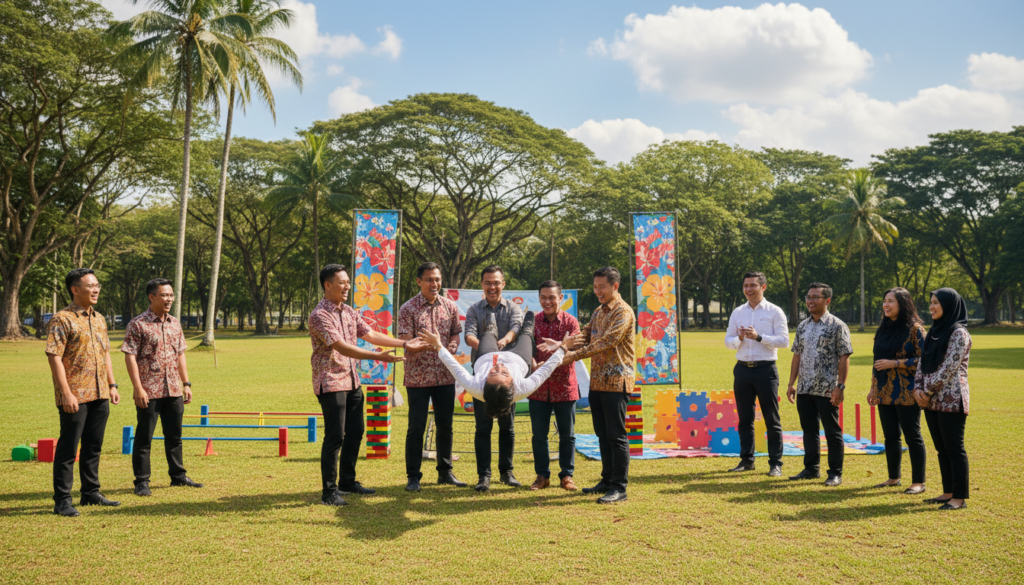
Did you know 72% of Malaysian employees report stronger motivation after just one well-run work session? That surprising stat shows how a short, focused exercise can shift mood, trust, and collaboration across a group.
We created this guide to help Malaysian companies pick practical, proven options that fit any office size or schedule. Whether you plan a half-day retreat or a 30-minute icebreaker, our advice aims to make participation meaningful and efficient.
Our approach balances fun with clear results. We highlight simple games, skill-building exercises, and an escape room option that all reinforce communication and trust. WhatsApp us to learn more at +6019-3156508.
We believe every group deserves tools that build real connection and lasting culture. This introduction leads into easy-to-run solutions that respect local needs and busy work routines.
Key Takeaways
- Short, focused sessions can boost motivation and trust quickly.
- Choose options that match your office size and time limits.
- Mix fun games with skill-focused exercises for best results.
- Escape room challenges can improve problem solving and collaboration.
- We offer tailored support—WhatsApp us at +6019-3156508 for help.
The Importance of Team Building for Malaysian Workplaces
In Malaysian workplaces, regular group exercises help turn casual coworkers into reliable collaborators. We see this as a long-term way to strengthen ties between staff and the company.
Research shows about 13% of employees are more productive when happy. That makes planned events a smart investment for any organisation that values output and retention.
When people work together, they gain better communication and practical skills. Over time, small sessions reveal leadership strengths and teach cooperation under pressure.
Team building is not just a one-off event. It should be a repeated approach that grows friendship, trust, and shared purpose across offices in Malaysia.
- Short exercises boost morale and on-the-job efficiency.
- Regular events help managers spot leaders and encourage collaboration.
- Prioritising these activities improves satisfaction and long-term retention.
Understanding the Core Benefits of Team Building Activities
Short, intentional exercises can turn routine work hours into moments of renewed energy and focus. We see two core benefits that matter most for Malaysian offices: higher morale and clearer communication.
Boosting Morale
Employees feel valued when a company schedules a regular activity. That respect raises confidence and helps members rely on one another.
Small events also let people show skills outside their daily roles. This lifts engagement and strengthens workplace culture.
Improving Communication
Exercises that require collaboration sharpen listening and problem-solving. Groups learn to share ideas faster and reduce misunderstandings.
Over time, clearer communication improves productivity and trust across groups. We recommend adding short sessions to regular meetings.
| Benefit | What It Improves | Time Needed |
|---|---|---|
| Boosted morale | Engagement & confidence | 15–30 minutes |
| Clearer communication | Listening & collaboration | 20–45 minutes |
| Stronger relationships | Trust & problem solving | 30–60 minutes |
For practical exercises and a list of proven formats, see our recommended resource on team-building exercises.
Essential Principles for Successful Group Collaboration
Clear principles help groups move from informal cooperation to dependable collaboration.
We use the seven C’s as a simple framework: Communication, Collaboration, Commitment, Competence, Confidence, Creativity, and Cohesion. These guide any exercise so every person knows their role and the expected outcome.
Apply each C with intention and you turn short sessions into measurable gains in trust and output. Below are compact reminders you can use before any activity.
- Communication — share clear goals and open feedback.
- Collaboration — pair diverse skills to solve problems fast.
- Commitment — ask every member to own a task.
- Competence — match exercises to people’s skill levels.
- Confidence — create a safe space to speak up.
- Creativity — invite new ideas and playful experiments.
- Cohesion — end with a quick reflection to link learning.
Use this approach in the office or at off-site events to help groups work together with purpose and speed.
Quick Icebreaker Games to Start Your Session
Kicking off with brisk icebreakers sets a friendly tone and primes collaboration. These short prompts help people relax, start talking, and learn small facts that matter in the workplace.
Three Question Mingle
Format: 30–60 minutes • 2–40 participants.
This activity gives everyone space to ask and answer three short questions. We suggest mixing one personal, one work-related, and one fun question.
Three Question Mingle encourages genuine conversation and helps members know better how to interact in future sessions.
Just One Lie
Format: 15–30 minutes • any group size.
Adapted from two truths and a lie, each person shares three statements with just one false claim. Others guess the lie. This game invites mingling and lots of facts about people.
Name Juggling
Format: 10–20 minutes • best for 5+ participants.
A lively memory exercise that combines motion and recall. Participants toss a soft object while saying names, adding rhythm and strategic thinking to learning who is who.
- Office trivia is a fun, low-stakes way to review company basics while helping members connect.
- These quick icebreakers are a great way to get your team building workshop off to the right start.
- Use these exercises to boost communication, trust, and comfort before deeper challenges.
Physical Challenges to Get Your Team Moving
Hands-on movement games give colleagues a fast, energising way to practice coordination and non-verbal cues.
Human Knot (15–30 minutes, 7+ people): Participants form a circle, cross hands, and work together to untangle without letting go. This activity teaches spatial awareness, patient problem solving, and silent coordination.
Gutterball (30–60 minutes, 8–20 people): Groups move a ball across the room using channels or pipes. Add obstacles to increase difficulty. The game rewards planning, steady hands, and quick adaptation.
These physical options break long hours in the office or conference room. They also lift energy and create shared momentum.
- Why try them: non-verbal communication improves, coordination sharpens, and people learn to trust quick decisions.
- Recommended size: best for groups of seven or more who need to work together and solve problems under mild time pressure.
We recommend scheduling one short exercise per meeting to keep skills fresh and to build practical teamwork over time.
Creative Exercises for Problem Solving
Creative problem-solving exercises let small groups test ideas fast and learn from quick feedback. We favour short, playful formats that reveal strengths, weaknesses, and who naturally takes lead roles.
The Marshmallow Challenge
Format: 20–30 minutes • groups of 4 members.
This classic lets groups build the tallest free-standing structure using 20 spaghetti sticks, one marshmallow, string, and tape. The exercise highlights rapid prototyping, iteration, and time pressure.
9 Dimensions
Format: 20–60 minutes • 3+ participants.
9 Dimensions guides members to compare views on communication, roles, and trust. It helps people share honest feedback and map where collaboration works best.
| Exercise | Size | Time | Core Skill |
|---|---|---|---|
| Marshmallow Challenge | 4 members | 20–30 minutes | Rapid prototyping |
| 9 Dimensions | 3+ participants | 20–60 minutes | Relationship mapping |
| Combined Run | 5–15 people | 30–60 minutes | Collaboration & trust |
We find these exercises push people to think outside routine tasks. They are a practical way to boost collaboration and identify who may need extra support.
Strategies for Remote and Virtual Team Bonding
Remote groups need simple rituals to stay connected across miles and time zones. We recommend short, regular options that fit busy Malaysian workdays and diverse schedules.
Schedule casual calls of 15–30 minutes during work hours so members across zones can join. These sessions recreate water‑cooler chats and let people share small wins.
“Regular, informal calls help colleagues feel included and seen.”
Online Group Games
Choose games like Jackbox or short quizzes for 30–60 minutes. Games ease pressure, spark laughter, and reveal collaboration styles without heavy prep.
- Rotate hosts so different people lead and meet colleagues they seldom speak with.
- Run sessions during core hours to avoid excluding outsourced or remote members.
- Keep one short exercise per week to maintain momentum and improve communication.
Quick tip: Track participation and adjust frequency. Small, consistent efforts build trust and make distant colleagues feel part of the same work culture.
How to Align Team Goals and Organizational Purpose
When objectives are visible, people see how their day-to-day work supports larger outcomes.
We recommend using OKRs to turn broad strategy into measurable aims. OKRs make goals clear, assignable, and trackable so members know what success looks like.
Strategic team building exercises can reveal how each person views the company mission. Use short, structured sessions to share priorities and surface ideas.
Make alignment practical: review priorities, map tasks to objectives, and set one metric per person. Repeat this every quarter to keep work on track.
“Aligning goals is a continuous process that needs regular communication and shared understanding.”
Try a game-show review: convert orientation learnings into a short quiz. It creates energy, checks knowledge, and links milestones to upcoming work.
| Step | Purpose | Time |
|---|---|---|
| Set OKRs | Translate strategy into measurable aims | 60 minutes |
| Link tasks | Show how individual work ladders up | 30 minutes |
| Review quiz | Reinforce mission and milestones | 15–20 minutes |
Building Trust Through Personal Sharing
Personal presentations give each person a chance to be seen and heard beyond the job title.
We use this format to help groups open up safely. The goal is simple: deepen trust and improve communication so members relate as people, not just coworkers.
Personal Presentations
Format: 60–240 minutes • 2–40 participants.
Each participant shares a few key experiences or stories that shaped them. This enlarges the social arena and helps one another connect on a deeper level.
Why it works: openness invites vulnerability, and vulnerability builds trust. We find that honest sharing creates lasting bonds that support collaboration and teamwork at work.
- Ask each person to include a short timeline, one meaningful event, and a lesson learned.
- Encourage simple visuals — drawings or keywords — to make the presentation memorable.
- Adjust time by group size: small groups need less time; larger groups need more minutes to give everyone space.
Tip: Close with a 10-minute reflection so members can link insights to daily work and future exercises.
Fun Activities for Small Groups
Low-prep exercises let people relax, laugh, and practise collaboration without long planning.
Two truths and a lie — 30 minutes, best for 5–8 people. Each person shares three statements and others guess the false one. This game is a great way to break the ice and push a new colleague to get personal.
Office trivia — 30–45 minutes, 5–20 participants. Lighthearted company questions help new recruits feel welcome and spark friendly competition. It is a breezy process to test simple facts and memories about the office.
- Both exercises help team members get to know better how to interact in a relaxed setting.
- They work well for groups who want to build trust and improve communication.
- Small group formats ensure every person can participate and share without feeling overwhelmed.
Why try them: these fun games create a positive company culture and give employees a simple way to practise collaboration and strengthen relationships.
Enhancing Communication Skills Through Play
Interactive play offers a fast, safe way for colleagues to practise speaking clearly and listening closely. These short exercises build practical skills that transfer to the office and daily work.
Human Knot
Format: 15–30 minutes • 7+ participants.
The Human Knot is a physical disentanglement puzzle that asks a group to work together to unwind without releasing hands. It trains non-verbal cues, spatial reasoning, and quick coordination.
Why it helps: this game forces members to read gestures, give clear short directions, and adapt when plans change. It is a great way to build collaboration and trust under light pressure.
Back to Back Drawing
Format: 5–10 minutes • 4+ participants.
Pairs sit back to back. One person describes an image while the other draws from the description alone. This activity sharpens listening and the ability to give precise instructions.
Why it helps: Back to Back Drawing is also great for teams that must improve how they coordinate and solve problems fast. Team members learn the value of clear instructions and active listening.
Outcome: Both games improve communication skills and help people trust one another. We find these short play sessions are a practical, low‑prep way to help staff work together more effectively.
Fostering a Positive Company Culture
Positive workplace culture starts with small, regular investments in how people relate to one another.
Fostering a positive company culture is essential if we want to retain top talent and keep employees engaged. Simple, repeatable events help colleagues learn respect, empathy, and clear communication.
Team building and short exercises are a common way to build camaraderie and personal relationships between team members in the office.
When team members appreciate one another, they create a supportive space. That support encourages collaboration and sparks innovation across departments.
“Regular, well-planned sessions show employees that management cares about their well‑being and growth.”
- Unity: These programs work to create shared purpose.
- Trust: Small challenges and a fun game help people rely on one another.
- Resilience: By investing in these moments, we build a team able to face challenges together.
| Goal | What it improves | Suggested time |
|---|---|---|
| Camaraderie | Personal connections among employees | 15–45 minutes |
| Skills & communication | Listening, problem solving | 20–60 minutes |
| Shared purpose | Alignment across groups | 30–90 minutes |
We recommend scheduling short, inclusive sessions and reviewing outcomes afterward. For a practical approach that fits diverse offices and rooms, see our methodology.
Tips for Facilitating Effective Workshops
Practical templates let facilitators focus on people rather than logistics. We recommend a short opening that states goals, timing, and expected outcomes so every participant knows why they are here.
Workshop Templates
Use a simple agenda: welcome, goal, one warm-up game, core work, and a 10-minute reflection. This order keeps members engaged and helps manage time.
Provide clear instructions for each game and check understanding before you start. Simple rules reduce confusion and let groups move faster.
- Define the objective in one sentence so all team members align quickly.
- Rotate facilitators to give different members a lead role and practise collaboration.
- Build short pauses for feedback to improve communication and apply new skills.
“Clear goals and a flexible plan make workshops memorable and productive.”
We prepare templates but adapt them during the session. When facilitators adjust pacing or examples, people stay engaged and learning deepens.
Overcoming Common Challenges in Team Dynamics
Addressing friction early with structured games helps people restore trust and move forward. We find short interventions reduce misunderstandings and keep work on track.
Use simple formats like two truths and a lie or office trivia to ease tension. These exercises let team members share safe personal details and laugh together.
In a small room, a single game can surface communication gaps and let groups practise listening. That practice builds real skills for daily work.
We encourage open discussion after each session. A quick reflection lets people voice concerns and propose solutions in a supported setting.
- Address issues early to prevent escalation.
- Create a safe space for employees to speak up.
- Use short games to build trust and practical collaboration.
Investing in regular, low‑prep exercises keeps groups cohesive and improves long‑term performance. When people feel heard, they focus on shared goals rather than ongoing challenges.
Expert Guidance for Your Next Event
Guidance from experienced planners reduces stress and boosts event impact. We help you design sessions that fit the room, the time available, and the people who will attend.
We help choose the best team building activities for your goals and for your team members. Our approach matches formats — from a quick game to an extended escape room — with desired outcomes.
Why use experts? Planning well means knowing how games and challenges shape behaviour. We tune exercises to develop skills and improve communication while building trust.
| Service | Format | Room size | Notes |
|---|---|---|---|
| Facilitated workshop | Interactive exercises | Small to medium | Focus on skills & communication |
| Custom escape room | Escape room | Medium | Problem solving challenge; great way to build trust |
| Quick energiser | Short games | Any room | Fast boosts for morale and focus |
We offer planning, facilitation, and follow-up so your company gets measurable results. Contact us to make your next event engaging, effective, and memorable.
Conclusion
We hope this guide helps you create small, repeatable rituals that strengthen communication and shared purpose across Malaysian workplaces.
Start small: try short games that get people talking and practising practical skills. As people connect, confidence and clarity grow.
Prioritise communication in every session and watch how people collaborate more naturally. Use the linked resource for quick ideas and formats like team building activities you can slot into meetings.
Thank you for trusting us. We look forward to seeing your group become more resilient, engaged, and ready to tackle new challenges together.
FAQ
What are quick icebreakers we can use to start a session?
We recommend short, low-prep games such as Three Question Mingle, Just One Lie, and Name Juggling. Each takes 5–15 minutes, helps people learn one another, and warms up communication and collaboration skills without special equipment.
How do we pick the right exercises for our group size?
We assess group size, time, and objectives first. For small groups under 10, choose personal sharing and problem-solving exercises. For larger groups, use breakout challenges like scavenger hunts or office trivia to split into workable teams and keep everyone engaged.
Can we run activities for remote employees?
Yes. We run Virtual Coffee Breaks and online group games over Zoom or Microsoft Teams. Use clear agendas, short segments, and interactive tools like polls and whiteboards to replicate in-person engagement and strengthen remote collaboration.
What physical challenges are appropriate for mixed fitness levels?
We select low-impact options such as relay puzzles, cooperative obstacle courses with optional roles, and gentle team hikes. These encourage movement and problem solving while letting participants opt into intensity that suits them.
How do creative exercises like the Marshmallow Challenge improve problem solving?
We use hands-on tasks to encourage rapid prototyping, iterative thinking, and role flexibility. The Marshmallow Challenge teaches teams to test assumptions quickly, communicate constraints, and prioritize collaboration over perfection.
What techniques build trust through personal sharing?
We guide Personal Presentations with clear boundaries and time limits, prompt reflection questions, and a facilitator to ensure psychological safety. When people share short, meaningful stories, relationships deepen and trust grows organically.
How can we improve communication via playful exercises?
We run activities like Human Knot and Back to Back Drawing to spotlight listening, clear instruction, and feedback. These fun challenges make communication gaps visible and let teams practice concise, constructive exchanges.
What are effective ways to align goals with company purpose?
We lead goal-setting sessions that connect individual roles to organizational objectives. Use vision mapping, OKR workshops, and short reflection exercises so employees see how daily work supports broader purpose and culture.
How long should a typical session last for maximum impact?
We recommend 60–180 minutes depending on depth. Short sessions (60 minutes) work for icebreakers and skill drills; half-day workshops allow deeper problem solving and goal alignment. Always include clear outcomes and follow-up actions.
What common challenges arise during these sessions, and how do we overcome them?
We often see disengagement, dominance by a few, and unclear objectives. We counter with rotating roles, timeboxing, varied activity formats, and explicit facilitation guidelines to ensure inclusive participation and measurable results.
Do we need an external facilitator for our events?
Not always. We can run many sessions in-house with trained facilitators. For large-scale or high-stakes events, an external expert can provide neutrality, structured frameworks, and fresh techniques to accelerate outcomes.
How do we measure success after a session?
We use short surveys, behavioral observations, and follow-up checkpoints tied to communication, collaboration, and goal metrics. Simple pulse surveys one week and one month after help quantify impact and guide next steps.
Are there low-cost ideas that still create strong results?
Absolutely. We use office trivia, improv prompts, and problem-solving games that require minimal materials but foster engagement. Thoughtful design and good facilitation deliver strong benefits without a big budget.