I explain the public health rules that took effect across Malaysia on April 1, 2022, as the country entered its endemic phase. Prime Minister Ismail Sabri announced the transition on March 8. This guide places that news in context and helps readers understand what changed.
Senior Minister of Defense Hishammuddin Hussein and Health Minister Khairy Jamaluddin helped lead the transition, alongside Finance Minister Tengku Zafrul and Communications and Multimedia Minister Annuar Musa. I’ll distinguish the April measures from further changes announced in May, while noting that some guidance could vary by state or later updates.
For organizations adapting to changing rules, sandmerit KPI performance management can help teams track goals, review progress, and keep responsibilities clear. Explore sandmerit KPI consultants to learn how the system can support stronger performance management.
Key Takeaways
- The endemic-phase rules began on April 1, 2022.
- The transition followed an announcement on March 8.
- National leaders helped guide the policy change.
- I cover travel, businesses, workplaces, worship, face coverings, and health protocols.
- Some rules depended on state guidance or later updates.
latest sop malaysia: The Shift to the Endemic Phase
I view the April 1, 2022, change as a measured response to a new phase of the pandemic. Omicron-related covid-19 cases had risen, yet severe illness remained limited. The government aimed to make daily rules easier to follow while keeping public health risks in view.
Why officials planned the change
Prime Minister Ismail Sabri announced the planned transition on March 8. The health ministry and other officials prepared a simpler standard operating approach for living with the virus. Clear guidelines would help people and businesses understand the rules.
Vaccination and hospital capacity
As of March 7, 98.7% of adults were fully vaccinated, and 64% had received a booster. Only 0.7% of patients were in severity levels three to five, while ICU use stood at 42%. These figures helped explain why officials judged the healthcare system able to manage the change. Workplace plans also shifted; workplace capacity changes took effect on April 1.
| Indicator | Reported figure | Context |
|---|---|---|
| Adult full vaccination | 98.7% | Coverage as of March 7, 2022 |
| Adult booster coverage | 64% | Coverage as of March 7, 2022 |
| Severe illness and ICU use | 0.7%; 42% | Severity levels three to five; ICU utilization |
What Changed When Malaysia Entered the Endemic Phase
On April 1, 2022, the national response shifted from many separate rules to a simpler framework. I saw the main change as a clearer way to organize public health guidance, rather than a single new restriction.
Officials planned one general SOP with nine key guidelines, replacing 181 separate documents. This approach aimed to help people understand which safeguards applied in daily settings and made the rules easier to navigate.
Several limits also ended. The 50% cap on social activities was removed, as were workplace capacity rules tied to employees’ vaccination status. Businesses and event organizers gained more room to plan, while basic health duties remained important.
Eased restrictions did not remove every precaution. Anyone who tested positive, along with close contacts, still had to follow health instructions. In my view, the transition paired fewer limits with personal care and practical safeguards.
| Area | Previous approach | Change from April 1 |
|---|---|---|
| National guidance | 181 separate SOPs | One general SOP and nine guidelines |
| Social activities | 50% capacity limit | Limit removed |
| Workplaces | Capacity tied to staff vaccination status | Vaccination-based capacity limits removed |
Face Masks and Everyday Health Measures
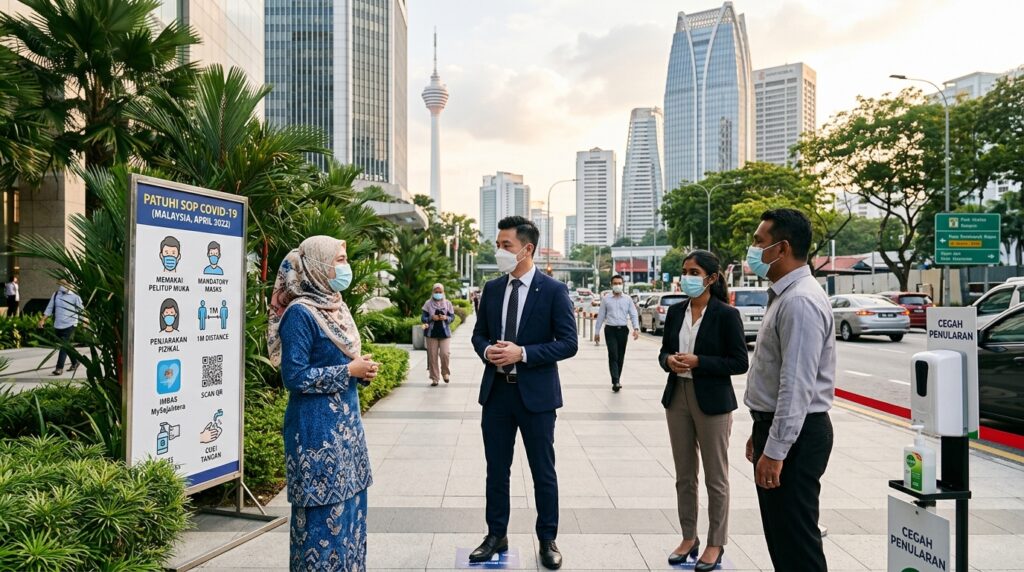
From April 1, 2022, I viewed face masks as a continuing precaution in public places, not as a sign that daily life had stopped. People were also advised to avoid crowds. Later outdoor guidance changed in May, so advice for indoor and outdoor areas did not stay the same.
Guidance for Public and Indoor Spaces
In April, people were advised to keep wearing masks in public places. The guidance covered face coverings, while later rules brought changes for outdoor settings. I recommend checking the date and setting when reviewing past guidance.
Ventilation and Hand Hygiene
Premises owners had to support good airflow, especially in enclosed areas such as shopping malls. People were also advised to clean their hands often. These simple steps worked alongside face masks and helped reduce everyday health risks.
Good ventilation and hand hygiene remained practical safeguards as people returned to shared spaces.
| Setting | April 2022 guidance | Practical focus |
|---|---|---|
| Public places | Face masks were advised | Avoid crowded gatherings |
| Enclosed premises | Owners had to ensure good ventilation | Support fresh airflow |
| Daily routines | Hand hygiene was advised | Clean hands often |
Business Operating Hours and Workplace Capacity
The April 1, 2022, changes gave businesses more control over daily schedules and staffing. I found the key point was not that every workplace rule disappeared. Instead, two specific limits ended, while employers still had to maintain safe working conditions.
Premises Operating Hours Returned to License Terms
Business premises could operate during the hours listed on their issued licenses. This change removed the earlier nationwide limit on opening times. Owners could plan shifts, customer service, and deliveries around their approved schedules. License terms again set the normal operating window.
Workplace Capacity Limits Were Removed
Employers could also end capacity limits tied to employees’ vaccination status. This gave teams more flexibility when arranging staff and reopening shared work areas. It did not cancel other health measures at work, however. Employers still needed to follow relevant public health guidance and protect staff.
I saw these changes as a practical shift: businesses could plan around license hours and staffing needs, while keeping sensible precautions in place. That distinction mattered for both daily operations and employee safety.
MySejahtera, Testing, and Positive COVID-19 Cases
I found it helpful to separate entry rules from health steps for people who may have had COVID-19. The rules for entering a venue changed over time, but testing and quarantine duties remained in place.
Entry scans and vaccination checks were dropped
From April 1, 2022, people still used MySejahtera to enter enclosed premises. That entry requirement did not apply to open areas such as parks. MYSJTrace also continued in enclosed venues where guests and visitors gathered.
Later May updates removed required QR-code scans and vaccination checks at premises. This change eased entry, but it did not end the MySejahtera system’s other public health uses.
Testing, isolation, and quarantine protocols remained
The health ministry still required people with suspected or confirmed cases to follow testing and quarantine instructions. People who tested positive, as well as close contacts, had to follow the directions they received.
- Entry checks changed as restrictions eased.
- Isolation and Home Surveillance Order duties remained in force.
The key distinction was simple: venue checks were dropped, while health protocols continued.
Interstate Travel and Religious Activities
Travel plans and worship routines both changed under the April 2022 rules. I found that the travel update removed a key barrier for residents moving between regions.
From April 1, people could cross state lines regardless of vaccination status.
Interstate travel was allowed regardless of a traveler’s vaccination status.
Worship could also resume without social-distancing measures, subject to decisions by the relevant authorities. The rules covered congregational prayers at mosques and surau, as well as ceremonies at other houses of worship.
- Islamic worship followed guidance from State Religious Authorities.
- Other houses of worship followed the Ministry of National Unity and UNIFOR.
Because local requirements could differ, I recommend checking the applicable guidance before attending. The national rules allowed these activities, while religious authorities guided how they took place.
| Activity | April 2022 provision | Relevant authority |
|---|---|---|
| Interstate travel | Allowed regardless of vaccination status | National travel rules |
| Mosque and surau prayers | Could take place without social distancing | State Religious Authorities |
| Other worship ceremonies | Could take place under applicable guidance | Ministry of National Unity and UNIFOR |
Guidelines for Safer Activities Across Different Settings
I found the nine-setting framework useful because it grouped advice by where daily activities took place. The government offered these recommendations to help reduce risk, while leaving room for relevant local and sector rules.
Travel, education, retail, and workplaces
The first group covered transport and travel, education and care, retail, and food and beverage services. Workplace advice applied to both enclosed rooms and open work areas. It helped people consider transmission risks and follow proper standard operating procedures.
Events, accommodation, worship, and recreation
Other recommendations covered events, ceremonies, entertainment, tourist attractions, hotels, and guest accommodation. They also addressed worship, marriage ceremonies, funerals, sports, leisure, and recreation facilities.
- Check venue and activity guidance before making plans.
- Consider airflow, crowd size, and possible symptoms.
- Review any relevant state or sector-specific rules.
“The guidance was encouraged rather than enforced.”
The aim was practical risk awareness, not a single rule for every setting. These guidelines gave organizers and visitors a clear way to think about safer activities.
May Updates to Masks and Social Distancing
The May 1, 2022, update marked a separate step after April 1. Outdoor face masks became optional across the country. I treat this as a date-specific change, not as a rule that applied to every setting.
The April measures took effect first. The outdoor adjustment began one month later. Keeping those dates distinct helps explain why guidance differed between public and indoor areas.
Indoors, masks remained mandatory. This rule also applied on public transportation and in e-hailing rides. The outdoor option did not change requirements in these settings.
“Outdoor use became optional; indoor use remained required.”
Officials encouraged physical distancing when people were not wearing a covering. They did not keep distancing as a universal requirement. This gave people a clear way to reduce close contact outdoors while following the rules in shared indoor spaces.
- Outdoor activities: coverings were optional.
- Indoor settings and rides: masks were required.
- Without a covering: distancing was encouraged.
The key point was that the May change applied outdoors, not everywhere.
International Travel Rules and Restrictions on Sectors
May’s border changes made vaccination status the main factor in the travel process. The health ministry shared different entry guidelines for each group.
Entry testing and quarantine varied by vaccination status
Fully vaccinated travelers entering Malaysia no longer needed a COVID-19 test before departure or upon arrival. The government also dropped the travel insurance requirement.
Partially vaccinated and unvaccinated travelers faced more regulations. They needed a PCR test within two days before departure, followed by supervised RTK-Ag testing within 24 hours of arrival. They also had to quarantine for five days.
These entry changes did not alter indoor masks rules. Travelers still needed to check requirements that applied to their trip dates.
Nightclubs and restricted businesses reopened
From May 15, 2022, nightclubs and other businesses on the National Security Council’s negative list could operate fully. This gave affected sectors room to resume normal business, while operators still followed rules that applied to their premises.
| Group or sector | May 2022 provision | Key detail |
|---|---|---|
| Fully vaccinated travelers | No predeparture or arrival test | Travel insurance requirement dropped |
| Partially vaccinated or unvaccinated travelers | PCR test, supervised RTK-Ag test, and quarantine | Five-day quarantine required |
| Nightclubs and listed sectors | Full operation allowed from May 15 | National Security Council negative list |
Education Updates and Malaysia’s COVID-19 Case Context
School routines showed how the 2022 transition affected students and families. Education news included the return of regular canteen service, sports, and recreational activities. Parents could also visit students at boarding schools.
The Education Ministry encouraged students to wear school uniforms at first. Uniforms became compulsory when the second school term began on June 12, 2022. The ministry also kept its current assessment and examination guidelines in place through May 17.
These school regulations came during a period of high public health impact. By April 30, 2022, Malaysia had recorded 4,443,318 cumulative COVID-19 cases and 35,536 deaths. That figure provides important context for the decisions schools and families faced.
I separate these dated updates from later developments. The reported cases and school rules describe the transition period in 2022, rather than current policy. Checking the date of a rule helps readers understand what applied at the time.
WhatsApp Me to Learn About the Sandmerit Performance Management System
If you would like to learn more about Sandmerit’s performance management offering, I invite you to contact us through WhatsApp. Send your inquiry to +60193156508, the number provided for business questions.
You can ask how the platform supports goal setting, progress reviews, and clear responsibilities. Share your team’s needs, and I can help point you toward relevant information.
Please note that this number is for Sandmerit inquiries. It is separate from Malaysia’s public health requirements and is not a MySejahtera contact. For questions about venue entry, health records, or government guidance, contact the appropriate official service.
I include this option as a business follow-up to the historical guide, not as part of the 2022 health rules. If you are comparing performance tools or planning a team review, WhatsApp offers a direct way to request details. A short message is enough to start the conversation.
结论
Looking back, Malaysia’s April 1, 2022, SOP changes eased limits on business hours, workplace capacity, interstate travel, and gatherings. Health duties remained, including isolation and instructions for positive cases.
May updates made outdoor masks optional and changed entry checks. Indoor face coverings remained required in some settings, while traveler rules depended on vaccination status and trip dates. People were also urged to follow safety advice for each setting and respect state or religious authority decisions.
Dated news context matters: school measures and border rules shifted during 2022. This guide records that transition, not current policy. Before acting on a historical requirement, I recommend checking official advice for the place and date involved. Rules can change, so current guidance should shape travel, worship, school, and workplace plans.
FAQ
What did the transition to the endemic phase mean?
It meant Malaysia shifted from broad emergency controls to managing COVID-19 as an ongoing health risk. I recommend checking current Health Ministry news because rules can change.
Were face masks still required in public areas?
Mask rules changed over time. During the 2022 transition, masks remained required in indoor public spaces and on public transportation, while outdoor use became optional. I would check current regulations before visiting crowded areas.
Did people need to scan MySejahtera or show vaccination status to enter premises?
Entry scans and vaccination checks were removed for most premises during the transition. Some settings could still have their own entry guidelines, so I suggest confirming with the venue.
What should I do after a positive COVID-19 test?
Follow the current isolation and testing directions from the Health Ministry. Requirements have changed over time, so I would not rely on old standard operating procedures for advice about a new positive result.
Did businesses have to follow fixed operating hours or capacity limits?
During the transition, premises could return to the operating hours on their licenses, and workplace capacity limits were removed. Businesses still had to follow applicable state and local regulations.
Could people travel between states or attend religious activities?
Interstate travel and religious activities resumed under eased rules. I recommend checking current travel notices and venue guidance, especially if a local area reports a rise in cases.
Did international travelers face testing or quarantine rules?
Entry requirements changed as the health situation developed. Travelers should review current government guidance before departure, since testing, vaccination, and quarantine rules may differ by route or traveler status.
What health measures can help lower the risk of infection?
I recommend wearing a well-fitting mask in crowded indoor settings, improving ventilation, and washing hands often. These steps can help protect people even when formal rules have eased.
Where can I find reliable updates on COVID-19 cases and guidelines?
I would use official Health Ministry announcements and current government channels. Check the date on any notice, since older guidance may not reflect today’s rules or local conditions.