
Can a clearer approach to team goals suddenly change how we work in Malaysia?
We believe a smart framework aligns individual effort with bigger business aims. In this guide, we outline the components of performance management system that help teams stay focused and grow.
Our view is practical: set clear goals, keep regular feedback loops, and build learning into each cycle. These steps make it easier for managers and employees to track progress and boost employee engagement.
We also highlight tools and practices that cut admin work and help people spend time on meaningful development. The aim is steady improvement, fair reviews, and better talent retention in competitive markets like ours.
Read on to learn how a structured process can turn everyday tasks into lasting gains for your company and teams.
Key Takeaways
- Clear expectations link individual work to company objectives.
- Regular feedback and training support ongoing development.
- A defined cycle of planning, review, and improvement drives results.
- Right tools reduce admin and increase meaningful engagement.
- Consistent practices help retain talent and grow business success.
Understanding the Performance Management System
When we treat goal-setting as an ongoing conversation, teams grow faster and with more focus.
Gallup finds just two in ten employees feel their work is managed in a way that truly motivates them. This gap shows why a clear performance management process matters now more than ever in Malaysia.
We see a robust management approach as the backbone of any organization that wants to link daily tasks to strategic objectives. It helps managers and employees set meaningful goals, track progress, and act on feedback all year.
Our focus is practical: making sure each employee knows their role, how their work affects business objectives, and where to grow next. Continuous cycles of check-ins and development turn stale reviews into helpful coaching moments.
- Close the motivation gap with regular conversations.
- Use simple goals that tie to company objectives.
- Prioritize clear feedback and steady development.
Core Components of Performance Management System
A defined six-stage flow turns daily tasks into steady progress and team wins.
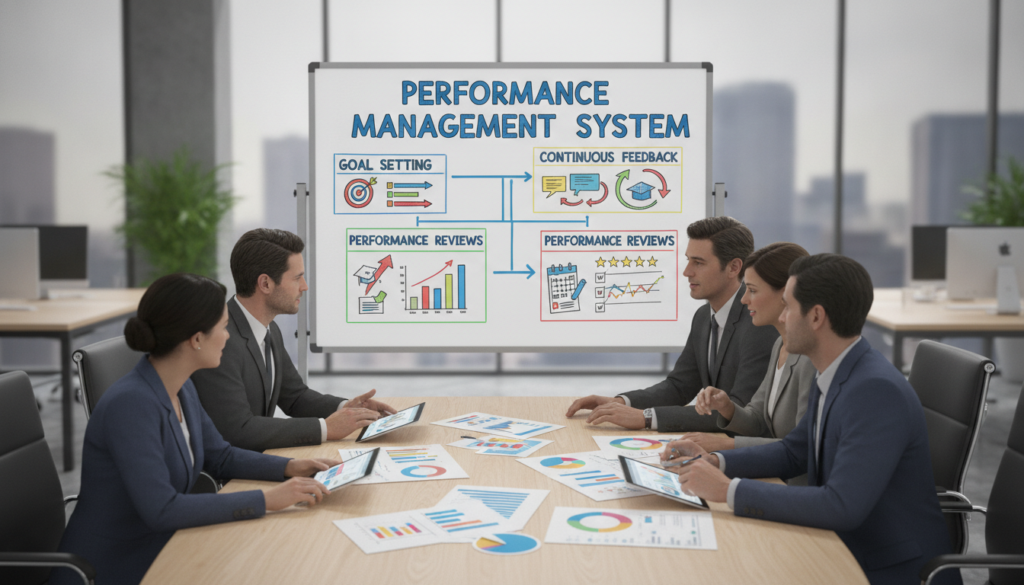
We break the approach into a clear six-stage cycle so planning, tracking, and development sit inside normal work. Each stage has a focused aim: set expectations, agree measurable goals, coach through checkpoints, deliver training, run structured reviews, and act on results.
The Six-Stage Cycle
This cycle keeps managers and employees aligned every step of the year. Short check-ins replace surprise reviews and let teams correct course quickly.
Aligning Goals with Business Objectives
We map each job to company objectives so every role contributes to bigger aims. Clear goals make it easier to measure employee performance and to plan targeted training that builds needed skills.
By linking reviews, feedback, and development, we reduce disengagement and lift engagement. The result is a practical framework that helps organizations make better, data-driven decisions and improve overall success.
The Importance of Strategic Planning
When we plan with strategy, teams know what to prioritise and why it matters to the business.
We prioritise strategic planning as the first step in any performance management process. Clear goals connect daily tasks to long-term objectives and help employees see their role in growth.
Collaborative planning lets managers and staff define success together. This approach sets expectations early and reduces confusion later.
“Good strategy turns vague aims into concrete milestones that teams can track and improve.”
We design a flexible management system that adapts when business needs shift. That keeps teams focused on primary goals without locking them into rigid rules.
- Set measurable goals that align with company objectives.
- Agree expectations with each employee and their managers.
- Provide development resources so staff can meet targets and grow.
By embedding planning into the process, we build a foundation for better feedback, consistent performance, and a resilient organisation.
Continuous Monitoring and Feedback Loops
Short, planned conversations help teams fix course fast and keep motivation high.
We prioritise continuous monitoring because timely recognition drives engagement. McKinsey finds up to 55% of employee engagement comes from non-financial recognition and regular feedback.
Leveraging Regular Check-ins
Regular check-ins let managers and employees discuss progress, surface blockers, and adjust goals in real time.
Our approach builds a feedback loop that treats reviews as learning moments. This keeps teams aligned with objectives and supports steady improvement.
We use simple tools to document observations. That means reviews rely on recorded facts, not memory, so outcomes stay fair and clear.
- Frequent, short check-ins for real-time course correction.
- Training for managers to run effective, supportive conversations.
- Tools that capture progress and boost employee performance over each cycle.
By embedding continuous feedback into daily work, we help organisations build a culture where people feel supported and focused on meaningful development.
Developing Employee Capabilities
Developing people starts with identifying real skill needs and giving managers practical tools to coach.
We prioritise targeted training that closes gaps between individual aspirations and business goals. Short programs, mentoring, and stretch assignments help employees gain usable skills fast.
Our approach uses clear diagnostics to find specific skills to build. That lets us tailor coaching and mentoring so every job role grows in the right direction.
By linking career pathing to objectives, we make development a routine part of the process. Managers get training resources so they can support staff and track improvement.
- Targeted training that maps to company goals.
- Coaching and stretch roles to accelerate learning.
- Career paths that help employees plan next steps.
We embed development into the performance management process, so growth is not an afterthought but a core practice that boosts engagement and long-term success. Learn more about practical performance management practices that support learning and results.
Structured Performance Reviews
We design review cycles that prioritise clarity, fairness, and ongoing development for every team member.
Moving Beyond Annual Appraisals
We replace year-end rituals with planned review sessions across the cycle. These shorter talks reduce bias and let managers track real progress.
Each meeting uses straightforward records and self-reflection to guide clear decisions about goals and development.
Collaborative Review Formats
Our format brings together self-assessments, peer feedback, and manager notes. This 360-degree view helps reveal strengths and needed training.
Separating career development from evaluation keeps growth conversations positive and focused on next steps.
| Review Type | Purpose | Frequency |
|---|---|---|
| Short check-in | Address blockers, update goals | Biweekly or monthly |
| 360 review | Collect multi-source feedback | Quarterly |
| Development meeting | Plan skills and career moves | Semi-annual |
We use modern tools to capture feedback and provide prompt recognition. This keeps employees engaged and helps teams make fair, transparent evaluations.
Rating and Rewarding Excellence
We tie clear ratings to visible rewards so top contributors see direct value for their work.
Transparency is key. We make ratings easy to understand. This helps employees see how their work maps to company objectives. Managers then give consistent recognition tied to defined goals.
Rewards follow clear criteria. We link pay, promotion, and public recognition to measurable results and fair reviews. Non-monetary recognition—like shout-outs and stretch assignments—boosts morale and encourages steady development.
To keep this fair, our management system captures data each cycle. That data supports consistent decisions on compensation and career moves. It also gives managers the evidence they need for honest feedback.
| Reward Type | Criteria | Typical Timing |
|---|---|---|
| Salary bump | Exceeded measurable goals and high review scores | Annual or mid-year |
| 晋升 | Consistent results, leadership potential | As roles open |
| Public recognition | Notable contributions or team wins | Quarterly |
| Development reward | Skill growth and learning milestones | Semi-annual |
Embed rewards into the cycle so they become part of everyday work. For guidance on aligning reviews and the annual flow, see the performance management cycle.
Strategies for HR Leaders to Improve Performance
We help HR teams move from plans to steady results by focusing on culture, tools, and clear steps that people can follow.
Building Implementation Strategies
HR leaders should craft a pragmatic rollout that fits company culture and daily work. Start small with pilot teams, collect quick feedback, then scale.
Example: Zitec, a 350-person software firm, saw voluntary turnover fall under 12% after tailoring its approach to local needs.
Evaluating Supportive Tools
Choose tools that make feedback and goal tracking simple for managers and employees. Look for platforms that record observations and help managers run short coaching sessions.
Transylvania College used Mirro for 500+ lesson observations to boost teaching results. That shows how the right tools change behaviour.
WhatsApp Us to Learn More About sandmerit Performance Management System at +60193156508
We train managers, set clear expectations, and use data-driven decisions to handle underperformance with structured plans.
sandmerit software shows how tools and training work together to raise engagement and keep talent.
“Effective change needs small steps, steady feedback, and the right tools to support people.”
结论
Closing the loop on planning and feedback turns good intent into steady progress. We saw how clear expectations, short check-ins, and timely feedback keep employees focused on real goals. This approach improves daily performance and helps teams stay motivated.
We recommend a practical performance management cycle that links planning, review, and development. Give managers simple tools, record outcomes, and treat each review as a coaching moment. For a tested approach to KPI alignment and rewards, see sandmerit methodology.
, By acting on these steps we help your organisation retain talent, boost employee engagement, and drive long-term improvement and success.
FAQ
What are the key parts we should know about a performance management approach?
We focus on goal setting, ongoing feedback, reviews, development plans, and recognition. These elements help align employee work with business objectives, improve skills, and guide decisions about training, promotions, and rewards.
How does a performance framework help managers and teams?
It gives managers clear expectations, regular touchpoints, and evaluation tools so teams can track progress and address gaps quickly. That clarity boosts engagement, accountability, and overall team success.
What is the six-stage cycle and why does it matter?
The six-stage cycle usually includes planning, goal setting, ongoing coaching, monitoring, reviewing, and development. We use it to create a predictable rhythm that drives continuous improvement and keeps objectives on course.
How do we align individual goals with company strategy?
We translate high-level objectives into team and individual targets, then cascade those targets throughout the organization. Regular check-ins ensure day-to-day tasks support broader business outcomes.
Why is strategic planning important for this approach?
Strategic planning connects talent priorities to business goals, so investments in skills, tools, and coaching deliver measurable returns. It also informs how we evaluate and reward contributions.
How often should we monitor progress and give feedback?
We recommend frequent, short check-ins—weekly or biweekly—for active projects, with formal reviews quarterly. Regular feedback prevents surprises and keeps development visible.
What does leveraging regular check-ins look like in practice?
It means brief status updates, coaching moments, and quick course corrections. We document outcomes and next steps so both managers and employees stay focused on improvement.
How do we develop employee capabilities effectively?
We combine targeted training, stretch assignments, mentoring, and clear development plans. Measuring skill growth and linking it to role expectations helps us prioritize talent investments.
How should we structure performance reviews to be fair and useful?
We use a mix of self-assessment, manager evaluation, and peer input, grounded in measurable objectives. Reviews should drive development conversations, not just ratings.
Why move beyond annual appraisals?
Annual-only reviews are too slow for today’s pace. Frequent feedback and mid-year checkpoints give employees timely direction and improve performance throughout the year.
What are collaborative review formats and their benefits?
Collaborative formats include 360-degree feedback, joint goal-setting sessions, and manager-employee calibration meetings. They increase transparency, reduce bias, and produce more actionable development plans.
How do we rate and reward top contributors?
We combine objective results, competencies, and potential when awarding ratings and rewards. Recognition can be monetary, career opportunities, or public acknowledgment to sustain motivation and retention.
What strategies should HR leaders use to improve adoption?
HR leaders should build clear implementation plans, train managers, communicate benefits, and pilot new approaches. Ongoing measurement and stakeholder feedback help refine the rollout.
How do we evaluate tools that support this approach?
We assess tools for goal alignment, feedback workflows, analytics, integration with HR systems, and ease of use. The right platform drives consistency and reduces administrative burden for managers.
How can we learn more or speak with a specialist about sandmerit’s offering?
WhatsApp us at +60193156508 to discuss sandmerit Performance Management System, get a demo, or ask about implementation support and pricing.