
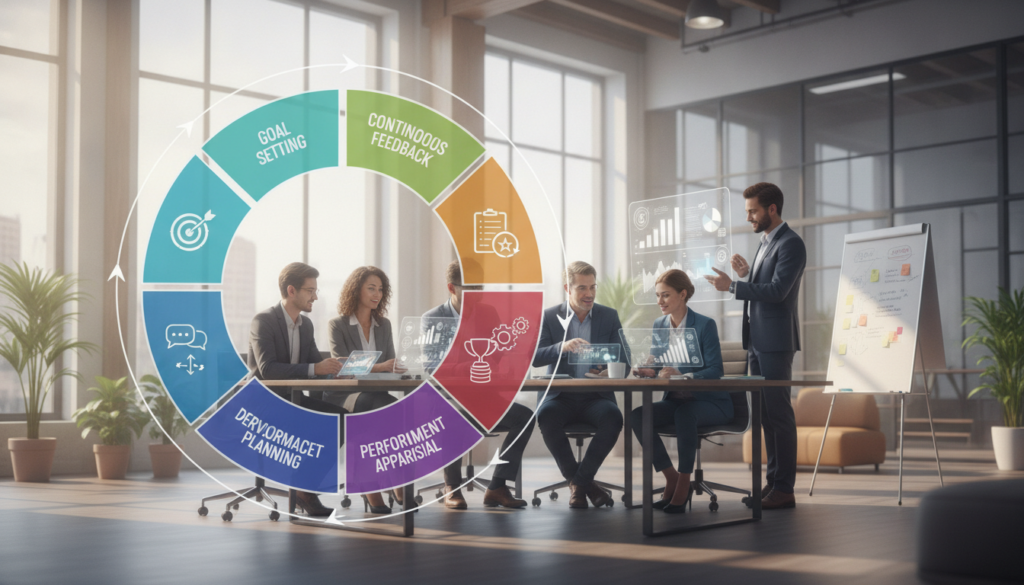
会选择 sandmerit helps Malaysian businesses align day-to-day work with strategic goals.
We describe a clear framework that keeps each employee aware of their role and expected results. This approach makes reviews, goals, and feedback routine and useful.
With sandmerit, managers track progress and give timely coaching. Regular check-ins and simple tools boost employee development and career growth.
Our aim is to foster a culture where people feel valued and motivated to improve. When teams know their objectives, the company sees steadier results and smarter use of time.
Key Takeaways
- sandmerit aligns individual goals with company vision.
- Regular reviews and feedback drive steady improvement.
- Managers gain clear insights to support employee growth.
- The approach builds a motivated, skill-ready workforce.
- Simple, repeatable processes make results measurable.
Understanding the Importance of Performance Management
We create a practical cycle that links an employee’s daily tasks to visible business results. A clear process helps managers and employees set short-term goals, review progress, and adjust quickly.
Good systems reduce guesswork. When reviews happen regularly, promotions and rewards follow documented results rather than impressions. That makes decisions fairer and more defensible.
Disconnected platforms leave people without feedback — a recent report shows 26% of staff received no feedback in the past year. We use data-driven tools to close that gap and provide timely insights.
- Faster course correction through regular goal checks keeps teams aligned.
- Targeted development means training and career plans meet real needs.
- Transparent communication builds trust and lowers turnover in Malaysian businesses.
In short, an effective performance management cycle turns everyday work into measurable progress. We help organisations build a culture where employees feel seen, valued, and ready to grow.
Core Components of Performance Management System
We start by aligning individual goals with wider business aims so every job adds clear value.
Planning for Organizational Alignment
Planning anchors our approach. We have managers and employees set SMART goals that map to company objectives.
Clear goals guide daily work and make results measurable. Competency checks help match skills with long-term plans.
Managing Performance Through Continuous Feedback
Real-time feedback keeps progress visible. We use short check-ins and 360 reviews combining manager evaluations, peer input, and self-assessments.
Research shows 80% of Gen Y prefer quick recognition and 63% of Gen Z want timely, constructive guidance. We design processes to meet those needs.
Rewarding Excellence and Sustaining Motivation
Recognition and automated rewards ensure milestones are not missed. PIPs are framed as improvement plans with coaching and training.
“Employees who feel valued stay motivated and help build a stronger culture.”
| Area | What we do | Benefit |
|---|---|---|
| Planning | SMART goals set with managers | Clear priorities, aligned results |
| Feedback | Continuous check-ins + 360 reviews | Faster growth and better engagement |
| Recognition | Automated rewards and milestones | Higher retention and motivation |
- We integrate competency assessments to guide development.
- PIPs focus on support, not exit.
- Managers get clear tools to coach and track progress.
Strategic Approaches to Goal Setting
Clear, measurable goals turn daily tasks into direct steps toward company priorities. We design an approach that keeps objectives simple and linked to strategic vision.
Aligning Objectives with Organizational Vision
We set SMART goals that map to top-level objectives. That makes it easy for managers and employees to see how their work matters.
We use OKRs to track progress and create accountability. Metrics focus on outcomes that drive the business forward.
Goals cascade from executives to teams so each person understands their role. Regular check-ins let us re-examine priorities when market conditions change.
“Clear expectations keep people motivated and reduce miscommunication.”
- We help teams set goals that support career development and company success.
- Our tools let employees view current targets and monitor progress in real time.
- Managers and staff review objectives together at scheduled intervals to keep alignment tight.
For organisations in Malaysia, this strategic alignment makes the performance process dynamic and relevant. Learn more about our performance software to support goal tracking and feedback.
Leveraging Data and Analytics for Better Insights
Analytics help us spot small shifts in employee output before they become bigger problems.
Modern performance management relies on clear tracking. A survey by 2CG shows 75% of companies use the Balanced Scorecard to steer business actions.
We deliver dashboards that turn live employee data into actionable insights. Managers can monitor trends and predict likely outcomes.
Our tools let HR automate review reports and produce smart analytics for fair calibration and pay decisions.
- Spot behaviour and output trends early to reduce risk.
- Compare performance over time and identify top performers.
- Target development investment where it delivers real ROI.
“Data-backed feedback creates honest conversations and continuous improvement.”
By using analytics, we ensure decisions are objective and tied to real outcomes. That drives better success for the company and clearer goals for employees.
Fostering Employee Development and Growth
We build focused learning paths that close skill gaps and link daily tasks to career milestones. This keeps learning practical and tied to measurable goals. It also helps managers spot training needs early.
Customized Training Initiatives
培训 is tailored to each role and career plan. We use IntelligendaTM to highlight skill gaps and suggest learning modules.
That approach boosts job-related skills and keeps employees ready for change. It also lowers turnover by supporting long-term professional goals.
Effective Career Pathing and Succession Planning
We map tasks to skills so every employee sees a clear road to advancement. Succession planning gives HR a snapshot of ready candidates and pipeline gaps.
| Focus Area | Action | Benefit |
|---|---|---|
| 培训 | Tailored courses via IntelligendaTM | Faster skill gains and higher employee performance |
| Career Pathing | Role-based roadmaps and milestones | Clear promotion readiness and retention |
| Succession | Talent pools and readiness scoring | Reduced risk and smoother transitions |
We help companies build a culture of continuous development and match development with business goals. For a deeper look at how this ties into an effective appraisal flow, see our partner insight on an effective performance management system.
Modern Methods for Performance Appraisals
New appraisal models focus on continuous insight rather than a single annual judgment.
We support balanced scorecard use by major firms like Volkswagen, Ford and Apple to link metrics to strategic goals.
In some markets, the bell curve still categorizes staff; an estimated 75–80% of companies in India use it to tie ratings to rewards.
Our platform also enables 360-degree reviews. Peer, subordinate and manager feedback gives a full view of employee progress.
“Fair, transparent appraisal practices help employees see where they stand and how to grow.”
- We separate reviews from career planning to reduce tension.
- Behaviorally Anchored Rating Scales (BARS) map behavior to clear ratings.
- OKR software helps strategy-driven teams at firms like Google and LinkedIn track objectives.
| Method | What we enable | Benefit |
|---|---|---|
| Balanced Scorecard | Strategy-linked metrics and dashboards | Clear link between work and business goals |
| 360 Appraisals | Multi-rater feedback and analysis | Richer insight into employee strengths |
| BARS & OKR | Behavioral scales and objective tracking | Fair ratings and focused development |
We streamline reviews to cut admin load for managers and keep appraisal outcomes fair and transparent. That helps organisations in Malaysia make decisions employees trust.
WhatsApp Us to Learn More About sandmerit Performance Management System
Start a conversation on WhatsApp and learn how sandmerit helps teams hit measurable objectives. WhatsApp us at +60193156508 to arrange a demo or ask questions about rollout and training.
We guide organisations in Malaysia through each step of adopting a new performance management system. Our goal is to align employee goals with business objectives and make feedback routine and useful.
By messaging +60193156508 you can discover how our tools automate feedback and boost employee engagement. We design solutions that help managers and employees work together with clarity and fairness.
- Get a tailored plan for goal setting and employee development.
- Learn how automation reduces admin and keeps review cycles on track.
- Discuss integration needs and timelines with our experts.
“Reach us on WhatsApp to see practical steps for better goals, clearer feedback, and stronger results.”
结论
A practical cycle of goals, coaching, and review keeps teams focused and growing. Clear objectives and simple tracking let every person see how daily work helps the business meet its goals.
We champion a modern performance management approach that values timely feedback and continuous development. When employees get regular coaching, they stay engaged and improve skills faster.
We encourage leaders in Malaysia to adopt these steps. Contact us to build a tailored performance management system that helps managers and HR spend time on people, not paperwork, and that boosts long-term development.
FAQ
What are the main parts of a performance management system?
We design a clear process that links goals, regular check-ins, feedback, reviews, and rewards. This includes goal setting to align work with company objectives, ongoing coaching from managers, measurable outcomes, and recognition programs to reinforce success. We also use tools that track progress and capture data for better decisions.
How does goal setting help align team objectives with our company vision?
We use structured goal setting to translate the organization’s strategy into specific, measurable objectives for teams and individuals. This ensures everyone focuses on the same priorities, helps managers monitor progress, and clarifies how daily work contributes to broader business results.
How often should managers provide feedback to employees?
We recommend frequent, informal conversations — weekly or biweekly — plus quarterly formal reviews. Regular feedback keeps people on track, supports development, and prevents small issues from becoming bigger problems. Timely feedback also improves engagement and learning.
What role does data and analytics play in improving outcomes?
We collect performance metrics, engagement signals, and goal progress to spot trends and coaching needs. Analytics highlight high performers, skill gaps, and workload imbalances, enabling smarter talent decisions and clearer insights into what drives results.
How can we support employee growth and career development?
We create tailored learning paths and career frameworks that match skills to future roles. That includes training programs, mentoring, and succession planning so we can prepare employees for new responsibilities while keeping retention and motivation high.
What methods improve the fairness of appraisals?
We combine multiple inputs — self-assessments, manager ratings, peer feedback, and objective metrics — to reduce bias. Calibrated reviews and clear performance criteria ensure consistent evaluations across teams and help us make defensible talent decisions.
How do rewards and recognition drive better results?
We link rewards to measurable achievements and timely recognition to reinforce desired behaviors. Financial incentives, public praise, and career opportunities all motivate staff and encourage continued high performance.
How can managers integrate continuous feedback without adding too much admin work?
We streamline conversations into short, focused check-ins and use simple digital tools to record notes and track action items. This keeps administration light while ensuring managers and employees stay aligned on priorities and development.
What are best practices for creating effective training initiatives?
We assess skill gaps using performance data, prioritize learning that supports strategic goals, and blend on-the-job coaching with targeted courses. Microlearning and hands-on projects increase retention and speed skill application.
How do we measure the overall success of our approach?
We track goal attainment, productivity changes, engagement scores, retention rates, and career mobility. Together these outcomes tell us whether our approach improves individual contribution and advances company strategy.