
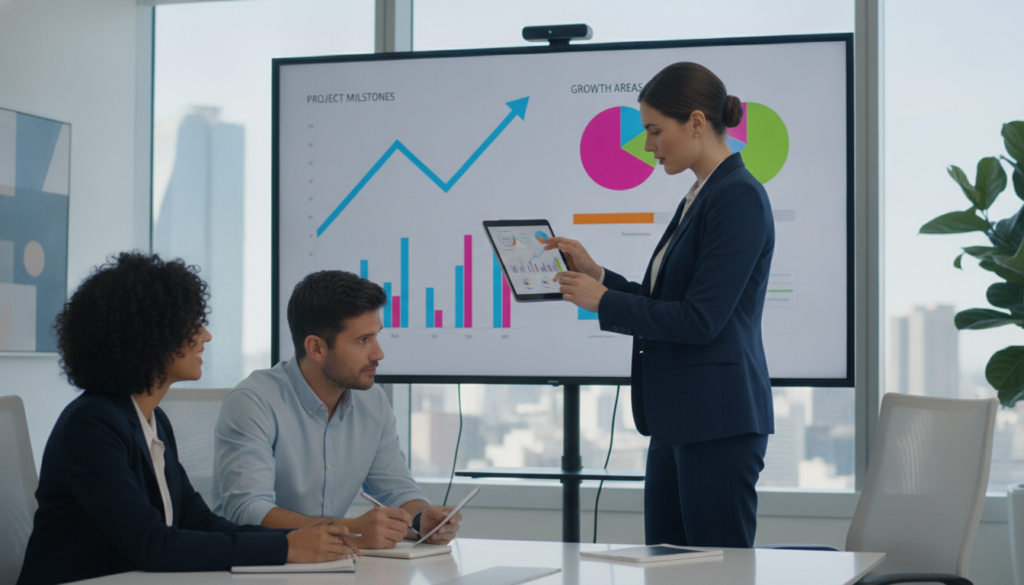
We wrote this guide to help Malaysian companies move from slow annual reviews to a more agile way of tracking staff growth.
Traditional cycles still dominate: 71% of organizations keep yearly reviews. That choice costs time. Managers spend about 210 hours a year on old review routines.
We believe a clear strategy and better feedback practices help employees feel seen and supported. By using sandmerit KPI system, we can drive data-led change and boost engagement.
Our approach focuses on continuous check-ins, easy-to-read metrics, and tools that save time. These shifts help teams align with company goals and support ongoing development.
Key Takeaways
- 71% of firms still use annual reviews, which drain resources.
- Managers lose roughly 210 hours yearly on traditional reviews.
- Continuous feedback helps employee growth and engagement.
- sandmerit KPI system gives clear metrics for better decisions.
- Small, ongoing changes create big gains in productivity.
Understanding the Modern Performance Management Landscape
Organizations are moving toward brief, frequent touchpoints that keep goals current. We see this shift across Malaysian businesses as teams trade long cycles for steady, focused conversations.
Defining the framework
Defining the Framework
We build a clear framework that links individual objectives to company strategy. This helps managers align goals and gives employees specific expectations.
Clear metrics produce consistent data for development and review. A good performance management system supports regular check-ins and fair evaluation.
The shift to continuous feedback
The Shift to Continuous Feedback
Gallup shows weekly feedback makes team members 5.2x more likely to say they get meaningful guidance. Employees who get weekly feedback are 2.7x more engaged than those with annual reviews.
Why it matters
- Faster course correction for goals and results.
- Higher engagement and productivity across teams.
- Managers save time while improving review quality.
| Metric | Annual Reviews | Continuous Feedback |
|---|---|---|
| Employee engagement | Baseline | 2.7x higher |
| Meaningful guidance | Low | 5.2x more likely |
| Manager time use | High hours | Reduced, focused |
Core Components of an Effective System
Strong foundations come from combining wide-ranging feedback with focused goal tracking. We use 360-degree input so employees get a rounded view from peers, managers, and external partners.
OKRs set clear, measurable goals that tie daily work to the organisation’s strategy. When teams track objectives in modern management software, alignment becomes visible.
We urge managers to keep concise notes and log reviews in a shared tool. This keeps feedback fair and repeatable across the business.
“A complete approach blends feedback, clear expectations, and recognition to lift engagement and results.”
- 360-degree feedback for a full view of employee strengths.
- OKR tracking through specialised management software for clear goals.
- Recognition and development planning to keep employees motivated.
| Component | What it provides | Practical tip |
|---|---|---|
| 360-degree feedback | Balanced insights from multiple sources | Use short, regular surveys and peer notes |
| OKRs and goal tracking | Measurable alignment to strategy | Review goals monthly in dashboards |
| Management software | Centralised review logs and data | Choose tools that integrate with HR and workflows |
| Recognition & development | Motivation and clear growth paths | Schedule simple learning plans after reviews |
For a deeper look at core design elements, see our recommended framework in this concise guide: the six vital elements.
Why Organizations Need to Transition from Annual Reviews
Annual review cycles often miss the full story of an employee’s year. This leaves managers relying on recent memories instead of steady records.
Reducing Bias and Improving Fairness
Reducing Bias and Improving Fairness
Recency bias is common when reviews happen once a year. Managers tend to recall events from the last weeks and downplay earlier achievements.
We argue that organizations must move to continuous feedback to cut this bias. By documenting work and goals across months, our approach gives a clearer view of an employee’s contributions.
“Continuous documentation turns snapshots into a reliable narrative of growth.”
- Year-round notes create an objective record that managers can consult.
- Ongoing conversations help employees stay aligned with goals and development plans.
- Transparent logs reduce unfair judgment and improve engagement.
| Issue | Annual Reviews | Continuous Approach |
|---|---|---|
| Recall accuracy | Low — recency bias | High — documented data |
| Fairness | Variable | Consistent, transparent |
| Support timing | Delayed | Timely coaching |
Strategic Steps for Implementing Performance Management System
Start by auditing how your teams currently track goals and feedback. We combine short interviews with quantitative logs to build a clear picture.
Assessing Current Processes
We ask managers and employees to collaborate on an audit. Use qualitative interviews and usage data from existing tools. Zitec’s model of quarterly check-ins offers a practical benchmark for timing and frequency.
Defining Clear Objectives
Set measurable goals that link daily work to company strategy. Ensure every employee understands expectations and how success will be judged. Add recognition steps to reinforce the desired results.
Establishing a Review Timeline
Choose a consistent cadence—quarterly check-ins are effective in many Malaysian businesses. Train managers and employees to use management software and simple templates to save time.
- Audit current practice with data and interviews.
- Define objectives that are clear and measurable.
- Set a fixed review timeline and provide training.
- Use tools that streamline notes, feedback, and recognition.
Best Practices for Driving Employee Engagement
Small, frequent gestures of appreciation build lasting engagement across teams.
We prioritise a performance management approach that pairs continuous feedback with timely recognition. This lets employees see how daily work links to team goals and company strategy.
Research shows staff are 2.7x more likely to be highly engaged when their organisation celebrates achievements. We use that insight to shape simple routines.
“A culture that recognises effort every week turns ordinary tasks into clear contributions.”
Practical best practices we recommend include short check-ins, public praise for wins, and quick coaching notes that guide development.
- Train managers and employees to give specific, frequent feedback.
- Use brief recognition moments to reinforce desired behaviours.
- Align praise with clear goals so every contribution ties to business outcomes.
| Practice | What it achieves | Quick tip |
|---|---|---|
| Weekly micro-checks | Fast course correction and clarity | Keep meetings under 15 minutes |
| Public recognition | Higher morale and collaboration | Share wins in team channels |
| Training for managers | Better coaching and fair reviews | Run short role-play sessions |
Overcoming Common Implementation Challenges
Addressing common rollout hurdles starts with clear, humane steps that protect dignity and drive results.
We focus on practical actions so teams feel supported when change affects day-to-day work.
Managing Underperformance with Empathy
Use PIPs as a coaching tool. Performance Improvement Plans should guide development, not punish staff.
We pair PIPs with short, specific goals and regular check-ins. These help employees see progress and regain confidence.
Calibration meetings keep ratings fair across the company. When managers align on criteria, reviews become consistent.
“Clear communication and objective data turn difficult conversations into constructive steps.”
We provide targeted training so managers and employees can use management software and handle tough talks well.
- Use objective data to back decisions and reduce bias.
- Set clear goals and expectations early to prevent escalation.
- Offer resources and short coaching sessions to support improvement.
| Challenge | Our response | Outcome |
|---|---|---|
| Inconsistent ratings | Regular calibration meetings | Fairer reviews across teams |
| Low engagement after PIP | Empathy-first PIPs with coaching | Improved morale and development |
| Tracking progress | Management software and data logs | Transparent, timely support |
Leveraging Technology for Seamless Performance Tracking
Real-time tools turn everyday work into clear, reviewable evidence of growth. We rely on centralised platforms to pull together data, automate reports, and make insights visible to both managers and employees.
Integrations with Slack and Microsoft Teams keep feedback in the flow of work. Short prompts, quick praise, and micro-coaching happen where teams already meet.
Data and analytics help managers and employees set better goals and measure development. Dashboards reduce admin time so teams focus on strategy and results.
- Centralised software captures goals, notes, and review history in one place.
- Automated reporting frees up time for coaching and training.
- Real-time feedback supports continuous feedback and clearer outcomes.
“Technology keeps reviews factual, timely, and fair — and it helps teams stay aligned.”
For a practical guide on using digital tools in this space, see our recommended resource on employee performance management in the digital.
Contacting sandmerit for Expert Guidance
For practical guidance that fits Malaysian companies, our advisors are ready to listen and tailor next steps.
WhatsApp us at +60193156508 to learn how sandmerit can transform your approach to performance management and employee feedback.
We offer direct consultations for HR leaders and managers. Our team explains how a clear system and short check-ins improve review quality and help employees grow.
- Access to expert advice and tailored training for managers and employees.
- Practical steps to move from annual reviews to ongoing feedback.
- Resources and templates that save time and keep work visible.
“Reach out today to discuss your needs and discover solutions that support real development.”
Explore our tools and demos at sandmerit software and message us to start a local pilot. We look forward to helping your team build a better culture of feedback and growth.
结论
Shifting to short, frequent feedback loops changes how employees learn and thrive. Our guide shows practical steps to build a robust performance management approach that fits Malaysian teams.
Prioritise continuous feedback and structured reviews to replace slow annual cycles. A clear system makes goals visible, fairness easier to maintain, and daily work more meaningful.
We encourage you to act now. Start small, train leaders, and keep notes that link work to outcomes. This way, your organisation will foster growth, boost performance, and help every team member feel valued.
FAQ
What is the best first step when we begin a guide to implementing a performance management system effectively?
We start by auditing current processes, tools, and culture. That means reviewing goal-setting, review cadence, feedback practices, and the software you use. A clear audit reveals gaps in expectations, coaching, and data collection so we can set realistic objectives and a phased rollout plan.
How do we define the framework when understanding the modern performance management landscape?
We map out roles, goal types, review frequency, and success metrics. This framework shows who gives feedback, how goals tie to strategy, and which data points matter. A simple, documented model reduces confusion and helps managers apply consistent standards.
Why is the shift to continuous feedback important for organizations?
Continuous feedback keeps development timely and grounded in real work. It encourages regular coaching, speeds up course corrections, and increases engagement. Teams see progress sooner, and managers can act on trends instead of waiting for annual reviews.
What are the core components of an effective performance system?
We focus on clear goals, regular check-ins, unbiased assessments, development plans, recognition, and reliable data. Integrating these parts creates a cycle of goal-setting, coaching, evaluation, and growth that supports both individual and business results.
Why should organizations transition from annual reviews?
Annual reviews are often too infrequent to influence behavior and can reflect recency bias. Moving away from them enables timely recognition, faster skill development, and decisions driven by ongoing data rather than memory or single events.
How do we reduce bias and improve fairness in reviews?
We standardize rubrics, train raters, use multi-source feedback, and rely on objective metrics where possible. Structured conversations and calibration sessions also help align manager judgments and minimize favoritism or halo effects.
What strategic steps should we take when assessing current processes?
We gather stakeholder input, analyze workflows, review past performance data, and identify bottlenecks. This assessment helps us prioritize quick wins and long-term changes and determines whether current tools meet our needs.
How should we define clear objectives for the team and organization?
We set SMART goals linked to strategic priorities, clarify expectations, and break objectives into milestones. Clear metrics and owner accountability ensure everyone knows how success is measured and how their work contributes to outcomes.
What is a practical way to establish a review timeline?
We adopt a mix of frequent short check-ins and quarterly or semiannual formal reviews. Check-ins support coaching and problem-solving, while periodic reviews capture development progress and career conversations.
What best practices drive employee engagement during the rollout?
We communicate transparently, provide manager training, involve employees in goal-setting, and recognize contributions often. When people understand purpose and receive regular coaching, engagement and retention improve.
How can we manage underperformance with empathy?
We diagnose causes, provide clear expectations, offer support and training, and set measurable improvement plans. Compassion combined with accountability helps employees recover and contributes to a healthier culture.
Which tools help with seamless tracking when leveraging technology?
We recommend platforms that support goal alignment, continuous feedback, check-ins, and analytics—examples include Workday, Lattice, and 15Five. Choose tools that integrate with HRIS and collaboration apps to reduce friction and centralize data.
How do we measure success after implementing a new system?
We track goal attainment, engagement scores, turnover, time to productivity, and manager effectiveness. Regularly reviewing these metrics lets us refine processes and prove ROI.
What common implementation challenges should we prepare for?
Expect resistance to change, inconsistent manager skills, and data quality issues. We mitigate these with strong leadership sponsorship, targeted training, clear communications, and phased rollouts.
How can sandmerit help when contacting them for expert guidance?
sandmerit offers consulting on strategy, change management, tool selection, and training. They help tailor approaches to your company size and industry, ensuring a smoother transition and measurable outcomes.