
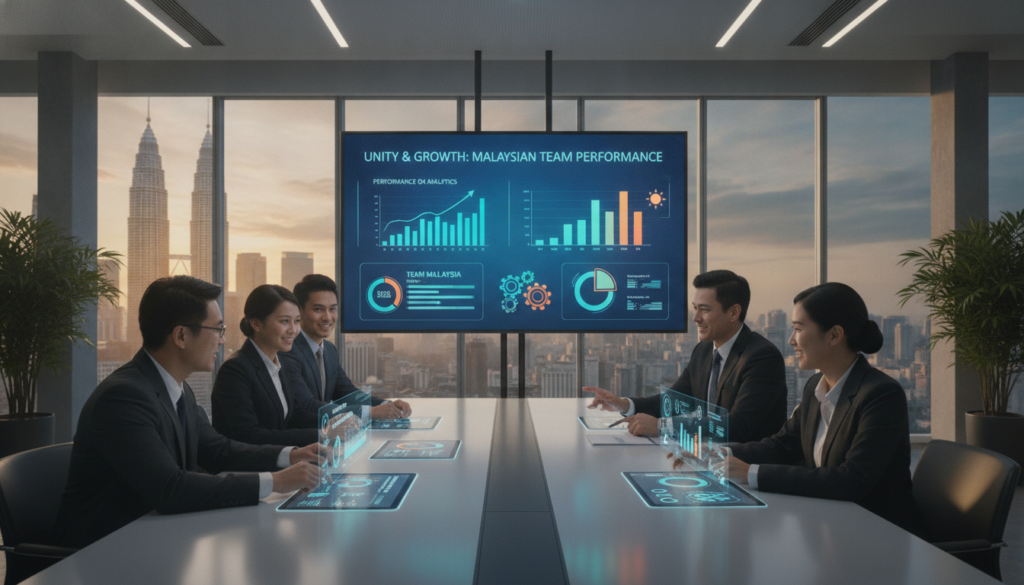
I see strong team results when leaders connect clear expectations, regular feedback, goals, and learning. In Malaysian workplaces, this approach helps each employee understand priorities and track progress with confidence.
Recent 2024 research reports that organizations focused on employee growth are 4.2 times more likely to outperform their peers. Other findings show that effective programs can support 1.5 times stronger financial results and 1.25 times higher productivity.
In this guide, I explain how sandmerit helps managers and people leaders replace isolated annual reviews with ongoing, evidence-based conversations. Its practical tools bring goals, feedback, development, and team insight into one clear system. The result is better focus, faster support, and lasting success.
To learn more about sandmerit, WhatsApp us at +60193156508.
Key Takeaways
- Clear goals help employees focus their daily work.
- Regular feedback supports timely growth and action.
- Evidence-based reviews improve decision-making.
- Managers can build stronger team alignment.
- sandmerit supports a consistent approach over time.
What Is a Performance Management System?
I define it as an ongoing framework for setting expectations, discussing results, and supporting growth. Managers, employees, and HR use it throughout the year. In Malaysia, this approach helps teams connect daily work with shared business priorities.
The process brings together clear responsibilities, individual objectives, regular feedback, progress checks, and career decisions. It can inform promotions, bonuses, training, and other development plans. Clarity gives each employee a stronger sense of purpose.
How It Supports Employees and Managers
Employees understand their role and receive timely guidance. Managers gain a consistent tool for recording progress and addressing concerns early. I find this creates fairer conversations and better team alignment. For a broader definition, I recommend this performance management system guide.
Ongoing Support Versus an Annual Appraisal
An appraisal is usually a formal review held once or twice a year. In contrast, continuous support encourages regular check-ins and useful feedback. Erik van Vulpen’s 16-minute guide, reviewed by Monika Nemcova and rated 4.77, reinforces this wider view. One meeting records history; frequent dialogue shapes what comes next.
| 务实方针 | Timing | Main purpose |
|---|---|---|
| Continuous support | Throughout the year | Guide growth and results |
| Annual appraisal | Yearly or semiannual | Summarize past results |
Why Effective Performance Management Matters for Team Success
Small gaps in workplace communication can quietly weaken morale, focus, and trust. I see greater success when employees know what matters, receive useful guidance, and can discuss their future with managers.
Improving Employee Engagement and Retention
Betterworks reports that 21% of employees set goals once a year and never revisit them, while 16% set no goals at all. These figures show why clear objectives need regular review. Without that process, daily work can lose its link to business priorities.
Career development also shapes retention. Leapsome’s 2024 Workforce Trends Report found that one in three employees may consider quitting because of limited development opportunities. I believe visible growth paths, learning support, and fair recognition help people see a future with the company.
Building a Culture of Feedback and Trust
Communication gaps create another risk. One-third of employees receive one-to-ones or feedback no more than twice a year, and one in 10 rarely receives guidance toward goals. Bryan Adelson of Red Clover HR stresses that leaders should understand the purpose and value of each conversation.
Regular, honest dialogue builds trust and supports productivity. Willis Towers Watson found that effective programs are 1.5 times more likely to improve financial results and 1.25 times more likely to raise productivity.
Core Components of a Modern Performance Management System
Modern people practices work best when they connect evidence, growth, and recognition in one practical framework. I see four linked elements: reviews, goals, learning, and employee insight.
Performance Reviews and Continuous Feedback
Regular reviews give employees a clear view of progress. Short check-ins, praise, and useful feedback also help managers act before small issues grow. Leapsome reports that only one-third of companies measure staff engagement, which shows the value of surveys and listening tools.
Goals, Objectives, and Competency Frameworks
Goals and OKRs connect daily tasks with company priorities. A competency framework defines the skills needed for each career level. This makes promotion decisions clearer and helps people choose focused training.
Learning, Development, and Recognition
Learning, onboarding, recognition, communication, and connected data support a healthy culture. Leapsome cites more than 2,365 G2 reviews and over 2,000 trusted companies. Simpplr offers surveys, a My Team dashboard, consolidated insights, and analytics. I would compare both approaches before selecting tools for Malaysian teams.
How to Build an Effective Performance Management Process
I start with a simple audit before adding new software. This review shows what works, where delays occur, and what employees need. It also helps managers choose a practical management system for Malaysian teams.
Aligning Employee Goals With Business Objectives
Next, I connect each role with the company’s wider objectives. A sales employee may focus on customer growth, while a finance employee may track timely reports. SMART goal setting keeps targets Specific, Measurable, Achievable, Relevant, and Time-bound.
Business needs can change, so goals should remain flexible. Managers and employees can adjust priorities without losing direction. This approach keeps daily work linked to team success.
Tracking Progress With Meaningful Metrics
Jonathan Westover recommends HR support through software, useful metrics, goal templates, and communication training. Shaun Wilde of Think Learning also advises regular progress checks and timely goal updates.
I prefer role-based measures over generic targets. They create a fairer view of employee performance and support focused development. Clear evidence turns reviews into useful action.
The Performance Management Cycle From Planning to Recognition
I use a clear cycle to turn business priorities into daily action. It moves from planning to monitoring, development, and fair recognition. This process gives employees direction while helping managers respond to changing needs.
Planning Clear Expectations and SMART Goals
Managers and employees first agree on job duties, objectives, goals, and useful metrics. SMART goal setting makes each target Specific, Measurable, Achievable, Relevant, and Time-bound. Clear expectations create a stronger foundation for employee performance and focused work.
Monitoring Performance Through Regular Check-Ins
Progress should not wait for annual performance reviews. Short meetings let managers discuss results, remove barriers, and provide constructive feedback. Jonathan Westover also stresses manager training in communication and useful feedback.
Shaun Wilde recommends continuous monitoring because priorities can shift as employees progress. A flexible review process keeps goals relevant and supports timely action.
Developing Skills and Rewarding Progress
Coaching, refresher courses, training, and new projects build skills and career growth. At the final stage, leaders can offer praise, recognition, pay increases, promotions, cross-functional moves, or corrective action. A practical management system can help teams record progress and apply these steps with consistency.
Performance Management Methods That Strengthen Teams
Different teams need different ways to guide work, build trust, and support growth. I prefer a blended approach that fits the company culture, role needs, and pace of business in Malaysia. The right mix creates clearer communication and stronger working relationships.
Continuous Performance Management and Coaching
Frequent check-ins replace long gaps between formal meetings. Managers can share real-time feedback, review goals, and remove barriers early. Coaching adds value through one-to-one, non-directive conversations. Instead of giving every answer, I help employees explore options, build skills, and take initiative.
Management by Objectives and Goal Setting
Management by Objectives links each role with company objectives and measurable results. Employees know what success looks like, while leaders can use data for follow-up. This approach supports focused employee performance and practical development.
Three-Hundred-Sixty-Degree Feedback and Performance Reviews
A 360-degree review combines manager input, peer feedback, self-evaluation, and, where useful, comments from external collaborators. It gives people a wider view of strengths and improvement areas. I recommend combining these methods rather than applying one approach to every team. Learn more about Sandmerit’s methodology.
| Method | Main focus | Best benefit |
|---|---|---|
| Continuous support | Check-ins and coaching | Faster growth |
| 目标 | Targets and results | Clear direction |
| 360-degree review | Multiple viewpoints | Balanced insight |
How Managers Can Improve Employee Performance
Better results often begin with the quality of a manager’s next conversation. Clear guidance helps Malaysian teams respond to issues early and stay focused on shared goals.
Delivering Constructive and Timely Feedback
Useful feedback names a behavior, result, and impact. I suggest stating what happened, explaining why it matters, and agreeing on one practical next step. Short check-ins support open communication across office and hybrid roles.
Jonathan Westover recommends training managers to give and receive feedback. This practice builds a listening culture instead of a blame culture. Specific guidance helps employees act with confidence.
Supporting Career Development and Training
Coaching helps each employee build knowledge, skills, autonomy, and initiative. A manager can ask questions, explore barriers, and let people choose suitable solutions. This approach supports role growth while keeping daily work meaningful.
Leapsome’s 2024 report found that one in three employees may consider leaving because of limited career development opportunities. Regular learning plans, mentoring, and fair internal opportunities can improve retention. Willis Towers Watson also links effective programs with a 1.25-times greater likelihood of improved productivity.
| Manager action | Employee benefit | Business value |
|---|---|---|
| Timely feedback | Clear next steps | Faster improvement |
| Coaching talks | Greater autonomy | Stronger initiative |
| Learning plans | Visible career growth | Better retention |
Choosing the Right Performance Management System for Your Company
Choosing a people tool requires more than a long feature list. I look for a clear fit with company goals, team culture, and daily work. This matters even more for Malaysian teams that include office, remote, and hybrid employees.
Essential Features for Growing and Hybrid Teams
A strong platform should support review formats, goals, feedback, learning, analytics, security, and employee experience. Remote check-ins, visible progress, and steady manager contact help prevent distance from weakening trust. Yet Willis Towers Watson found that only 16% of employers changed their processes for remote and hybrid work.
- Flexible reviews and goal tracking
- Learning plans and career development
- Useful insights and secure data
- Simple access for employees and managers
Customization, Integrations, and Employee Experience
Leapsome offers custom workflows, templates, question banks, HR features, goal setting, and learning tools. It reports more than 2,365 G2 reviews and over 2,000 customer companies. Simpplr adds surveys, a My Team dashboard, combined insights, and analytics. I would compare each option with local needs before deciding.
WhatsApp sandmerit at +60193156508 to learn how its performance management system can support growth and retention.
| Selection area | What to check | Value for teams |
|---|---|---|
| Reviews | Flexible formats and templates | Fair, timely discussions |
| 洞察 | Surveys and analytics | Better decisions |
| Integration | HR and learning connections | Smoother processes |
Measuring the Impact of Performance Management on Business Growth
Reliable measurement shows whether people practices support business goals. I track a small set of indicators so Malaysian leaders can connect daily work with lasting growth. This approach turns review data into practical decisions.
Productivity, Engagement, and Retention Metrics
My framework covers goal completion, feedback frequency, learning activity, engagement, retention, productivity, and business results. I also compare progress across teams and roles. This view helps managers spot skill gaps, training needs, and career development barriers.
Willis Towers Watson found that effective programs are 1.5 times more likely to outperform competitors financially and 1.25 times more likely to improve productivity. McKinsey reported in 2024 that companies investing in employee performance are 4.2 times more likely to outperform peers.
Using Employee Insights to Improve Performance
Surveys, a My Team dashboard, consolidated insights, and analytics can reveal concerns early. Simpplr offers these tools for clearer employee input. Leapsome reports that one in three employees may consider leaving when career opportunities remain limited. Tracking development and feedback helps companies act before retention falls.
结论
I believe lasting team success begins when clear expectations guide daily work. A modern performance management system links goals, feedback, learning, recognition, and business results.
Managers and employees gain more from regular conversations than from one annual appraisal. Open feedback builds trust, supports engagement, and helps people address challenges early. It also creates space for career growth and fair recognition.
McKinsey & Company’s 2024 research associates investment in employee performance with a 4.2-times greater chance of outperforming peers. For Malaysian companies, a clear process can strengthen culture, accountability, and long-term success.
WhatsApp sandmerit at +60193156508 to learn how its practical management system can support your employees, company goals, and sustainable growth.
FAQ
What is a performance management system?
I use it as an ongoing process for setting goals, sharing feedback, tracking progress, and supporting employee growth. It connects daily work with company objectives and team success.
How does this approach help employees and managers?
I use clear expectations and regular communication to reduce confusion. Employees see how their role supports the business, while managers can address needs, barriers, and opportunities in less time.
How is it different from an annual performance review?
I treat a review as one part of a larger process. Regular check-ins, coaching, goal updates, and recognition create useful support throughout the year instead of relying on one yearly meeting.
Which features should I look for in a performance management system?
I look for goal setting, feedback tools, progress tracking, review templates, development plans, and useful metrics. Integrations with payroll, communication, and learning tools can also improve the employee experience.
How can I connect employee goals with business objectives?
I begin with company priorities, then link each team goal to a clear result. I define ownership, timing, and success measures so every employee understands the value of their work.
How often should I hold check-ins?
I recommend brief check-ins every two to four weeks. This schedule gives employees time to make progress while allowing managers to offer timely feedback, coaching, and support.
What makes feedback useful?
I keep feedback specific, fair, and close to the event. I describe the action, explain its effect, and agree on a practical next step. I also recognize strong results and steady improvement.
How can this process support career development?
I connect employee interests with skill gaps, training, mentoring, and new opportunities. A written development plan helps both sides track learning and prepare for future career moves.
Which metrics can show business value?
I review productivity, engagement, retention, goal progress, training results, and review completion rates. I compare these measures over time and use employee insights to improve team processes.
What should I consider when choosing a tool for hybrid teams?
I choose a simple tool that supports remote access, clear communication, privacy, and flexible workflows. It should work well for employees, managers, and leaders without adding unnecessary tasks.