
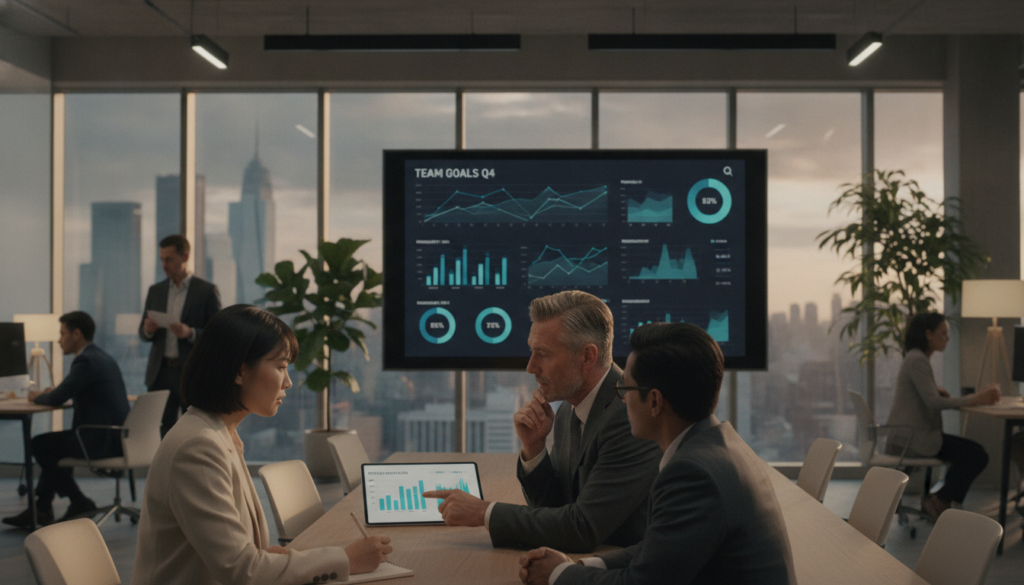
We see how a clear process aligns every employee with the goals of an organization. A modern approach moves away from yearly appraisal cycles and toward ongoing review. This helps teams act faster and keeps objectives visible.
sandmerit KPI system gives managers easy tools to give timely feedback, track skills, and plan development. By using real data, we spot gaps and deliver targeted training that boosts growth for each team member.
In Malaysia today, companies that adopt this approach report better results and stronger workplace culture. When employees know their role and get steady feedback, engagement and output rise. We focus on simple steps that create lasting improvement.
Key Takeaways
- Continuous review replaces annual appraisal for faster progress.
- Clear goals and real-time feedback help employees grow.
- Data-driven planning reveals training needs and closes skill gaps.
- Managers gain simple tools to support teams and track objectives.
- Adopting sandmerit KPI system drives measurable business results.
Understanding the Performance Management System in HRM
We define this approach as a cyclical process that links individual goals to the organisation’s strategic objectives. Our framework uses goal-setting, real-time monitoring, and both qualitative and quantitative evaluation to guide employee progress.
We replace yearly appraisal with regular check-ins that capture true progress and enable timely coaching. Managers use automated tools and software to collect data and make informed choices about rewards, training, and promotions.
Core steps include SMART goal-setting, ongoing feedback, and tailored improvement plans. This makes the programme more than paperwork — it becomes a driver of growth, learning, and retention across teams.
- Cycle: set goals, review regularly, act on findings.
- Focus: align KPIs with business objectives.
- Outcome: clearer roles, improved results, and targeted training.
| Stage | What we do | Tools used | Benefit |
|---|---|---|---|
| Goal-setting | Define SMART objectives for each employee | Goal software, templates | Clear expectations and focus |
| Monitoring | Real-time tracking and check-ins | Dashboards, automated data | Faster course correction |
| Evaluation | Qualitative and numeric reviews | Surveys, KPI reports | Balanced appraisal |
| Development | Personal plans and training | Learning platforms, coaching | Higher retention and growth |
Why Modern Organizations Prioritize Performance Management
We see leaders shifting to continuous tracking and quick feedback to keep teams focused on results. This move helps align daily work with broader objectives and supports clearer career paths.
Benefits for Employee Retention
Benefits for Employee Retention
Clear goals and steady feedback make employees feel valued. When staff know how their role contributes to the organization, turnover drops.
Research supports this. A Willis Tower Watson study shows firms using effective performance management are 1.5x likelier to beat competitors. We also note a 1.25x uplift in productivity where the approach is applied.
Driving Organizational Growth
Driving Organizational Growth
We focus our management process on spotting high potential early. Regular review and development create a pipeline of talent ready for larger roles.
- Improve retention by clarifying career paths and objectives.
- Use data and tools to identify skill gaps and plan training.
- Create transparency so every employee sees how they affect business results.
| Focus Area | What we do | Business Impact |
|---|---|---|
| Retention | Set clear goals and regular feedback cycles | Lower turnover and higher engagement |
| 生产率 | Track progress and offer targeted training | 1.25x productivity gains reported |
| Growth | Identify talent and create development plans | Faster promotion readiness and better results |
Core Objectives of an Effective System
Our chief aim is to boost output while building a culture that rewards accountability and achievement. We set clear goals so every employee understands their role and how it links to broader organizational objectives.
We prioritise continuous feedback to enable real-time corrections and faster improvement. This reduces ambiguity and helps managers give timely coaching.
We use data-driven insights to spot development needs and design targeted training that lifts skill levels. That approach also supports fair recognition, promotions, and succession planning.
- Align individual team goals with organizational objectives to increase focus.
- Foster accountability through transparent standards and regular review.
- Recognize achievements to reinforce desired behaviors and sustain growth.
| Objective | Outcome | Tool |
|---|---|---|
| Enhance productivity | Higher output and clarity of role | Goal tracking software — see sandmerit tools |
| Identify development | Targeted training and improved skills | Data reports and learning plans |
| Ensure fairness | Trust and consistent evaluation | Transparent criteria and regular reviews |
Essential Components for Success
When core practices are set well, every employee knows what to do and why it matters.
Goal setting and KPI definition
We set clear, measurable goals so each role links to business objectives. Use SMART targets and define simple KPIs that teams can track daily.
Continuous feedback loops
We replace yearly appraisal with short, regular check-ins. Open feedback keeps communication honest and helps managers act fast.
Betterworks reports 21% of employees say goals are set once a year and then forgotten. We prevent that by making review an ongoing habit.
Performance improvement plans
When an employee needs support, we use structured plans. PIPs clarify expectations, list training steps, and set timelines for improvement.
- Clear goals: Align objectives to reduce ambiguity.
- Real-time tracking: Use data and software to spot gaps early.
- Supportive PIPs: Offer coaching and focused training to lift results.
| Component | What we do | Benefit |
|---|---|---|
| Goal setting | Define KPIs and SMART targets | Clear focus for teams |
| Feedback | Frequent check-ins and notes | Faster course correction |
| PIPs | Structured improvement plans | Targeted development and retention |
Comparing Traditional and Advanced Management Models
Traditional annual appraisals often miss small, frequent changes that shape results. We find that old models leave managers reactive and slow to act.
Advanced models use AI and predictive analytics to spot skill gaps and forecast potential. They push continuous feedback and tie goals to evolving strategy.
“Moving from yearly review to realtime insight helps teams coach faster and keep every employee aligned with goals.”
- Traditional approaches rely on manual yearly appraisal and subjective scores.
- Advanced solutions deliver fairer evaluation via standard criteria and data-backed metrics.
- Continuous feedback lets managers correct course quickly and suggest tailored training paths.
| Aspect | Traditional | Advanced |
|---|---|---|
| Timing | Annual review | Realtime continuous review |
| Decision basis | Manager opinion | AI, predictive data |
| Learning | Ad hoc training | Automated, personalized learning |
The Strategic Role of HR in Performance Oversight
HR guides the link between daily work and long-term strategy by shaping how we measure progress and support staff.
We design the overall management process so every goal ties back to business objectives. HR trains managers to give clear, constructive feedback and to coach teams regularly.
Building a coaching culture
Building a Coaching Culture
We act as facilitator, custodian, and driver of the approach. That means choosing the right software tools, setting standard evaluation criteria, and running manager workshops.
By using data-driven insights we spot high-potential talent. Then we create tailored development paths for succession planning and growth.
- Align process design with business strategy to boost clarity.
- Train managers to coach and deliver timely feedback.
- Standardize evaluation to reduce bias and ensure fairness.
| HR Role | Action | Benefit |
|---|---|---|
| Designer | Create a management process and goal framework | Clear links between tasks and objectives |
| Facilitator | Train managers and select software tools | Better coaching and real-time tracking |
| Custodian | Standardize evaluation and use data for talent decisions | Fair reviews and stronger succession pipelines |
Exploring Different Types of Performance Management Systems
We compare common frameworks so leaders can choose what fits their organisation best. Each approach shapes how employees get feedback, set goals, and measure results.
Management by Objectives (MBO)
MBO aligns individual targets with strategic objectives. We find it works well for teams that need clear, measurable goals and regular review cycles.
MBO helps employees feel ownership of their work and supports simple appraisal and development plans.
The Balanced Scorecard
The Balanced Scorecard is a strategic framework that tracks four areas: finance, customer, internal process, and learning and growth. About 75% of companies use it to guide business actions and link daily work to long-term strategy.
This model helps organisations balance short-term results with future capability building.
- Many firms use the Bell Curve to rate staff; 75–80% of companies in India apply this method for appraisal.
- We recommend adding 360-degree feedback to get views from peers, managers, and direct reports.
- The right choice depends on size, culture, and strategic goals; we tailor deployment and software to match.
To learn more about how each option works and which may suit your organisation, see our overview of types of performance management systems.
Step by Step Framework for the Performance Process
First, we map objectives so each team member knows how daily tasks drive broader results. Planning sets clear goals and expectations for every employee.
Next comes monitoring. We track progress, hold short reviews, and give regular feedback so teams stay aligned with objectives.
Development follows. We analyse data to find training needs and provide focused resources for skill growth and career planning.
The cycle ends with rating and rewarding. We recognise achievements and link outcomes to pay, promotion, and career paths.
- Transparent steps: planning → monitoring → development → rating/rewarding.
- Employee involvement: co-created goals boost engagement and ownership.
- Flexible design: adjust goals as business priorities shift over time.
- Manager tools: equip managers with dashboards, coaching guides, and training.
| Stage | 专注 | Benefit |
|---|---|---|
| Planning | Goal setting and clarity | Aligned effort and purpose |
| Monitoring | Regular review and feedback | Faster course corrections |
| Development | Training and resources | Skill growth and retention |
Leveraging Data and Analytics for Better Results
A data-first approach turns scattered signals into actionable plans for growth. We use objective metrics to guide promotions, rewards, and training investments. This helps our teams focus on clear goals and timely feedback.
The Importance of Data Governance
Accurate, secure data is the backbone of any modern performance management effort. We set rules for access, retention, and quality so leaders can trust what they see.
Our dashboards highlight trends and hotspots. They reveal links between employee performance and retention. With real-time reporting, managers act faster and give feedback based on facts.
“Good governance makes analytics a reliable source of truth for promotion and training decisions.”
- Use dashboards to spot high-potential employees and plan development.
- Apply governance to keep records accurate, compliant, and secure.
- Focus on actionable insights to drive measurable results across the organization.
| Tool | Use | Benefit |
|---|---|---|
| Dashboards | Visualize trends | Faster, evidence-based decisions |
| Governance rules | Protect data | Reliable reporting and compliance |
| Real-time software | Track progress | Timely coaching and review |
Overcoming Common Implementation Challenges
Rolling out a new appraisal approach often hits two roadblocks: user resistance and unclear goals.
Leadership commitment is essential. We start with a clear change plan and visible support from senior teams. That sets expectations and speeds adoption.
Training fixes fear. We run short workshops for managers and employees so the new review process feels simple and useful.
Feedback gaps are real: 1 in 10 staff rarely get guidance. We embed frequent check-ins and follow-up steps so appraisal outcomes turn into growth plans.
Remote work adds complexity. Only 16% of employers adjusted their approach for hybrid teams. We adapt tools and cadence to suit remote time zones and workflows.
- Clarify goals and link them to daily tasks.
- Give managers actionable guides and coaching time.
- Use data and simple software to track progress and make reviews fair.
“A clear plan, consistent feedback, and steady leadership make change stick.”
We back every rollout with resources and regular check-ins so the program delivers real results across the organization.
Strategies for Ensuring Fairness and Reducing Bias
Bias erodes trust; we stop it by making evaluations clear and objective. Fairness in the performance management process is vital to keep employees engaged and to protect organizational integrity. Our approach combines standard rules, training, and data to make appraisal outcomes fair and repeatable.
Standardizing Evaluation Criteria
We set the same criteria for every role so each employee is judged by measurable objectives. Clear goal setting and simple rubrics reduce guesswork during review cycles.
Use of templates and calibrated score scales helps managers give consistent feedback across teams. We also log metrics in software so data guides promotion and reward decisions.
Mitigating Unconscious Bias
Common biases—Recency, Halo/Horns, Similarity, and cultural or gender bias—skew appraisal results. We counter these with bias-awareness training for managers and by using anonymized data where practical.
AI-assisted tools can flag unusual rating patterns and highlight possible bias. Regular audits of our system and open conversations with employees ensure transparency and ongoing improvement.
- Standard rubrics link goals to objective measures.
- Manager training helps uncover hidden biases.
- Data and software checks make reviews more reliable.
| Action | What we do | Benefit |
|---|---|---|
| Standard criteria | Use templates and calibrated scales | Consistent evaluation across roles |
| Bias training | Workshops for managers | Better, fairer decisions |
| Data audits | AI and periodic reviews | Detects patterns and improves trust |
How AI is Transforming Performance Management
Automated analytics turn large volumes of employee data into simple recommendations for growth and review.
AI automates data collection, removing manual reporting and giving managers clear dashboards that show team progress and goals.
Machine learning provides predictive insights that forecast likely gaps and suggest targeted training before gaps affect results.
- AI suggests personalised learning paths based on employee performance and skills.
- Algorithms flag unusual rating patterns to support fair, consistent appraisal and evaluation.
- Real-time software frees HR to focus on strategy and coaching rather than paperwork.
We believe this shift helps organizations scale a personalised review process while keeping transparency and trust. AI is a tool that supports better feedback, faster development, and measurable improvement for every employee.
Measuring Effectiveness with Key Metrics
Good measurement turns activity into insight and prompts timely coaching. We track a small set of clear indicators to judge how well the performance management process drives results.
Core metrics include productivity rates, employee engagement scores, turnover rates, and goal completion percentages. These give us quick, comparable signals across teams.
Automated reporting generates smart analytics that help us calibrate ratings and plan succession. Our software produces dashboards that guide managers during review and appraisal cycles.
- Define KPIs that map to business objectives and local context in Malaysia.
- Review regularly to spot gaps and tune learning or training plans.
- Use data to evaluate retention and overall organizational health.
| Metric | How we track | Business value |
|---|---|---|
| 生产率 | Output per time and goal completion | Shows efficiency and target alignment |
| Engagement | Pulse surveys and participation rates | Predicts retention and morale |
| Turnover | Exit reasons and trend analysis | Informs development and succession planning |
Future Trends to Watch in the Coming Years
The next wave of workplace tools will personalise development and make coaching continuous. We see hyper-personalization tailoring learning paths to each employee’s goals and strengths.
Wellbeing will become a core objective. Companies will measure stress, workload balance, and resilience as part of regular review cycles.
AI will deepen its role, offering predictive insights and automating routine tasks so managers can coach more often. Systems will grow more agile, letting organisations adjust goals and strategy in real time.
We expect more peer-to-peer feedback to build a collaborative culture where teams share ownership of outcomes. Appraisal models will shift toward growth-focused reviews rather than fixed ratings.
“Tools that combine wellbeing, data, and personalised coaching will shape how companies grow their people.”
- Hyper-personalised development plans for each employee.
- Wellbeing metrics embedded in review cycles.
- Deeper AI insights and automated coaching prompts.
- Agile platforms that adapt goals as business needs change.
We are building software and guidance to help organisations in Malaysia adopt these trends. Our aim is to keep your approach modern, fair, and focused on lasting results.
Contact Us to Learn More About sandmerit Performance Management System
Want a clearer path from goals to growth? We can show you how.
If you are ready to transform your organization, WhatsApp us at +60193156508 to learn more about the sandmerit performance and management system.
We help leaders set clearer goals, deliver timely feedback, and build tailored development plans that lift employee performance. Our team offers hands-on support during planning, rollout, and ongoing review.
- Comprehensive support to match your strategy and culture.
- Cutting-edge software tools that streamline the process and empower employees.
- Training and coaching resources for managers and teams to sustain growth.
“Reach out today and let us customise a solution that drives real results.”
We look forward to partnering with your organisation across Malaysia. WhatsApp +60193156508 to start a short consultation.
结论
Ending well means turning insight into action that lifts teams and sharpens goals. We recommend adopting an effective performance management approach that emphasizes continuous feedback and ongoing development for every employee.
Such a clear process builds trust and transparency. Use data and modern tools to refine the approach and keep objectives aligned with strategy. Learn more about what performance management is to guide your rollout.
We view this work as a journey that needs steady leadership and coaching. We are ready to help you build a practical system that supports employees, equips managers, and drives lasting results.
FAQ
What is a performance management system and how does it improve results?
We define a performance management system as a structured process that aligns employee goals with organizational objectives. By setting clear goals, tracking progress, and providing regular feedback, we increase accountability, boost productivity, and drive measurable business results.
How does goal setting and KPI definition work?
We create specific, measurable, achievable, relevant, and time-bound goals and link them to key performance indicators. This gives teams clarity on priorities and makes it easier to evaluate outcomes against agreed metrics.
What role does continuous feedback play?
We use ongoing feedback loops to correct course quickly, recognize achievements, and support learning. Frequent, constructive conversations reduce surprises at review time and promote steady improvement.
How do performance improvement plans help underperforming employees?
We design improvement plans that outline clear expectations, timelines, and support resources such as coaching or training. These plans focus on development and measurable milestones to help employees get back on track.
What are the main differences between traditional and advanced models?
Traditional models often rely on annual reviews and ratings. Advanced approaches emphasize continuous dialogue, real-time data, coaching culture, and integration with talent and learning systems to produce faster, fairer outcomes.
How does HR contribute strategically to oversight?
We partner with leaders to define frameworks, train managers, ensure consistency, and use analytics to guide decisions. HR also champions a coaching culture that supports growth and retention.
What is Management by Objectives (MBO) and when should we use it?
MBO focuses on setting mutually agreed objectives for individuals and teams. We recommend it when goals are clear, measurable, and directly tied to business outcomes, especially for sales, projects, and operational targets.
How can the Balanced Scorecard benefit our organization?
The Balanced Scorecard links financial, customer, process, and learning perspectives to a single strategy. We use it to ensure balanced progress across short- and long-term priorities and to translate strategy into actionable goals.
What steps make up an effective performance process?
We follow a cycle of planning, continuous feedback, mid-cycle check-ins, formal reviews, and development planning. Consistent documentation and clear timelines keep the process fair and actionable.
How do data and analytics improve outcomes?
We leverage data to spot trends, predict flight risks, evaluate program impact, and make evidence-based decisions. Good analytics turns raw information into practical insights for managers and leaders.
Why is data governance important for people metrics?
We establish governance to ensure data accuracy, privacy, and ethical use. Strong controls build trust, support compliance, and improve the reliability of any insight or automation we deploy.
What common challenges occur during implementation and how do we overcome them?
We often see resistance to change, inconsistent manager skills, and poor data quality. We overcome these with clear communication, manager training, phased rollouts, and ongoing support.
How do we ensure fairness and reduce bias in evaluations?
We standardize criteria, use calibrated scoring sessions, train raters on bias mitigation, and combine qualitative and quantitative evidence to support decisions and improve transparency.
What techniques help mitigate unconscious bias?
We implement structured rubrics, anonymized reviews where feasible, diverse calibration panels, and regular bias-awareness workshops for evaluators and leaders.
How is AI transforming how we assess and develop talent?
We use AI to surface performance patterns, recommend development resources, and automate routine tasks. When used responsibly, AI enhances decision-making, speeds coaching, and personalizes learning paths.
Which key metrics should we track to measure effectiveness?
We monitor goal attainment rates, engagement scores, retention and turnover, time to productivity, and calibration spread. These indicators show both behavioral and business impact.
What future trends should organizations watch?
We expect increased use of real-time people analytics, deeper learning integrations, AI-driven insights, and stronger emphasis on fairness and workforce wellbeing.
How can we learn more about sandmerit performance offerings?
We invite you to contact sandmerit for demos, case studies, and tailored assessments. Our team provides practical guidance on design, rollout, and long-term adoption to meet your strategic goals.