
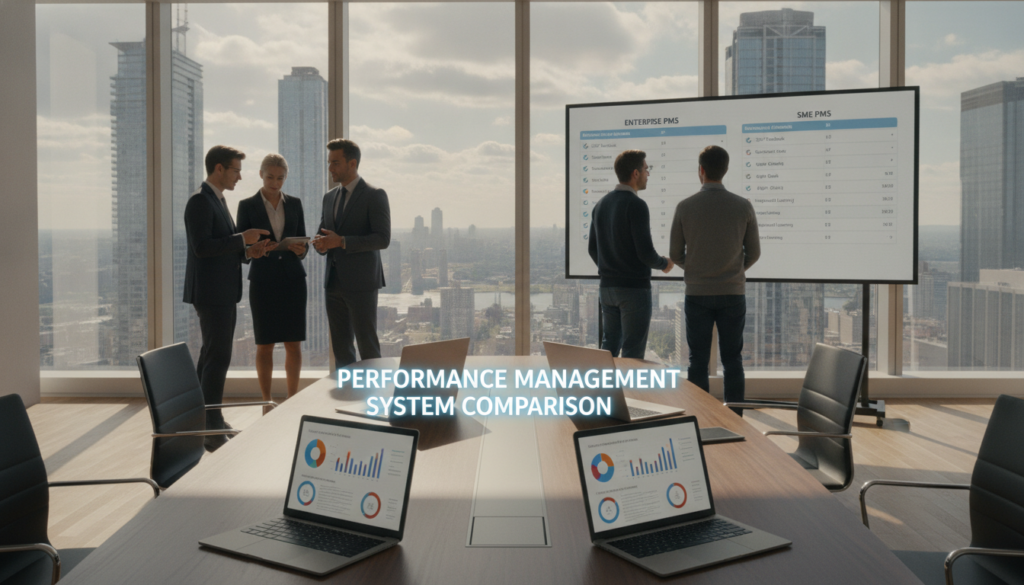
I have developed this guide to help business leaders navigate the complex landscape of employee evaluation. Selecting the right Performance Management System is vital to achieving long-term growth in our local market.
Efficiency remains the primary goal for both Malaysian SMEs and Large Enterprises. While their operational scales differ, the need for clear goal alignment is universal.
I often see companies struggle with manual tracking methods that hinder productivity. The 会选择 sandmerit KPI system offers a modern approach to bridge these gaps. By using this tool, your team can streamline workflows and improve overall output.
Key Takeaways
- Understand the core differences between organizational scales in Malaysia.
- Identify essential tools that drive employee engagement and productivity.
- Learn how the 会选择 sandmerit KPI system simplifies complex tracking tasks.
- Discover why data-driven decisions lead to better business outcomes.
- Gain insights into selecting technology that scales with your company.
The Evolving Landscape of Performance Management in Malaysia
I have observed that the rapid pace of change in the Malaysian economy is forcing companies to rethink their internal management structures. With a steady annual growth rate of 5.4% since 2010, the pressure to maintain high standards of productivity has never been greater. I believe that businesses must adapt their strategies to remain relevant in this competitive environment.
Digital Transformation Trends in Malaysian Businesses
The shift toward Digital Transformation is fundamentally altering how local firms operate. Many organizations are moving away from outdated, paper-based reviews in favor of automated platforms. This transition allows teams to streamline workflows and reduce administrative burdens significantly.
By embracing these new technologies, companies can foster a culture of transparency and continuous improvement. I see this as a necessary step for any business looking to scale effectively within the Malaysian economy. Integrating these tools is no longer a luxury but a critical requirement for modern operations.
Why Performance Management Systems Matter for Local Growth
Adopting a modern system is essential for enabling Data-Driven Decision Making across all levels of an organization. When leaders have access to real-time insights, they can make informed choices that directly impact the bottom line. I find that this clarity is what separates market leaders from those struggling to keep pace.
Furthermore, these systems provide the structure needed to align individual goals with broader company objectives. By prioritizing Data-Driven Decision Making, businesses can identify top talent and address skill gaps before they become major issues. Ultimately, these tools serve as the foundation for sustainable growth and long-term success in our fast-moving market.
A Structured Comparison of PMS Features for Large Enterprises vs SMEs
I often find that the gap between large enterprises and SMEs in Malaysia comes down to how they manage their internal growth. With SMEs representing 98.5% of the local business population and contributing significantly to our GDP, it is vital to align strategic management with the right tools. Choosing a system that fits your specific organizational structure is the first step toward long-term success.
Core Differences in Scalability and Complexity
Large enterprises typically require robust systems that can handle thousands of employees across multiple regions. These organizations prioritize scalability to ensure that their software grows alongside their expanding workforce. A complex organizational structure demands features like multi-departmental reporting and advanced permission settings.
In contrast, I have observed that SMEs often struggle when they adopt overly complex tools. They require agility and simplicity to maintain momentum. For these smaller firms, the focus should remain on streamlined workflows that do not overwhelm the existing team.
“The essence of strategy is choosing what not to do. When a business scales, the ability to simplify processes becomes just as important as the ability to grow.”
Budgetary Considerations and Resource Allocation
Budgeting for a performance management system is rarely just about the initial price tag. Large enterprises often have the capital to invest in custom-built solutions that integrate deeply with their existing infrastructure. However, SMEs must be more cautious with their resource allocation to ensure they see a clear return on investment.
I recommend that business owners evaluate their needs based on the following comparison table to ensure their strategic management goals remain achievable.
| Feature Category | Large Enterprise Needs | SME Requirements |
|---|---|---|
| 系统 Scalability | High (Global/Multi-site) | Moderate (Local/Agile) |
| Implementation | Phased/Long-term | Rapid/Immediate |
| Budget Focus | Long-term ROI | Cost-effectiveness |
| Complexity | High (Customizable) | Low (User-friendly) |
Ultimately, the right choice depends on your current capacity and future vision. By prioritizing scalability that matches your actual growth trajectory, you avoid the common trap of over-investing in features you will never use. I believe that when you align your tools with your reality, your team will thrive.
Key PMS Requirements for Large Enterprises in Malaysia
I believe that for large Malaysian firms, the right performance management system is a strategic necessity. Strategic management involves the formulation and implementation of major goals based on a deep assessment of both internal and external environments. Without a robust framework, these organizations struggle to align their workforce with long-term corporate objectives.
Advanced Analytics and Multi-Departmental Reporting
Large enterprises must prioritize multi-departmental reporting to maintain a clear view of their overall business performance. By leveraging sophisticated analytics, leadership teams can identify bottlenecks that hinder productivity across different business units. Data-driven insights allow managers to make informed decisions that directly impact the bottom line.
Integration Capabilities with Existing ERP and HRIS
Seamless HRIS Integration is a non-negotiable requirement for any modern enterprise operating in Malaysia. When a performance management system connects directly with existing ERP platforms, it eliminates the need for manual data entry. This connectivity ensures that employee records and performance metrics remain synchronized across the entire organization.
Handling High-Volume Data and Global Compliance
The ability to process high-volume data is essential for maintaining operational efficiency across global branches. By utilizing scalable infrastructure, firms can secure a significant competitive advantage in a crowded marketplace. Furthermore, staying compliant with local and international regulations protects the company from legal risks while fostering a culture of transparency.
| Feature Category | Enterprise Requirement | Strategic Benefit |
|---|---|---|
| Data Analytics | Real-time reporting | Informed decision-making |
| System Connectivity | Full ERP/HRIS sync | Operational efficiency |
| Compliance | Global data standards | Risk mitigation |
| Scalability | High-volume processing | Market agility |
Essential PMS Features for Malaysian SMEs
I believe that for Malaysian SMEs, the path to operational excellence begins with choosing the right software. With approximately 80% of the Malaysian population now active internet users, the transition to a Cloud-Based PMS has never been more accessible or necessary for local businesses.
User-Friendly Interfaces and Rapid Implementation
Small teams often lack the luxury of long training periods or complex IT setups. I recommend prioritizing platforms that offer intuitive dashboards and a plug-and-play experience. Rapid implementation ensures that your staff can start using the system immediately without disrupting daily workflows.
Cost-Effectiveness and Subscription-Based Models
Budget management is a top priority for any growing enterprise in Malaysia. Subscription-based models allow you to scale your investment alongside your team size, ensuring you only pay for what you actually use. This cost-effective approach removes the burden of heavy upfront capital expenditure.
Focusing on Core Performance Tracking and Feedback Loops
While enterprise tools often come with excessive features, SMEs should focus on the essentials. Consistent 绩效追踪 allows you to monitor progress against key business goals in real-time. Furthermore, establishing regular Feedback Loops is vital for small teams to stay aligned and improve their daily operations.
| Feature Category | SME Priority | Business Impact |
|---|---|---|
| Interface Design | High (User-Friendly) | Faster Adoption |
| 绩效追踪 | Critical | 目标对齐 |
| Feedback Loops | Essential | Employee Retention |
| Pricing Model | Subscription | Financial Flexibility |
Evaluating sandmerit as a Versatile PMS Solution
I have found that selecting the right performance management software is a critical decision for any organization. My experience suggests that Sandmerit offers a unique approach to managing employee performance across different business sizes in Malaysia.
How sandmerit Bridges the Gap Between SME and Enterprise Needs
Many companies struggle to find a balance between simple tools and overly complex systems. Sandmerit effectively bridges this gap by providing the agility required by Malaysian SMEs while maintaining the robust architecture needed by Large Enterprises.
This platform ensures that your team can scale operations without needing to switch software as you grow. By working with our trusted network of partners, you can ensure a seamless transition regardless of your current organizational stage.
“True performance management is not just about tracking metrics; it is about fostering a culture of continuous growth and alignment across every level of the organization.”
Customization Options for Diverse Malaysian Industries
I believe that flexibility is the hallmark of a great system. Sandmerit provides flexible customization options that cater to the diverse needs of various Malaysian industries, ranging from manufacturing to professional services.
Whether you need to track specific KPIs for a factory floor or manage complex project goals for a service firm, the software adapts to your requirements. This level of personalization ensures that your performance management processes remain relevant and effective.
WhatsApp Us to Learn More About sandmerit Performance Management System at +60193156508
If you are interested in optimizing your performance management, I encourage you to contact the team for a personalized consultation. Please WhatsApp us to learn more about sandmerit Performance Management System at +60193156508 to see how we can support your specific organizational goals today.
Common Challenges in PMS Adoption Across Business Sizes
I have observed that the transition to modern performance management tools is rarely just a technical challenge. While software features are important, the success of these systems often hinges on how well a company navigates the unique landscape of the Malaysian economy. Many SMEs, in particular, face hurdles due to limited experience with formal strategic planning.
Cultural Resistance and Change Management
Adopting a new system often triggers cultural resistance among staff who are accustomed to legacy processes. I believe that leaders must prioritize Change Management to ensure that employees feel supported rather than monitored. When staff members understand the benefits of transparency, they are more likely to embrace the new platform.
Effective communication is the cornerstone of this transition. By involving team members in the selection process, management can reduce anxiety and foster a sense of ownership. This human-centric approach is vital for long-term success in any organization.
Data Security and Privacy Regulations in Malaysia
Beyond the human element, companies must navigate the strict landscape of data protection. Adhering to the Personal Data Protection Act (PDPA) is essential when handling sensitive employee performance metrics. I always advise businesses to conduct thorough audits to ensure their chosen software meets local compliance standards.
Proactive risk management allows firms to focus on Data-Driven Decision Making without compromising privacy. Protecting employee information builds trust, which is a critical asset in today’s competitive market. When security is prioritized, the organization can confidently leverage data to drive growth.
| Challenge Type | Primary Impact | Mitigation Strategy |
|---|---|---|
| Cultural Resistance | Low User Adoption | Transparent Communication |
| Data Privacy | Legal/Compliance Risk | PDPA-Compliant Software |
| Strategic Planning | Poor Goal Alignment | Leadership Training |
Strategic Implementation Strategies for Different Business Scales
I believe that the success of any digital transformation depends heavily on how you choose to roll out your new systems. Implementing a new performance management platform requires a strategy that aligns perfectly with your unique organizational structure. By leveraging dynamic capabilities, I find that firms can better integrate and reconfigure their internal processes to meet changing market demands.
Phased Rollout Approaches for Large Organizations
For large enterprises, I always recommend a phased rollout to ensure stability. This method minimizes operational disruption by introducing features to specific departments one at a time. It allows your team to manage the transition effectively while ensuring that every employee receives proper training.
By focusing on scalability, large organizations can test the system in a controlled environment before a full-scale launch. This approach reduces the risk of technical bottlenecks and helps leadership gather valuable feedback early in the process. It is a proven way to maintain productivity during complex transitions.
Agile Adoption Methods for Growing SMEs
Conversely, growing SMEs often benefit from agile adoption methods that prioritize speed and flexibility. I suggest starting with core features that provide immediate value to your staff. This allows for quick adjustments based on real-time feedback from your users.
This iterative process supports rapid growth and ensures that your organizational structure remains lean and responsive. By keeping the implementation cycle short, you can pivot quickly as your business needs evolve. This agility is essential for maintaining a competitive edge in the Malaysian market.
| Strategy Feature | Phased Rollout (Large) | Agile Adoption (SME) |
|---|---|---|
| Primary Goal | Risk Mitigation | Speed to Value |
| Implementation Pace | Slow and Structured | Rapid and Iterative |
| Feedback Loop | Departmental Reviews | Continuous Daily Input |
| Scalability 专注 | Long-term Integration | Immediate Flexibility |
Measuring ROI on Performance Management Investments
I believe that calculating the true value of a performance management system requires looking beyond the initial purchase price. While the upfront cost is often the most visible factor, ROI measurement is actually about understanding how the software transforms your daily operations. By focusing on long-term outcomes, I can better justify the investment to stakeholders and ensure the business remains competitive in the Malaysian market.
Quantifying Productivity Gains and Employee Retention
To truly understand the impact of these systems, I track specific metrics that reflect organizational health. Research shows that structured strategic planning is a key driver of market success. When employees have clear goals, I observe significant productivity gains that directly correlate with the use of automated tracking tools.
Furthermore, employee retention becomes much easier to manage when staff members feel their contributions are recognized. By using data-driven insights, I can identify high performers early and provide the support they need to stay with the company. This reduces the high costs associated with turnover and keeps institutional knowledge within the organization.
Long-Term Value Versus Short-Term Costs
It is common to feel hesitant about the initial implementation fees, but I view these as necessary steps toward future efficiency. While the short-term costs include software licensing and training, the long-term value manifests in a more agile and engaged workforce. I find that balancing these figures helps me maintain a healthy budget while fostering a culture of high performance.
The following table outlines how I categorize these investments to ensure a clear view of the financial benefits over time.
| Metric Category | Short-Term Focus | Long-Term Impact |
|---|---|---|
| Operational Costs | Subscription Fees | Reduced Administrative Overhead |
| Workforce Output | Training Time | Increased Productivity Gains |
| Talent Stability | Onboarding Expenses | Improved Employee Retention |
| Strategic Growth | System Setup | Enhanced Market Competitiveness |
Ultimately, my goal is to ensure that every ringgit spent on technology serves a strategic purpose. By consistently monitoring these indicators, I can prove that the system is not just an expense, but a vital asset for growth.
结论
Selecting the right Performance Management System represents a vital step for any organization operating in Malaysia. This choice serves as a pillar for your long-term business performance by aligning daily tasks with broader corporate goals.
I believe that effective strategic management requires tools that grow alongside your team. Whether you lead a large enterprise or a small business, your software must support your unique operational needs.
My goal with this guide was to provide the clarity needed to navigate the local market. You now possess the insights to choose a platform that fosters efficiency and employee engagement.
Investing in the right technology today builds a strong foundation for your future. I encourage you to evaluate your current processes and take the next step toward digital transformation. Your commitment to excellence will define your position in the competitive Malaysian landscape.
FAQ
How is digital transformation impacting performance management for Malaysian businesses?
With Malaysia’s economy growing at a steady 5.4% annually, I have seen that digital transformation is no longer a luxury but a necessity. Companies are moving away from manual appraisals toward data-driven decision-making to maintain a competitive edge. By integrating modern systems, I believe organizations can better navigate the fast-paced market environment and achieve sustainable local growth.
What are the core differences between a PMS for large enterprises versus SMEs?
In my experience, the primary divergence lies in scalability and complexity. Large enterprises require multi-layered systems capable of handling high-volume data, whereas SMEs need agility and cost-effective solutions. I often observe that SMEs succeed when they align their strategic planning with their actual resource availability, rather than over-investing in unnecessarily complex tools.
What specific integration features should large Malaysian corporations look for?
For large organizations, I emphasize the importance of seamless integration with existing HRIS and ERP platforms like SAP, Oracle, or Microsoft Dynamics. A robust system must offer advanced analytics and multi-departmental reporting to ensure compliance and operational efficiency across various global and local branches.
Why is a subscription-based model ideal for Malaysian SMEs?
I recommend subscription-based models or SaaS (Software as a Service) because they provide affordability without sacrificing the ability to track core performance metrics. These cloud-based tools allow for rapid implementation and feature user-friendly interfaces, which are essential for small teams to establish consistent feedback loops and improve daily operations.
How does sandmerit accommodate the needs of different industries in Malaysia?
I have found that sandmerit is a highly versatile solution because of its extensive customization options. Whether a business is in manufacturing, retail, or professional services, the system adapts to unique industry demands. If you want to optimize your KPI tracking, I encourage you to WhatsApp the team at +60193156508 for a personalized consultation on the sandmerit Performance Management System.
How can companies overcome cultural resistance during a new system rollout?
Cultural resistance is a significant hurdle; therefore, I believe effective change management is a critical success factor. Leaders must address human-centric challenges early by communicating the benefits of employee engagement and transparency. Proactively managing these transitions helps foster a culture that embraces continuous improvement and data-driven insights.
What are the legal considerations regarding data security for PMS in Malaysia?
Navigating the landscape of data security and privacy regulations, specifically the Personal Data Protection Act (PDPA), is essential. I stress that any performance management system must protect sensitive employee information through encryption and secure access protocols to ensure total compliance with Malaysian law.
What implementation strategy do you recommend for growing businesses?
For large organizations, I suggest a phased rollout approach to minimize disruption and ensure thorough departmental training. Conversely, for growing SMEs, I favor agile adoption methods that allow for quick adjustments based on immediate feedback. Aligning the implementation with your digital transformation goals is key to a successful transition.
How is the ROI of a Performance Management System measured?
When evaluating Return on Investment (ROI), I look beyond the initial price tag to track measurable productivity gains and improved employee retention rates. By utilizing key performance indicators (KPIs) and a Balanced Scorecard approach, management can see the long-term value of a more engaged, efficient, and motivated workforce.