
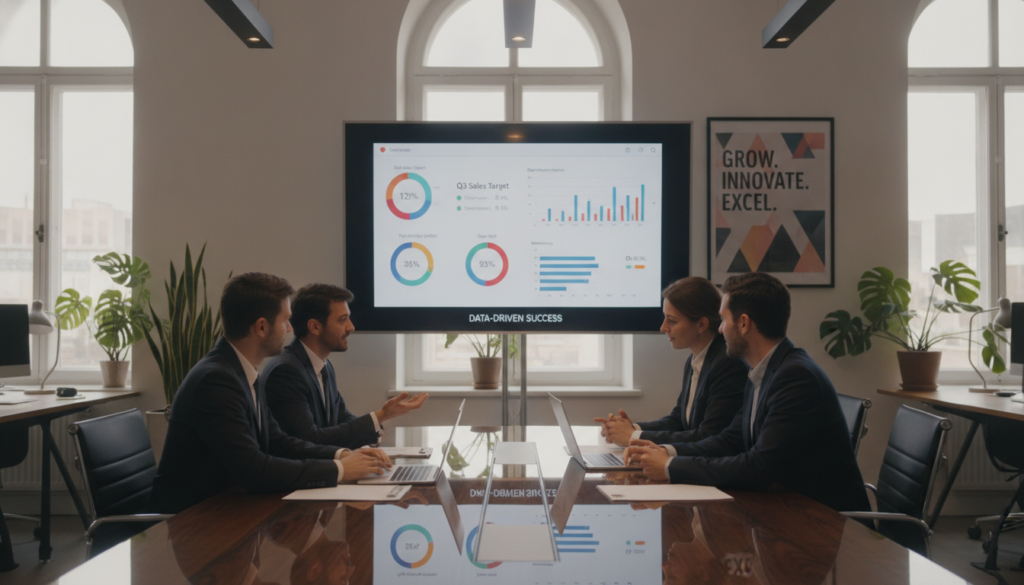
sandmerit KPI system helps us build a clear path for employee growth in Malaysia’s fast-moving workplaces.
We guide managers and people to set practical goals, track daily progress, and give timely feedback. This creates a culture where an employee knows what to aim for and how to improve.
By focusing on measurable results, organizations become 4.2 times more likely to beat peers and can see about 30% higher revenue growth. We design tools that link individual work to company objectives.
Our approach blends regular check-ins, skill development, and transparent review cycles. That mix boosts engagement, improves learning, and helps teams reach shared outcomes.
Key Takeaways
- Clear goals and routine feedback amplify employee engagement.
- Linking daily work to business objectives drives better results.
- Regular reviews and training support ongoing development.
- Transparent metrics make roles and expectations visible.
- sandmerit KPI system helps future-proof talent and lift productivity.
Understanding the Performance Management System
We help teams turn regular check-ins into clear development steps for each employee. Our approach treats review as an ongoing conversation that connects daily tasks to bigger goals.
The goal of this management system is to empower employees to do their best. We align individual effort with the organization’s strategy and create a positive work environment.
Unlike old annual appraisals, our model blends verbal and written feedback throughout the year. This modern process supports steady growth and real-time coaching.
“Open communication builds trust, and trust drives lasting improvement.”
- Regular dialogue between managers and staff keeps expectations clear.
- We provide resources and coaching, not just ratings.
- When employees know their roles, engagement and retention improve.
In short, a strong performance management approach is about supporting every employee so the whole team wins.
Why Organizations Need a Robust Performance Management System
We build a clear line of communication that links daily work to long-term learning and career paths.
Future-proofing workforce skills
Establishing regular dialogue with employees helps us spot gaps in skills, learning, and training early.
When we track progress, we can design targeted coaching and pathways for development. Companies using an effective performance management program are about 1.5x more likely to outperform peers financially and 1.25x more likely to boost productivity.
Increasing employee engagement
A transparent process sets clear goals for every employee. This clarity increases trust and motivates people to improve.
Open, honest feedback from managers creates a culture where employees feel safe to learn and take on new roles.
- Transparent expectations and learning opportunities create clear career paths.
- Connecting individual work to organizational objectives focuses effort where it matters most.
- We use reviews to identify who is ready for greater responsibility and plan succession.
“Building a culture of feedback and trust starts with leadership and HR and spreads through the whole company.”
Core Types of Performance Management Systems
Several widely used models structure how we track goals, learning, and team alignment.
Balanced Scorecard measures progress across four perspectives: financial, customer, internal processes, and learning & development. It helps an organization link everyday activities to long‑term vision.
OKRs (Objectives and Key Results) promote focus and transparency. We use OKRs to define clear objectives and measurable key results that align teams and track outcomes.
Management by Objectives (MBO) pairs managers and employees to set shared targets. This process ensures individual work supports broader objectives.
Individual approaches like 360‑degree feedback gather insight from managers, peers, and direct reports. Combining KPIs into these approaches lets us monitor critical business processes in near real‑time.
- Balanced Scorecard aligns strategy across four lenses.
- OKRs drive transparency and measurable alignment.
- MBO ensures goal ownership at the employee level.
- 360° feedback and KPIs give a fuller view of contribution.
Choosing the right performance management systems means tailoring tools to company culture, workforce design, and the outcomes you need. That lets us foster continuous improvement and boost every employee’s contribution to organisational success.
Essential Elements for Driving Employee Growth
Clear, measurable goals give every employee a roadmap for daily choices and long-term growth.
Goal setting and alignment
We craft goals that are specific, measurable, and time-bound so each team member knows what success looks like.
Goal alignment links individual tasks to company objectives and improves focus across the team.
Continuous feedback loops
Daily conversations matter. According to Gallup, employees are 3.6 times more motivated when managers give regular feedback.
We make feedback routine and constructive so issues are fixed quickly and trust grows.
Ongoing training and development
Training fuels skill growth. Companies with formal programs see 218% higher income per employee.
We build individual development plans with clear steps, resources, and timelines. Managers and employees co-create these plans to ensure alignment and ownership.
“Making feedback a natural part of daily work helps sustain improvement and keep people engaged.”
- Set clear goals that map to outcomes.
- Encourage daily feedback between managers and employees.
- Offer targeted training and an individual development plan.
- Use recognition and rewards to maintain motivation.
For practical tools that support these elements, explore sandmerit software to link goals, reviews, and learning in one platform.
Strategic Steps for Successful Implementation
Aligning goals, tools, and training at launch reduces friction for managers and employees. Start with clear expectations: only 47% of staff say they know what is expected of them.
We recommend managers and employees co-create goals at the start of each cycle. Review progress weekly or monthly to keep results measurable and visible.
HR must equip teams with the right software, metrics, and training. That support helps managers give timely feedback and guide development.
- Run a pilot, then scale after early wins.
- Use an intranet with polls and anonymous feedback to surface honest input.
- Build peer recognition into reviews using badges or points.
- Align training with career paths to signal long‑term investment.
We evaluate what works and tailor the approach to each company. For a practical rollout checklist, see our implementation step-by-step guide.
Benefits of Modernizing Your Performance Approach
Modernizing how we measure and develop people brings clearer outcomes across teams. A modern approach connects daily work to long‑term goals and builds trust.
Creating a culture of transparency
Open communication makes expectations visible. When employees know objectives and receive steady feedback, they focus on what matters.
Organizations with high employee engagement see about 18% more productivity and 23% higher profitability. That makes this upgrade a strong business investment.
- A holistic management system sets clear goals, gives continuous feedback, and recognizes achievements across the company.
- Multi‑source evaluations reduce bias and combine peer reviews, goal progress, and manager input in one place.
- Open, authentic communication helps trust grow, innovation to flourish, and collective goals to be embraced by the whole team.
| Benefit | What it delivers | Metric |
|---|---|---|
| Clear goals | Better focus and aligned work | Improved objective completion |
| Continuous feedback | Faster corrections and learning | Higher employee engagement |
| Integrated reviews | Fairer assessments and clarity | Reduced bias, better retention |
“Openness and honest communication create a workplace where trust thrives and shared goals are truly understood.”
Our approach helps employees stay aligned with business objectives and feel supported in their development. This leads to better job satisfaction and higher retention for Malaysian companies.
Best Practices for Continuous Feedback and Recognition
Short, regular feedback beats long, infrequent reviews for building trust.
We prioritise on-the-spot recognition because 80% of Gen Y prefer immediate praise and 63% of Gen Z want timely, constructive feedback. Small moments of praise help employees feel seen and keep motivation high.
Personal recognition is a top motivator. We encourage shout-outs in team meetings so colleagues celebrate real contributions and reinforce positive behaviours.
Our approach includes 360-degree input so every employee receives balanced views from peers, managers, and stakeholders.
Integrate peer recognition into check-ins and reviews to normalise appreciation. Use badges or public praise to make gratitude visible and repeatable.
- Make feedback frequent: weekly or monthly check-ins keep goals clear.
- Use multi-source input: combine peer and supervisor observations.
- Reward publicly: badges and shout-outs sustain a culture of thanks.
“Regular, honest feedback helps employees learn, self-correct, and grow.”
| Practice | What it does | How to apply |
|---|---|---|
| On-the-spot recognition | Boosts morale and quick reward | Encourage shout-outs in meetings and chat channels |
| 360° feedback | Gives balanced insight | Collect peer, manager, and stakeholder input quarterly |
| Peer badges | Builds visible appreciation | Implement a badge tool for weekly recognition |
| Frequent check-ins | Keeps objectives aligned | Short weekly reviews between managers and employees |
Our best practices ensure managers and employees keep trust and authenticity through frequent, open dialogue. This helps people meet goals, enjoy work, and support durable development across the organisation.
Leveraging Technology to Enhance Performance Outcomes
Smart tools let us turn raw data into clear actions that lift employee results. We pair analytics with everyday work so managers and staff get timely, useful signals.
Data-driven insights
AI-powered dashboards like Simpplr’s My Team give consolidated insights and analytics. These dashboards show trends, hotspots, and readiness for promotion.
We use surveys and listening tools to add the employee voice. That makes our evaluation more user-centric and actionable.
Automating review reporting
Automation streamlines review reporting, saving time and cost. Smart analytics help managers calibrate ratings, align remuneration, and plan succession.
Integration matters: when feedback, recognition, and goal tracking sit in one platform, communication flows and employees can track progress in real time.
- Gain early alerts on declining metrics and skill gaps.
- Reduce admin work so managers focus on coaching.
- Use dashboards to design targeted training and career plans.
“Technology turns data into faster action and fairer decisions.”
WhatsApp Us to Learn More About sandmerit Performance Management System
Connect with us via WhatsApp for a hands-on demo tailored to Malaysian workplaces. We’ll walk you through features, answer questions, and suggest a fit for your organisation.
Message our dedicated support line at +60193156508 to start a conversation. It’s fast, direct, and designed for busy HR teams and leaders.
- If you want to implement a world-class performance management system, reach out for a personalised consultation.
- You can easily WhatsApp us at +60193156508 to learn more about the sandmerit solution.
- Our experts will show how the sandmerit management system can transform employee growth and outcomes.
- Contacting us on WhatsApp is the quickest way to schedule a live demo of advanced features.
- We help build a robust management system that aligns with your goals and supports continuous development.
“Message us and we’ll tailor a demo that maps to your team’s priorities.”
结论
A practical approach to goals and coaching lets employees improve week by week.
We believe well‑run performance management systems clarify expectations, track work, and link daily effort to long‑term results. By prioritizing regular check‑ins and timely feedback, we fix issues fast and keep learning on track.
Using methods like OKRs, 360‑degree reviews, and balanced scorecards helps align individual goals with company aims. These management systems also provide documented evidence for fair promotions, pay, and training decisions.
Investing in robust systems empowers your workforce to reach full potential and builds a resilient, growth‑focused organisation in Malaysia.
FAQ
What is a performance management system and how does it help employee growth?
A performance management system is a structured approach we use to set goals, track results, and support employee development. It helps employees understand expectations, receive timely feedback, and access training that closes skill gaps. By aligning individual objectives with organizational goals, we improve engagement, productivity, and career progression.
How often should we run reviews and feedback cycles?
We recommend ongoing check-ins combined with quarterly reviews. Frequent, short conversations keep goals relevant and let managers address issues early. Quarterly cycles work well for measuring progress and adjusting development plans without creating excessive administrative work.
What types of tools or platforms can enhance our approach?
Modern platforms like Workday, SAP SuccessFactors, and BambooHR provide goal tracking, continuous feedback, and reporting. These tools automate workflows, surface insights from performance metrics, and integrate learning resources to support skill development across teams.
How do we set goals that align with company objectives?
We use SMART criteria—specific, measurable, achievable, relevant, time-bound—and cascade objectives from company-level priorities down to teams and individuals. Regular alignment sessions ensure everyone understands how their work contributes to broader business outcomes.
What role do managers play in driving results?
Managers coach, give regular feedback, and remove obstacles so their teams can perform. They translate strategy into actionable goals, conduct development conversations, and document progress to support promotions and learning plans.
How can we measure the impact of changes to our process?
We track key indicators such as goal completion rates, employee engagement scores, time-to-competency after training, and turnover among top performers. Dashboards and analytics help us monitor trends and link improvements to business results.
How do continuous feedback loops improve employee engagement?
Continuous feedback keeps people informed about performance and development. When employees receive timely recognition and correction, they feel valued and motivated. That drives higher retention, stronger teamwork, and better outcomes.
What are best practices for integrating learning and development?
We embed learning into goals, recommend microlearning for on-the-job skills, and tie training to competency gaps identified in reviews. Managers should support stretch assignments and mentor employees to accelerate growth.
Can automation reduce the administrative burden of reviews?
Yes. Automation helps schedule check-ins, collect ratings, and generate reports. That frees managers to focus on coaching rather than paperwork and ensures consistent, timely evaluations across the organization.
How do we future-proof workforce skills?
We perform skills gap analyses, prioritize critical capabilities, and invest in continuous learning programs. Cross-training and career pathways help people adapt to changing roles and emerging business needs.
How quickly can an organization see benefits after modernizing its approach?
Some benefits—like improved communication and clearer goals—appear within weeks. Metrics such as productivity, engagement, and learning uptake typically show measurable improvement within three to six months when changes are consistently applied.
How do we ensure fairness and transparency in reviews?
We use objective criteria, competency frameworks, and calibrated calibration sessions across teams. Clear documentation and open conversations about expectations reduce bias and build trust in the process.