
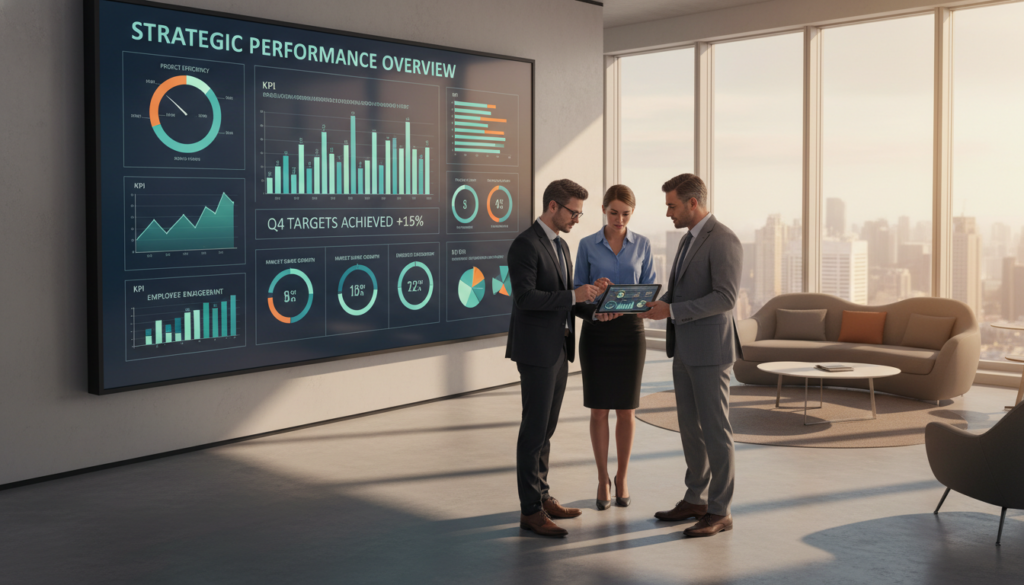
Can one clear approach change how every team reaches its goals? We ask this because many organisations in Malaysia still rely on ad-hoc reviews that do not link daily work to long-term vision.
We believe a structured approach can align individual roles with company aims. By setting clear objectives and sharing expectations, we help people see how their work drives results.
Our model uses timely data to track progress and adjust plans over time. This makes the process flexible and responsive when priorities shift.
With a focused performance management system, transparency grows. Team members get the information they need to act and improve, and leaders keep the whole organisation moving toward a shared vision.
Key Takeaways
- Clear goals link daily tasks to the company vision.
- Transparent expectations help teams focus on high-impact work.
- Real-time data allows quick adjustments over time.
- Structured approaches replace static evaluations.
- Consistent tracking delivers measurable results across departments.
Understanding the Strategic Performance Management System
Many organisations still treat reviews as a yearly chore rather than a guide for daily work.
Defining the Concept
Our approach replaces one-off appraisals with an ongoing process that ties tasks to outcomes.
Research shows 95% of managers are dissatisfied with their current review setup. That gap means we must use objective data and clearer criteria to judge results.
The Role of Strategic Alignment
When 67% of employees say evaluations rely on subjective observations, bias undermines trust.
We expand feedback beyond single managers. Only 17% of workers get team evaluations today, while 99% are assessed by direct managers. We train managers so feedback leads to real improvement.
- Objective ratings: reduce subjectivity and help teams act.
- Broader feedback: include peers to improve accuracy of reviews.
- Continuous check-ins: allow real-time adjustments instead of annual surprises.
“By aligning individual effort with team goals, we turn measurements into meaningful progress.”
Our goal is simple: make the process fair, clear, and useful so the whole organization moves forward.
Why Modern Organizations Require Strategic Alignment
Today’s fast-moving markets demand that every team links daily tasks to clear company aims. Without that link, staff feel reviews add little value; only 8% of businesses say traditional methods help the firm.
We know that 75% of employees find yearly reviews unfair. That gap harms trust and reduces engagement. By using clear goals and frequent check-ins, we create fairer assessments that everyone understands.
Gallup shows engaged teams deliver 21% higher profitability and 17% greater productivity. These numbers prove a focused approach drives measurable results.
- Define concise goals so every person sees how their work supports the vision.
- Use simple data to track progress and spot problems early.
- Align objectives across teams to prevent silos and speed outcomes.
“Alignment turns everyday tasks into measurable gains.”
We build a clear path from individual objectives to company strategy. That alignment is essential for long-term success in Malaysia’s competitive market.
Core Components of an Effective Performance Framework
A reliable framework ensures every employee knows what success looks like each day. We design the structure so roles, expectations, and goals are visible across the organisation.
Accountability and Ownership
We define clear responsibilities for every employee. That link between individual performance and company objectives raises fairness and clarity.
Implementing a structured strategic performance management approach increased perceived fairness and accuracy by 50% in our teams.
Employee Well-being
Well-being is part of success. We combine development programs, regular feedback, and incentives so employees feel supported and valued.
Simple training and check-ins help staff balance goals with workload and career growth.
Performance Metrics
Our metrics track progress in real time so managers can step in early. We use clear indicators that tie daily work to broader objectives.
Explore our performance management system at Sandmerit software to see how goal setting, data, and development align to deliver measurable results.
Moving Beyond Traditional Annual Reviews
We move past once-a-year check-ins and adopt a steady rhythm of timely coaching and feedback.
Our approach replaces the single annual performance review with regular, short conversations that guide employee development. These check-ins help staff adjust goals and learn as work changes.
员工 gain clearer direction and faster support. Managers spot trends early and can offer targeted development before issues grow.
We make feedback two-way so employees shape their own growth. That fosters ownership and boosts morale across teams in Malaysia.
| 务实方针 | Frequency | Benefit |
|---|---|---|
| Annual review | Once a year | Formal rating, delayed coaching |
| Continuous feedback | Weekly–monthly | Quick fixes, steady improvement |
| Our approach | Ongoing check-ins | Real-time tracking and growth |
“Regular guidance keeps employees aligned and ready to improve.”
Establishing Clear Organizational Objectives
Concrete objectives turn vague expectations into actionable steps for every team member. We start by mapping how each role supports the company vision.
Defining Measurable Outcomes
We set clear goals and link them to specific responsibilities so employees know what success looks like.
Goal setting is part of our process. We use simple, measurable indicators to track progress toward organizational goals.
- Align individual work with strategic goals to focus efforts on measurable outcomes.
- Integrate goal setting into the management system so expectations are transparent.
- Provide training and development that equips employees to meet objectives.
We monitor progress with data-driven metrics and adjust our strategy when needed. This keeps teams aligned and helps the organization reach its strategic goals.
“Clear communication of objectives empowers employees and drives measurable results.”
Integrating Technology for Real-Time Tracking
Real-time tracking turns daily tasks into measurable steps toward bigger goals.
We integrate advanced tools into our strategic performance management approach so teams can view progress as it happens. Our cloud dashboards gather data from daily work and show clear objectives and results.
Using analytics, we give managers timely insights to coach employees and improve output. This moves feedback out of annual reviews and into immediate, actionable guidance.
- Automated dashboards: monitor goals and key indicators in one place.
- Real-time feedback: lets employees adjust work and speed development.
- Data-driven coaching: helps managers spot trends and support teams fast.
Our approach keeps the organisation aligned and helps every employee access the facts they need. With digital tools, tracking performance and measuring progress becomes part of daily work, not an occasional task.
Aligning Individual Goals with Corporate Strategy
We map each employee goal to a clear business outcome so daily tasks add up to measurable results.
We ensure every individual performance target links to our organizational goals. This creates a clear path to success for every employee and boosts employee performance.
By setting clear expectations and objectives, we help employees take ownership of their work and goals. Our management approach supports development and steady progress toward the company vision.
| 专注 | What we do | Benefit |
|---|---|---|
| Goal setting | Match individual goals to organizational goals | Clear priorities for employees |
| Tracking | Monitor progress and offer coaching | Higher individual performance |
| Development | Provide targeted learning and support | Improved skills and results |
“When employees understand their role in the strategy, they are more motivated to achieve goals.”
We link individual goals to strategic goals so the whole organisation moves forward together.
Fostering a Culture of Continuous Feedback
Frequent check-ins create a habit of small course corrections that add up to real progress toward our goals. We build routines that keep conversations short, specific, and useful.
The Importance of Regular Check-ins
We hold regular meetings so employees know where they stand. These moments let managers give timely feedback and spot issues early.
Short, scheduled check-ins reduce surprises during annual reviews and help teams adjust objectives fast.
Creating a Safe Environment for Discussion
We foster open dialogue where every employee can share challenges without fear. This builds trust and encourages honest problem solving.
Safe conversations lead to faster improvement and stronger team cohesion.
| What we do | Why it helps | 成果 |
|---|---|---|
| Weekly check-ins | Share quick updates and blockers | Faster course corrections |
| Anonymous pulse surveys | Gather candid feedback and data | Clear trends for development |
| Manager coaching | Guide employees toward objectives | Stronger skills and higher engagement |
“Continuous feedback keeps teams aligned and lets employees shape their own growth.”
Developing Employee Skills Through Targeted Training
We design learning paths that match real job demands and clear expectations. Focused training helps employees build the exact skills needed for daily work and long-term goals.
Our management system identifies skill gaps for each person. Then we invest in targeted training programs that map to those needs.
We align training with organizational goals so learning drives measurable results. Using data, we track program outcomes and link them to employee performance and key performance indicators.
Regular feedback is part of the process. Managers give short, actionable guidance so staff apply new skills quickly.
- Tailored programs: meet individual development needs.
- Data tracking: shows which courses boost performance.
- Incentives: reward employees who complete learning paths.
“Continuous learning and timely feedback turn training into measurable gains.”
Recognizing and Rewarding Exceptional Performance
Tangible rewards and timely recognition turn strong work into repeatable results. We use clear incentives to motivate employees to exceed their goals and help the whole team succeed.
Our performance management approach includes a structured rewards plan so every employee feels valued. We link recognition to measurable progress and visible results.
We combine regular feedback with targeted development and training. Short coaching sessions help staff build skills and prepare for higher levels within the organisation.
Incentives range from spot awards to career growth opportunities. These reinforce the behaviours that drive long-term success.
- Clear criteria: rewards tied to goals and tracked progress.
- Ongoing feedback: keeps employees aware of their role and impact.
- Development paths: training that builds needed skills and boosts results.
“Recognition strengthens commitment and raises overall productivity.”
Contact Us to Learn More About the sandmerit Performance Management System
Contact our specialists for a clear demo of how Sandmerit links daily work to measurable outcomes.
WhatsApp us at +60193156508 to see how we can transform your business operations in Malaysia. We will schedule a demo and walk you through features that fit your needs.
- WhatsApp us to learn more about the Sandmerit performance management system at +60193156508 to see how we can transform your business operations.
- Our team is ready to provide a comprehensive demo to help you achieve your strategic goals.
- Contact us today at +60193156508 to discuss how our system can be tailored to meet your organisation’s needs.
- We are committed to helping you implement a robust approach that drives productivity and employee engagement.
- Reach out via WhatsApp at +60193156508 to discover the benefits of integrating Sandmerit into daily operations.
| Contact | What we offer | Next step |
|---|---|---|
| WhatsApp +60193156508 | Live demo and Q&A | Schedule a session |
| Email on request | Custom quotation | Receive proposal |
| On-site visit (Malaysia) | Implementation planning | Start pilot |
“Reach out and let us show you practical ways to connect daily tasks to bigger goals.”
结论
When every employee sees how tasks link to results, coordination becomes simpler and outcomes improve. We focus on clear goals and regular check-ins so work stays relevant and measurable.
Our management system gives teams the structure to track progress, offer timely feedback, and support ongoing development. This boosts engagement and helps employees move toward shared objectives.
For practical guidance and data-driven tips, explore our take on strategic performance management. Contact us to see how this approach can help your organisation align daily work with long-term success.
FAQ
How does a strategic performance management system work?
We align organizational goals with individual objectives, set measurable indicators, and track progress using data and regular check-ins. This approach helps managers and employees focus on results, clarify responsibilities, and adjust work based on timely feedback and development needs.
What do you mean by a strategic performance management system?
We mean a structured approach that links vision and strategic goals to everyday tasks. It combines goal setting, progress tracking, reviews, and incentives so teams understand expectations, prioritize work, and measure outcomes against key indicators.
Why is alignment between goals and strategy important?
Alignment ensures every role contributes to organizational objectives. When employees see how their work supports the larger vision, we get better engagement, clearer priorities, and improved results across teams and departments.
What are the core components of an effective performance framework?
Core components include clear objectives, measurable outcomes, accountability and ownership, employee development, well-being considerations, and metrics that track progress. Together, these parts create a repeatable process for improvement and success.
How do we foster accountability and ownership?
We assign clear roles, set individual targets tied to team goals, and use regular reviews and data visibility to maintain responsibility. Managers coach and support employees while recognizing contributions that advance business aims.
How does the system address employee well-being?
We integrate well-being into goals and check-ins, monitor workload and stress indicators, and provide training and resources. Prioritizing health helps sustain productivity and reduces turnover.
What types of performance metrics should organizations use?
We recommend a balanced mix of outcome measures (results, revenue, quality), behavioral indicators (collaboration, leadership), and efficiency metrics (time to delivery, cycle time). Use data that ties directly to objectives and can be tracked over time.
Why move beyond traditional annual reviews?
Annual reviews are too infrequent to guide day-to-day work. We promote continuous feedback and frequent check-ins so employees receive timely guidance, can course-correct quickly, and sustain growth throughout the year.
How do you establish clear organizational objectives?
We start with the company vision, break it into strategic goals, and translate those into measurable outcomes for teams and individuals. Clarity comes from specific targets, timelines, and assigned ownership.
What does defining measurable outcomes involve?
We define outcomes by choosing key indicators, setting targets, and agreeing on data sources. Measurable outcomes should be specific, time-bound, and reviewed regularly to confirm progress.
How can technology help with real-time tracking?
We use platforms that consolidate goals, feedback, and metrics in one place, enabling managers to monitor progress, generate reports, and deliver timely coaching. This reduces manual work and improves visibility.
How do we align individual goals with corporate strategy?
We cascade goals from leadership to teams, translate strategic priorities into daily tasks, and ensure each employee’s objectives connect to measurable outcomes that support the organization’s targets.
How do we build a culture of continuous feedback?
We train managers and teams to hold regular check-ins, provide constructive feedback, and celebrate progress. Building norms around open dialogue and quick course corrections embeds continuous improvement into the work routine.
Why are regular check-ins important?
Frequent conversations let us identify obstacles early, align priorities, and offer coaching when it matters. Regular check-ins shorten feedback loops and keep work on track toward goals.
How do we create a safe environment for open discussion?
We encourage psychological safety by modeling transparent communication, ensuring feedback is constructive, and protecting employees from negative consequences when they raise issues or suggest changes.
How does targeted training develop employee skills?
We assess skill gaps, design focused learning programs, and link training to career pathways and role expectations. Targeted learning increases capability and supports measurable improvements in outcomes.
How should organizations recognize and reward exceptional results?
We combine monetary incentives, promotions, public recognition, and development opportunities tied to clear achievement criteria. Rewards should reinforce desired behaviors and measurable results.
How can we learn more about the Sandmerit performance management solution?
Contact Sandmerit through their official website or schedule a demo to see how their platform supports goal setting, tracking, feedback, and analytics that drive alignment and measurable results.